
Israeli Ministers Reject US-Iran Deal, Vow to Hold Ground
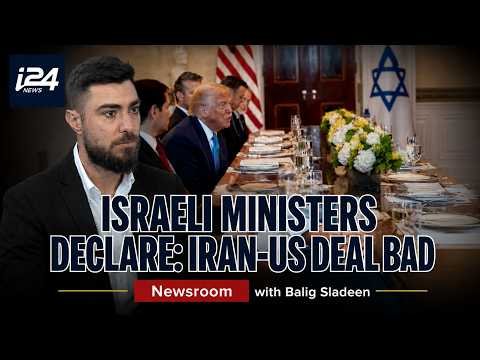
The i24NEWS English YouTube video titled "Israeli Ministers declare: Iran-US deal bad, fails to ensure security" features analysts Catherine Perez-Shakdam and Balig Sladeen breaking down the sharp reactions from Israeli officials to the framework MOU signed electronically on June 15, 2026, between President Trump, Vice President Vance, and Iran's Speaker Mohammad Baqer Qalibaf.
The i24NEWS English YouTube video titled "Israeli Ministers declare: Iran-US deal bad, fails to ensure security" features analysts Catherine Perez-Shakdam and Balig Sladeen breaking down the sharp reactions from Israeli officials to the framework MOU signed electronically on June 15, 2026, between President Trump, Vice President Vance, and Iran's Speaker Mohammad Baqer Qalibaf. The discussion highlights how the agreement, which formally concludes the three-month US-Iran war, has triggered immediate political divisions in Jerusalem over security guarantees and military posture in Lebanon and Syria.
Headline: Israeli Ministers Unite in Condemnation of US-Iran Deal, Vow to Maintain Military Operations
Jerusalem, Israel — June 2026 — Israeli ministers from the governing coalition have issued coordinated statements rejecting the US-Iran framework memorandum of understanding signed on June 15, 2026, arguing that the document fails to address Iran's nuclear enrichment activities or its support for proxy militias. The MOU, described as roughly one and a half pages and very general in nature, sets a 60-day period for further negotiations on Iran's enriched uranium stockpile ahead of a formal signing ceremony scheduled for Geneva on June 19, 2026. Finance Minister Bezalel Smotrich, Defense Minister Israel Katz, and National Security Minister Itamar Ben-Gvir each emphasized that Israel remains unbound by the terms and will continue operations against terrorist infrastructure in Gaza, southern Lebanon, and the Syrian Golan Heights. The performance-based structure of the deal, which ties reconstruction funds to Iranian compliance, has done little to ease concerns in the Prime Minister's Office about verification mechanisms or long-term regional stability.
Coalition Hardliners Reject US-Iran Framework
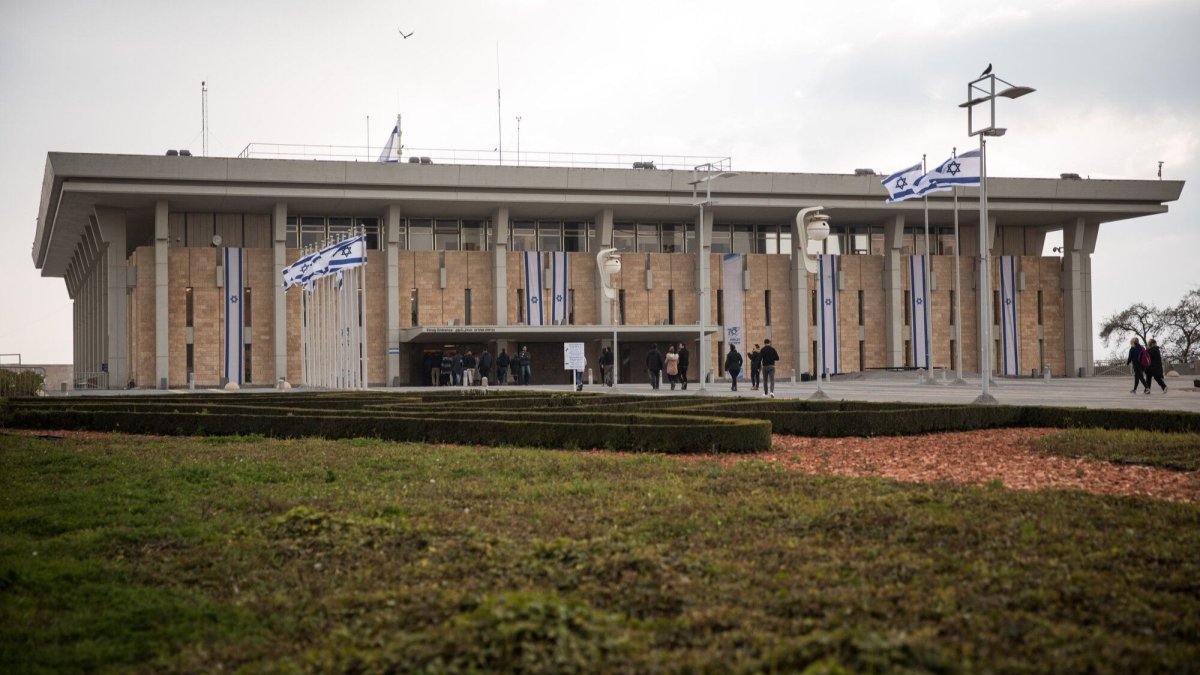
Finance Minister Bezalel Smotrich stated on June 16, 2026, that the coalition would pursue the toppling of the Iranian regime through creative diplomatic and economic measures even after the electronic signing of the MOU. Smotrich, speaking from his office in the Knesset, pledged to block any IDF withdrawal from security zones in southern Lebanon, citing ongoing Hezbollah rocket fire near the Litani River. He referenced specific incidents in May 2026 where Hezbollah operatives attempted to infiltrate positions near Metula, underscoring that reconstruction funds promised to Iran under the performance-based clause would not alter Israel's defensive posture.
Defense Minister Israel Katz reinforced this position during a briefing at the Kirya military headquarters in Tel Aviv on June 17, 2026, declaring that IDF forces would remain in designated security zones in Lebanon, Syria, and Gaza indefinitely. Katz pointed to the destruction of over 200 Hezbollah rocket launchers in the previous month as evidence that withdrawal would invite renewed attacks on northern Israeli communities such as Kiryat Shmona and Shlomi. He noted that the MOU's general language on uranium enrichment does not constrain Israeli operations against Iranian-backed groups operating from the Bekaa Valley.
National Security Minister Itamar Ben-Gvir told reporters outside the Prime Minister's Office that the agreement does not bind Israel because the country was never a party to the negotiations involving President Trump and Iran's Speaker Mohammad Baqer Qalibaf. Ben-Gvir highlighted the need to maintain operations in the Philadelphi Corridor along the Egypt-Gaza border to prevent weapons smuggling, regardless of any 60-day framework for permanent settlement talks. He argued that the very general terms of the one-and-a-half-page document leave too many loopholes for Iran to resume enrichment activities at the Natanz facility.
Opposition Slams Netanyahu Over Strategic Failure
Opposition Leader Yair Lapid addressed the Knesset on June 18, 2026, labeling the US-Iran framework MOU as Prime Minister Benjamin Netanyahu's absolute strategic failure, arguing that the electronic signing on June 15 bypassed Israeli input entirely. Lapid, from the Yesh Atid party, cited the absence of any clause requiring Iran to dismantle its proxy networks in Lebanon and Syria as a direct threat to communities along the northern border. He referenced the i24NEWS reporting on coalition hardliners vowing to defy withdrawal pressure as further evidence of policy incoherence.
Lapid's criticism extended to the performance-based funding mechanism, which he said would allow Iran to receive reconstruction aid from international donors before full verification of its enriched uranium levels. Speaking at a press conference in Tel Aviv, he noted that sporadic clashes between Israeli forces and Hezbollah fighters near the Blue Line have continued despite the ceasefire declared in early June 2026. Lapid called for an emergency session of the Foreign Affairs and Defense Committee to examine how the Geneva ceremony on June 19 could affect Israel's qualitative military edge.
Broader opposition voices, including members of the Labor and National Unity parties, echoed Lapid's assessment during Knesset debates on June 17, 2026, pointing to the MOU's failure to address Iran's ballistic missile program as a missed opportunity. They argued that the very general language leaves room for Iran to expand its influence through the Popular Mobilization Forces in Iraq, directly impacting Israeli security calculations in the region.
Regional Fallout: Hezbollah, Lebanon, and the Northern Border
Iran's Foreign Minister Abbas Araqchi warned on June 16, 2026, that any Israeli attack on Lebanon would violate the US-Iran understanding reached through the framework MOU. Araqchi, speaking from Tehran, insisted that the end of hostilities requires the withdrawal of Israeli forces from occupied territories in southern Lebanon and the Syrian Golan Heights. His statements came amid reports of continued sporadic exchanges between Hezbollah units and IDF patrols near the town of Marjayoun.
The situation along the Israel-Lebanon border remains tense, with Hezbollah maintaining positions south of the Litani River despite the ceasefire. IDF engineering units have reinforced security zones near the Lebanese village of Kafr Kila, where cross-border fire incidents occurred as recently as June 14, 2026. Defense Minister Israel Katz reiterated that these zones would stay under Israeli control to prevent the re-establishment of Hezbollah infrastructure previously destroyed in operations around Ayta ash-Shab.
Regional dynamics have also drawn in the United Nations Interim Force in Lebanon, whose patrols near the Blue Line have been hampered by the ongoing low-level fighting. Israeli officials at the Foreign Ministry in Jerusalem have coordinated with UN representatives to ensure that any future 60-day negotiations on Iran's uranium do not constrain operations against Hezbollah supply lines originating from the Syrian border crossing at Quneitra.
The Deal's Details: What the MOU Actually Says
The framework memorandum of understanding signed electronically on June 15, 2026, by President Trump, Vice President Vance, and Iran's Speaker Mohammad Baqer Qalibaf consists of approximately one and a half pages of general principles rather than detailed protocols. It establishes a 60-day window for technical teams to negotiate a permanent settlement specifically addressing Iran's enriched uranium stockpile at facilities including Fordow and Natanz. The document explicitly ties any reconstruction funding to verifiable performance benchmarks on compliance.
A formal signing ceremony is scheduled for Geneva on June 19, 2026, under the auspices of Swiss diplomatic authorities. The performance-based structure means that Iran would receive phased economic assistance only after international inspectors confirm reductions in uranium enrichment levels below agreed thresholds. Israeli analysts at the Institute for National Security Studies in Tel Aviv have noted that the absence of specific timelines for missile program restrictions leaves significant gaps.
Prime Minister's Office spokespeople have emphasized that the MOU's general wording does not reference Israeli security concerns in Lebanon or Gaza, prompting the coalition ministers' public rejections. The 60-day framework period will run through mid-August 2026, during which time IDF operations in the security zones are expected to continue without interruption.
International Reactions and Diplomatic Fallout
The US-Iran MOU has drawn a spectrum of international responses, with European capitals expressing cautious optimism while Gulf states monitor the implications for their own security arrangements. The European Union's foreign policy chief issued a statement on June 16, 2026, welcoming the framework as a potential step toward de-escalation but stressing that any agreement must include robust verification mechanisms. In Riyadh and Abu Dhabi, officials have privately expressed concern that the 60-day framework does not address Iran's ballistic missile capabilities or its support for proxy militias across the region.
At the United Nations, Secretary-General António Guterres called for all parties to use the 60-day window to negotiate a comprehensive settlement that includes security guarantees for all regional states. The Geneva ceremony on June 19 is expected to draw senior diplomats from the P5+1 countries, though Israeli officials have confirmed they will not attend. Israeli Ambassador to the UN Danny Danon has circulated a memorandum outlining Jerusalem's position that the MOU's general language on enrichment fails to account for Iran's record of concealment at undeclared sites.
The Russian Foreign Ministry welcomed the agreement while offering to facilitate parallel negotiations on Iran's regional role, a proposal viewed with skepticism in Jerusalem given Moscow's coordination with Tehran in Syria. Chinese representatives at the IAEA have expressed support for the performance-based funding mechanism, signaling potential alignment with the US position on compliance benchmarks.
What This Means for Israel's Security Doctrine
The US-Iran framework MOU has prompted a reevaluation of Israel's security doctrine, particularly regarding the maintenance of buffer zones in Lebanon and Syria following the June 15, 2026, electronic signing. Military planners at IDF Northern Command headquarters in Safed are preparing for extended deployments, citing the continued presence of Hezbollah forces near the Israeli border communities of Avivim and Dovev. The performance-based funding clause offers no immediate mechanism to address these ground realities.
Israeli diplomats at the Foreign Ministry have begun consultations with European Union representatives in Brussels to ensure that any reconstruction funds disbursed to Iran under the MOU do not indirectly support proxy activities. The upcoming Geneva ceremony on June 19, 2026, is viewed in Jerusalem as a critical juncture where additional clarifications on verification could be sought, though coalition hardliners remain skeptical of binding outcomes.
Long-term implications include strengthened coordination between the IDF and the Shin Bet on monitoring Iranian compliance during the 60-day negotiation window. Officials have stressed that operations to dismantle terrorist infrastructure in Gaza's Rafah area and along the Philadelphi Corridor will proceed independently of the US-Iran understanding, preserving Israel's freedom of action against threats originating from multiple fronts.
By Hannah Berg, Staff Writer
This article was produced with AI-assisted research and editorial support. Reporting is based on sources cited in the article.
What's Your Reaction?
 Like
0
Like
0
 Dislike
0
Dislike
0
 Love
0
Love
0
 Funny
0
Funny
0
 Wow
0
Wow
0
 Sad
0
Sad
0
 Angry
0
Angry
0
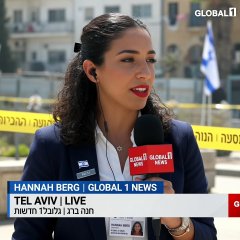
Israel Correspondent at Global1.News. Based in Tel Aviv, covering Israeli politics, security, technology, and society. Provides balanced, deeply-sourced reporting on one of the most closely-watched regions in the world.













Comments (0)