
Sikh community ‘faced considerable abuse and hatred’ after fatal Henry Nowak stabbing
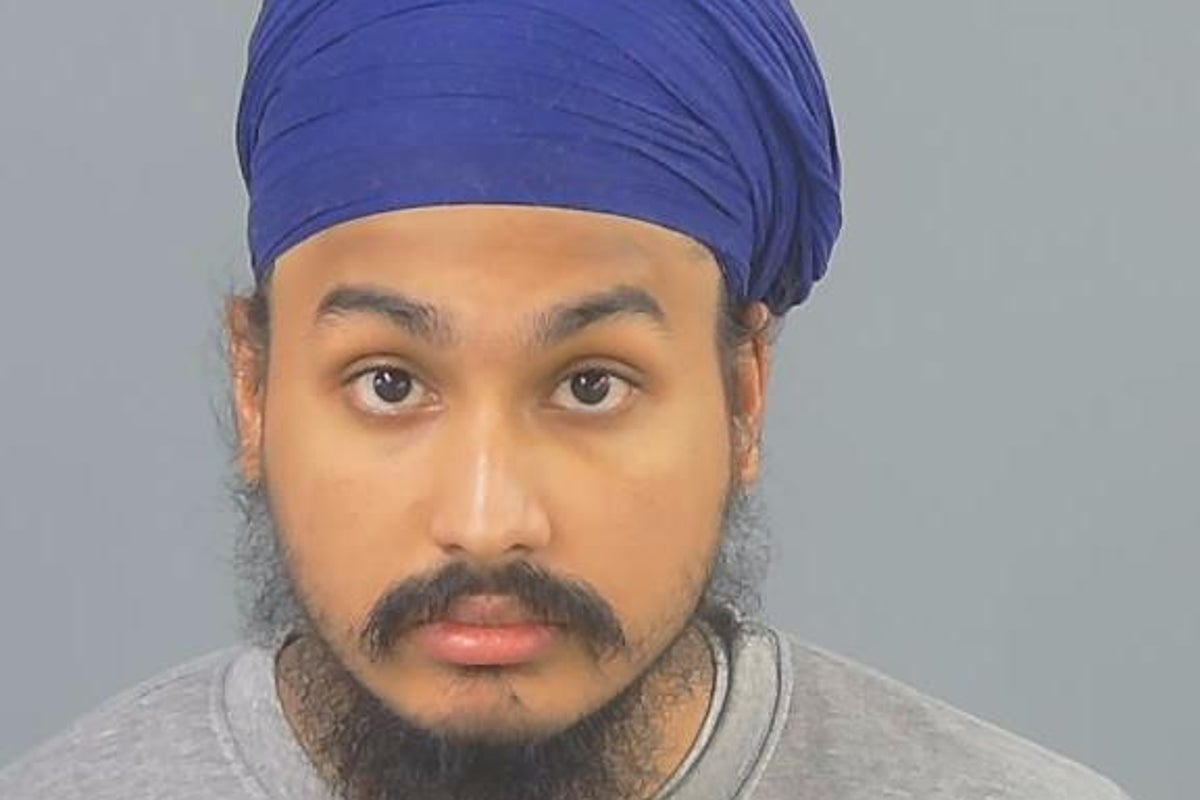
Sikh Community ‘Faced Considerable Abuse and Hatred’ After Fatal Henry Nowak Stabbing
The fatal stabbing of Henry Nowak in Southampton has left more than one life in ruins. While a jury at Southampton Crown Court has now delivered its verdict on the unlawful killing, the Sikh Federation UK has spoken out forcefully about the collateral damage: a wave of abuse, online vitriol and street-level hostility directed at British Sikhs who had no connection to the case.
The Night of the Killing
Henry Nowak, a 42-year-old warehouse supervisor from Eastleigh, was fatally stabbed outside a convenience store on Bitterne Road on 14 March 2024. He died at the scene from a single wound to the chest. Police arrested 28-year-old Amrit Singh, a local delivery driver, within hours. The prosecution case rested on eyewitness testimony, CCTV footage and Singh’s own admissions during interview that he had been involved in a confrontation with Nowak.
Crucially, the Crown made clear from the outset that the case was not being presented as a racially or religiously aggravated offence. In his opening remarks, prosecuting counsel told the jury: “This is not about Sikhism or racism. It is about an unlawful killing.” The judge reinforced that direction in summing up.
Jury Deliberations and Verdict
After five days of evidence and two days of deliberation, the jury convicted Singh of manslaughter. He was acquitted of murder. Sentencing is scheduled for next month, with the judge indicating that a lengthy custodial term is inevitable.
Throughout the trial, defence counsel sought to introduce character evidence portraying Singh as a practising Sikh with no history of violence. Prosecutors objected successfully, arguing that religious observance was irrelevant to the question of intent. The judge’s ruling kept the focus squarely on the sequence of events outside the shop.
Backlash Against the Wider Community
Yet outside the courtroom, a different narrative quickly took hold. Within 48 hours of the arrest, social-media accounts began circulating claims that the killing was part of a “Sikh gang” turf war or linked to supposed “no-go” areas in Southampton. The Sikh Federation UK documented more than 140 incidents of targeted abuse in the following fortnight, ranging from abusive emails to bricks thrown at gurdwaras in Birmingham, Leicester and west London.
“Our members reported being spat at on the street, receiving death threats via WhatsApp, and having their children questioned at school about whether ‘their people’ carried knives,” said Federation spokesperson Harpreet Kaur. “The speed and venom of the reaction was shocking, even by the standards we have come to expect after high-profile incidents.”
Hate-Crime Data in Context
Home Office figures for the year ending March 2024 already showed a 15 per cent rise in religiously aggravated offences, with incidents against Sikhs increasing faster than those against any other faith group outside Islam. The Federation argues that high-profile cases act as accelerants. After the 2020 Southall stabbing of a Polish man—initially misreported as involving Sikhs—recorded hate incidents against Sikhs in west London rose by 62 per cent in a single quarter.
Southampton City Council’s equalities unit has logged 37 complaints since the Nowak killing, most describing online doxxing or workplace harassment. Local police have made four arrests for communications offences, though none yet relate to the most serious threats.
Expert Perspectives on Misinformation
Dr Priya Singh, senior lecturer in criminology at the University of Southampton, notes that visual markers—turbans, beards, the kara bracelet—make Sikhs an easy target for misidentification. “In moments of public anxiety, the most visible minority becomes a proxy for whatever fear is circulating,” she told Global1 News. “The fact that the court explicitly ruled religion out of scope has done little to slow the rumour mill.”
Counter-terrorism and community cohesion officers have been deployed to reassure gurdwaras, yet several temple committees have cancelled evening programmes for the first time in a decade, citing parental concerns.
Legal and Policy Implications
The Federation is now calling for the Crown Prosecution Service to issue clearer guidance on when religious identity should be kept out of proceedings entirely, rather than introduced selectively by defence teams. It also wants social-media platforms to treat coordinated campaigns against a religious minority with the same urgency currently reserved for Islamist or far-right content.
Meanwhile, the Nowak family has asked that their son’s memory not be used to stoke division. In a brief statement read outside court, his sister said: “Henry would not have wanted anyone else to suffer because of this. We just want justice for him.”
Looking Ahead
Sentencing will test whether the court can keep the focus on individual culpability. For Britain’s 520,000 Sikhs, the harder task is repairing the sudden erosion of trust that followed a verdict the jury was explicitly told had nothing to do with their faith.
The episode is a reminder that, in an age of instant outrage, courtroom directions travel more slowly than hashtags. Until both travel at the same speed, communities will continue to pay a price the law never intended to exact.
This is Erica Thornton for Global1 News, reporting from London. 🇬🇧
This article was produced with AI-assisted research and editorial support. Reporting is based on sources cited in the article.
What's Your Reaction?
 Like
0
Like
0
 Dislike
0
Dislike
0
 Love
0
Love
0
 Funny
0
Funny
0
 Wow
0
Wow
0
 Sad
0
Sad
0
 Angry
0
Angry
0

US Politics and Policy Correspondent at Global1.News. Based in Washington DC, covering American politics, policy, elections, and the courts. Knows how the system works and tells you what it actually means.













Comments (0)