
Elvira Nabiullina Missing: Russia Bank Chief Vanishes
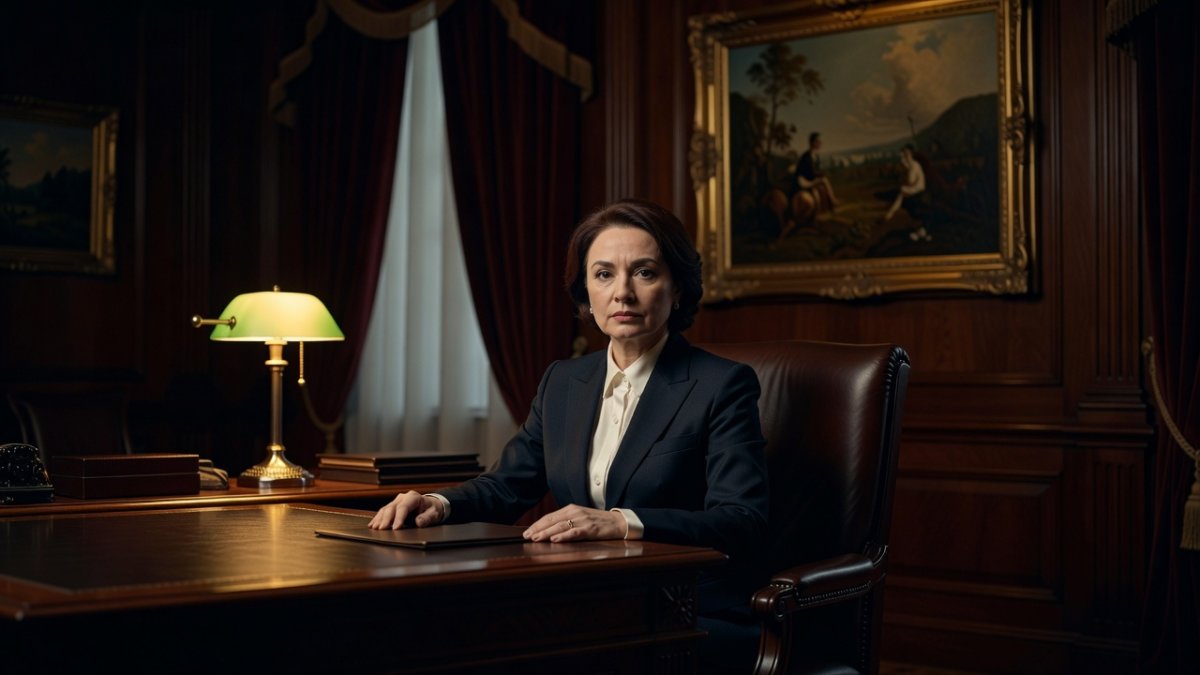
The Sudden Vanishing of Russia's Economic Iron Lady Folks, something is seriously off in Moscow right now. Elvira Nabiullina, the woman who has run Russia's Central Bank since June 2013, has simply dropped off the map. She has not been seen in public for over a week as of June 14-15, 2026, and the silence from the Kremlin is deafening. This is not some minor official we are tal
The Sudden Vanishing of Russia's Economic Iron Lady
Folks, something is seriously off in Moscow right now. Elvira Nabiullina, the woman who has run Russia's Central Bank since June 2013, has simply dropped off the map. She has not been seen in public for over a week as of June 14-15, 2026, and the silence from the Kremlin is deafening. This is not some minor official we are talking about. This is the person credited with keeping the ruble from total collapse after the 2022 Western sanctions hit.
Imagine the chief financial firefighter of an entire nation vanishing without a trace or even a proper explanation. That is exactly what has happened here. Nabiullina missed the St. Petersburg International Economic Forum on June 4, 2026, with officials claiming she was calling in sick. But then she skipped Putin's own interest rate meeting on June 10, 2026, and not a single deputy showed up either. That kind of coordinated absence does not happen by accident.
Sources like Meduza, The Moscow Times, NV out of Kyiv, and Agentstvo have all been tracking this story closely, and none of them are buying the simple illness narrative anymore. When the person who stabilized the Russian economy after massive sanctions disappears right as the country faces crushing 21 percent interest rates, you have to ask what is really going on behind those closed doors. The lack of any public sighting for more than a week tells its own story.
Who Is Nabiullina and Why Her Absence Matters
Elvira Nabiullina has been the Governor of Russia's Central Bank since June 2013, which makes her one of the longest-serving and most powerful economic figures in the country. She earned her reputation by steering the ruble through the storm of Western sanctions back in 2022, preventing what could have been a total financial meltdown. Her steady hand at the tiller gave Putin some breathing room when the economy was under maximum pressure.
Her third term is scheduled to end in June 2027, so she is not some lame duck whose departure would be expected. This is a woman still very much in the middle of her mandate, and her influence reaches every corner of Russian economic policy. When she speaks, markets listen. When she is missing, the entire system starts to wobble in ways that are hard to ignore.
The fact that her absence coincides with a 21 percent key interest rate that is crushing domestic businesses only adds to the weight of the moment. Nabiullina has been the one person Putin could count on to manage the economic fallout from massive war spending that now consumes nearly every other ruble in the federal budget. Without her visible presence, questions about who is really in charge of monetary policy are growing louder by the day.
The Timeline: What Happened and When
Let's lay out exactly what we know and when we know it. On June 4, 2026, Nabiullina was supposed to appear at the St. Petersburg International Economic Forum but instead called in sick. That was the first public signal that something was wrong. Four days later, on June 10, 2026, she failed to show up for Putin's interest rate meeting, and remarkably, none of her deputies attended either.
By June 14-15, 2026, she had not been seen in public for more than a week. That is a long stretch for someone whose job requires constant visibility and decision-making at the highest levels. Independent outlets including Meduza, The Moscow Times, NV, and Agentstvo have all confirmed the timeline with multiple sources inside Russia, and none of them have been able to locate any official appearance or statement from her during this period.
The gap between the June 4 excuse and the June 10 no-show is particularly telling. One missed event can be explained away. Two missed high-profile events with zero deputies stepping in suggests something far more serious is unfolding. The timeline alone forces us to look beyond the official story and examine what might actually be happening inside the Russian power structure.
The House Arrest Rumors — What We Know
Exiled former Russian state TV editor-in-chief Dmitry Skorobutov has put forward a specific claim that Nabiullina is under de-facto house arrest after giving Putin an ultimatum about economic policy. That is a serious allegation coming from someone with deep knowledge of how the Kremlin operates. While we cannot independently verify the house arrest claim, the rumor has gained traction precisely because the official explanations have been so thin.
What we do know is that her prolonged absence lines up with a period of intense pressure over Russia's economic direction. The 21 percent interest rate is strangling businesses, and war spending is eating up almost the entire federal budget. If Nabiullina pushed back on these policies, it would not be surprising that tensions boiled over behind closed doors.
Putin has reportedly signaled possible rate cuts in her absence, which only fuels speculation that her voice is no longer part of the decision-making process. Whether she is under house arrest or simply sidelined, the result is the same: the person who has guided Russian monetary policy for over a decade is no longer at the table. That shift carries enormous consequences for how the economy is managed going forward.
Russia's Economy at a Breaking Point
Russia's key interest rate sitting at 21 percent is not some abstract number. It is actively crushing domestic businesses that need affordable credit to operate and expand. When borrowing costs reach that level, investment dries up, hiring slows, and ordinary people feel the squeeze in their daily lives. Nabiullina built her reputation on managing these kinds of pressures, yet she is nowhere to be seen while the rate remains sky-high.
War spending now consumes nearly every other ruble in the federal budget, leaving very little room for anything else. This is the economic reality Nabiullina has been navigating since the 2022 sanctions wave, and her ability to stabilize the ruble during that earlier crisis is exactly why her current absence feels so significant. Without her steady presence, the balancing act between military outlays and civilian economic needs looks increasingly fragile.
The fact that Putin has reportedly signaled possible rate cuts while she is missing suggests the Kremlin may be preparing to ease policy in ways she might have resisted. That potential shift comes at a time when the economy is already stretched thin by years of sanctions and massive defense spending. The combination of high rates, budget dominance by war costs, and the sudden lack of her leadership creates a dangerous mix that could accelerate existing problems.
What This Means for Global Markets and Energy
When the governor of Russia's Central Bank disappears, global markets take notice because Russia remains a major player in energy and commodities. Nabiullina's track record of stabilizing the ruble after the 2022 sanctions gave investors some confidence that the country could weather further shocks. Her absence removes that layer of predictability at a time when energy prices and supply chains are already sensitive.
The 21 percent interest rate and the dominance of war spending in the budget both point to an economy under severe strain. If leadership uncertainty at the Central Bank leads to erratic policy moves, that instability can ripple outward through oil, gas, and other resource markets. Traders and governments around the world are watching closely to see who steps into the vacuum and what decisions they make.
Putin's reported signals about possible rate cuts in Nabiullina's absence add another layer of uncertainty. Markets dislike surprises, and a sudden change in direction from the world's largest energy exporter can move prices quickly. The longer she remains out of sight, the more nervous international players become about the reliability of Russian economic management.
Implications for US-Russia Relations
The disappearance of a key figure like Nabiullina complicates an already tense relationship between Washington and Moscow. Her role in managing the ruble through sanctions made her a central player in the economic standoff that has defined much of the past several years. Without her visible influence, it becomes harder to predict how Russia will respond to continued Western pressure.
The fact that war spending now dominates the Russian budget means economic decisions are tightly linked to military priorities. If Nabiullina's absence signals a shift toward looser policy or different priorities, that could affect how sanctions are felt inside Russia and how the Kremlin calculates its next moves. US policymakers will be studying every signal that emerges from Moscow in the coming weeks.
Her third term running until June 2027 had suggested continuity in monetary leadership. That continuity is now in question, and any change at the top of the Central Bank could alter the tone of future negotiations or confrontations. The United States and its allies have to factor this new uncertainty into their calculations about how to engage with Russia on both economic and security issues.
What Happens Next — and Why You Should Care
The coming days and weeks will reveal whether Nabiullina returns to her post or whether someone else takes the reins at the Central Bank. Putin has already reportedly signaled possible rate cuts while she is missing, which suggests the economic conversation inside the Kremlin is moving forward without her input. That alone marks a significant change from the pattern of the past decade.
Independent reporting from Meduza, The Moscow Times, NV, and Agentstvo will continue to be essential as more information surfaces. The house arrest rumor from Dmitry Skorobutov remains unconfirmed but fits the pattern of a high-level official being removed from public view during a period of policy disagreement. Whatever the truth turns out to be, the absence of the person who stabilized the ruble after 2022 sanctions is a development that cannot be ignored.
You should care because Russia's economic stability affects energy prices, global inflation, and the broader balance of power between major nations. When the Central Bank governor vanishes and war spending eats nearly the entire budget, the ripple effects reach far beyond Moscow. Stay tuned, because this story is far from over and the stakes could not be higher.
By Jessica Ali, Global 1 News Staff WriterThis article was produced with AI-assisted research and editorial support. Reporting is based on sources cited in the article.
What's Your Reaction?
 Like
0
Like
0
 Dislike
0
Dislike
0
 Love
0
Love
0
 Funny
0
Funny
0
 Wow
0
Wow
0
 Sad
0
Sad
0
 Angry
0
Angry
0

Editor-in-Chief at Global1.News. Atlanta-based journalist who cuts through the BS and tells it like it is. Lead anchor, host, and the voice you hear when the spin stops and the truth starts.











Comments (0)