
Russia to build Kazakhstan’s 1st nuclear plant in $16.5B deal
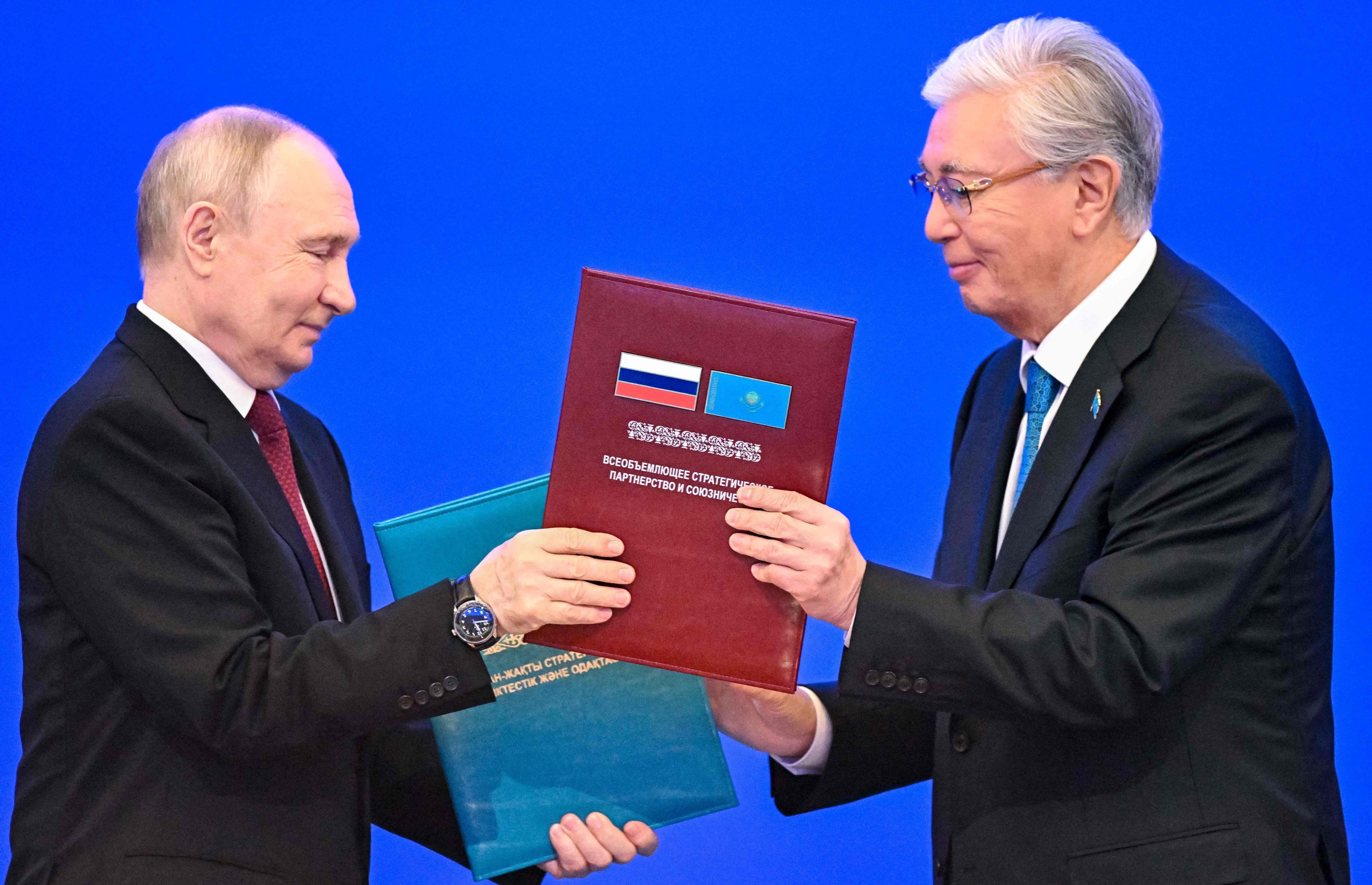
Russia to Build Kazakhstan’s First Nuclear Plant in Landmark $16.5 Billion Deal
Strategic Partnership Reshapes Central Asian Energy Landscape
In a move that underscores Moscow’s enduring influence in post-Soviet Central Asia, Russia has secured a $16.5 billion contract to construct Kazakhstan’s inaugural nuclear power plant. The agreement, signed between Rosatom and Kazakh state nuclear company Kazatomprom, represents the largest single energy investment in the region since independence. The project will feature two VVER-1200 reactors with a combined capacity of 2.4 gigawatts, expected to generate up to 20 percent of Kazakhstan’s electricity by 2035.
Negotiations spanned three years amid intense competition from Chinese and South Korean firms. Ultimately, historical ties, shared technical standards from the Soviet era, and favorable financing terms tipped the scale toward Rosatom. The deal includes a 30-year fuel supply arrangement and comprehensive training programs for Kazakh engineers at Russian nuclear facilities.
Background: Kazakhstan’s Nuclear Ambitions and Uranium Wealth
Kazakhstan possesses the world’s second-largest uranium reserves, producing over 21,000 tons annually. Yet the country has relied almost exclusively on coal and gas for domestic power, with aging Soviet-era plants supplying much of its 110 terawatt-hours of annual consumption. Frequent blackouts in industrial hubs like Almaty and Astana have prompted President Kassym-Jomart Tokayev to accelerate diversification plans.
The new plant will be located near the village of Ulken on Lake Balkhash, chosen for its abundant cooling water and distance from seismic zones. Environmental impact assessments, completed in late 2023, project the facility will reduce Kazakhstan’s carbon emissions by 14 million tons yearly once operational in 2032.
Geopolitical Ramifications for Russia and the West
This agreement arrives as Russia seeks to circumvent Western sanctions imposed since 2022. While the United States and European Union have restricted certain nuclear technologies, Rosatom remains largely unaffected due to global dependence on Russian uranium enrichment services. Kazakhstan’s decision signals a pragmatic balancing act: deepening energy cooperation with Moscow while maintaining economic partnerships with China through the Belt and Road Initiative.
Analysts note that the financing structure—comprising 60 percent Russian state loans and 40 percent Kazakh sovereign funds—locks Astana into long-term technical reliance on Rosatom. “This is not merely about kilowatts,” remarked energy economist Dr. Aizhan Serikova in Nur-Sultan. “It is about embedding Russian standards and personnel into Kazakhstan’s critical infrastructure for decades.”
Economic and Technical Details of the $16.5 Billion Agreement
The contract breaks down into $9.8 billion for reactor construction, $3.2 billion for fuel fabrication facilities, and $3.5 billion allocated to grid upgrades and worker housing. Rosatom will supply low-enriched uranium fuel assemblies, with an option for Kazakhstan to develop its own fabrication plant by 2040.
Projected levelized cost of electricity stands at $0.048 per kilowatt-hour, competitive with new gas plants but higher than existing coal facilities. Kazakh officials project 15,000 direct jobs during construction and 2,500 permanent positions once operational, a significant boost for the Balkhash region where unemployment exceeds 12 percent.
Regional Implications and Middle East Energy Parallels
From Beirut, the reverberations of this deal extend beyond Central Asia. Russia’s successful penetration of Kazakhstan’s nuclear sector mirrors its earlier engagements with Egypt’s El Dabaa plant and ongoing discussions with Turkey. For Middle Eastern energy producers, the precedent raises questions about whether Russian technology could become an alternative to Western vendors amid shifting alliances.
Oil markets may also feel indirect effects. Kazakhstan’s increased nuclear output could free up natural gas currently used for power generation, potentially adding 8-10 billion cubic meters annually to export capacity via the existing pipeline network to China and Russia. Such volumes matter at a time when European buyers seek non-Russian sources.
Expert Perspectives on Safety and Non-Proliferation
International Atomic Energy Agency Director General Rafael Grossi welcomed the transparency of the agreement but stressed the need for robust safeguards. Kazakhstan has ratified the Non-Proliferation Treaty and maintains an Additional Protocol, yet the introduction of fresh nuclear material requires enhanced monitoring protocols.
Dr. Malik al-Rashid, a Beirut-based nuclear policy analyst, observed: “Central Asia’s uranium corridor now gains a power-generation dimension. This changes the strategic calculus for suppliers and regulators alike. The region must avoid the proliferation pitfalls witnessed elsewhere.”
Challenges Ahead: Public Opinion and Environmental Concerns
Domestic opposition remains muted but persistent. Environmental groups in Kazakhstan cite the 1986 Chernobyl legacy and local memories of Soviet nuclear testing at Semipalatinsk. Public consultations in Ulken drew 4,200 participants, with 62 percent expressing conditional support contingent on strict safety guarantees.
Rosatom has committed to building an emergency training center modeled after its facility in Sosnovy Bor, Russia, and will conduct annual joint drills with Kazakh civil defense authorities. Seismic reinforcements will exceed local building codes by 25 percent.
Outlook: A New Chapter in Eurasian Energy Integration
The Ulken plant marks Kazakhstan’s transition from raw uranium exporter to nuclear power producer. For Russia, it demonstrates that sanctions have not fully isolated its nuclear export machine. For the broader region, it highlights how energy security decisions continue to blend economic necessity with geopolitical alignment.
As construction crews prepare to break ground in 2026, the $16.5 billion project will serve as a test case for whether Russian nuclear technology can deliver on schedule and within budget under contemporary sanctions constraints. The outcome will shape not only Kazakhstan’s energy future but also Moscow’s leverage across the Eurasian landmass.
This is Malik Hassan for Global1 News, reporting from Beirut. 🇱🇧
This article was produced with AI-assisted research and editorial support. Reporting is based on sources cited in the article.
What's Your Reaction?
 Like
0
Like
0
 Dislike
0
Dislike
0
 Love
0
Love
0
 Funny
0
Funny
0
 Wow
0
Wow
0
 Sad
0
Sad
0
 Angry
0
Angry
0

Middle East Correspondent at Global1.News. Based in Beirut, covering politics, conflict, energy, and society across the Middle East. Brings context and depth to a region often reduced to headlines.









Comments (0)