
Russia Issues Sweeping Ban on Armenian Imports After Pashinyan Victory
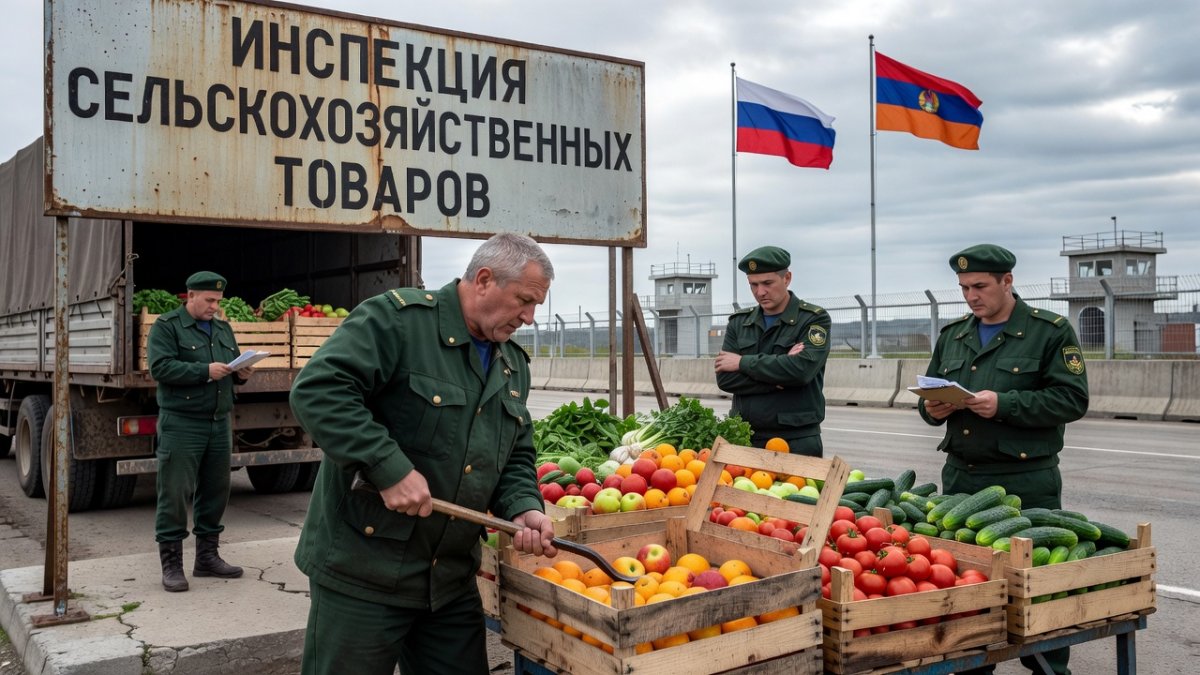
Russia Enforces Broad Import Restrictions on Armenian Goods Rosselkhoznadzor announced that Russia will restrict imports of most food, seeds, flowers, wood and fertilizer from Armenia beginning on Friday. The federal agricultural safety agency cited the systematic detection of pests in products from Armenia since May, including three separate cases of khapra beetle infestations
Russia Enforces Broad Import Restrictions on Armenian Goods
Rosselkhoznadzor announced that Russia will restrict imports of most food, seeds, flowers, wood and fertilizer from Armenia beginning on Friday. The federal agricultural safety agency cited the systematic detection of pests in products from Armenia since May, including three separate cases of khapra beetle infestations in dried food shipments during June alone. The measures expand an existing list of banned Armenian goods that already includes produce, flowers, mineral water and alcoholic products.
The newly targeted categories cover fresh and dried fruits, fresh and chilled vegetables, grains, cereals, grain-derived products, coffee and cocoa beans. Additional restrictions apply to live plants, fresh cut flowers, planting seeds, plants used for pharmaceuticals and perfumery, soil, peat, organic fertilizers, timber, lumber, wooden packaging, and certain insects along with live pathogenic bacteria and viruses intended for research. Rosselkhoznadzor stated the ban will remain in effect until a framework ensures safety and traceability of shipped goods.
Official Justifications and Armenian Oversight Concerns
Rosselkhoznadzor criticized Armenian authorities for inefficient export oversight and accused Yerevan of endangering agricultural and environmental safety across Russia and the Eurasian Economic Union. The agency framed the restrictions as necessary to protect domestic markets and partner states from biological risks. These claims align with standard procedures used by the agency in prior disputes with other trading partners.
While the stated rationale centers on phytosanitary standards, the timing follows closely after political developments in Yerevan. The Foreign Ministry has separately accused Western actors of interference in Armenian internal affairs, though it has not directly linked the import measures to those allegations.
Parliamentary Elections and Shifts in Yerevan's Orientation
Prime Minister Nikol Pashinyan's Civil Contract party secured 49.8 percent of the vote in parliamentary elections held on Sunday. Brussels welcomed the outcome and announced financial aid along with relaxed trade barriers for Armenian goods. Pashinyan has pursued closer institutional ties with the European Union in recent years, a direction that contrasts with Armenia's traditional security alignment with Moscow.
Armenia froze its participation in the Moscow-led Collective Security Treaty Organization in 2024 after Azerbaijan regained control of Nagorno-Karabakh in 2023. Yerevan accused Russian peacekeepers of failing to prevent Baku's offensive. These events have strained the bilateral relationship that once formed a cornerstone of post-Soviet security arrangements in the South Caucasus.
Transit Restrictions and Eurasian Economic Union Dynamics
Russia intends to block transit of the targeted Armenian products through its territory to Belarus, Kazakhstan and Kyrgyzstan, all fellow members of the Eurasian Economic Union. This step affects the free-movement provisions that underpin the union's common market. The EAEU was designed to facilitate trade among former Soviet states, yet unilateral restrictions by the largest member can disrupt supply chains for smaller economies.
Analysts suggest this approach tests the limits of union rules when one participant faces political friction with Moscow. Kazakhstan and Belarus have maintained formal neutrality in the Armenia-Russia dispute so far, but sustained transit barriers could prompt private sector adjustments in those countries. The measures illustrate how regulatory tools can serve broader foreign-policy objectives within the union framework.
Kremlin Decision-Making and Regional Leverage
Decisions of this nature typically involve coordination between Rosselkhoznadzor, the Foreign Ministry and the presidential administration. The use of agricultural safety regulations to address diplomatic tensions reflects established patterns in Russian external policy toward post-Soviet neighbors. Such instruments allow Moscow to apply economic pressure without immediate resort to security mechanisms.
Armenia's reduced engagement with the CSTO has already narrowed Russia's formal levers in the region. Import restrictions therefore represent one of the remaining channels through which the Kremlin can signal displeasure over Yerevan's Western outreach. This could indicate a preference for calibrated economic responses rather than direct confrontation at a time when Russian resources remain committed elsewhere.
Consequences for Armenian Economy and Daily Life
Armenian exporters of fruits, vegetables, timber and related products now face sudden loss of access to the Russian market, their largest traditional outlet. Producers who invested in compliance with EAEU standards may need to redirect shipments or absorb losses. The restrictions also affect transit routes that previously allowed Armenian goods to reach other union members without additional documentation.
Ordinary Armenians employed in agriculture and processing industries stand to experience reduced incomes and possible layoffs if alternative markets cannot be secured quickly. The European Union's announced trade facilitation measures may eventually offset some losses, yet they require time to scale and do not cover all affected categories.
Outlook for Bilateral Relations
The current measures add to a pattern of accumulating restrictions that began before the most recent elections. Both sides continue to share membership in the Eurasian Economic Union, which creates formal obligations even as political trust erodes. Future adjustments to the ban will depend on whether Yerevan and Moscow can establish new verification protocols acceptable to Rosselkhoznadzor.
Regional actors including the European Union and Azerbaijan will monitor how these economic steps influence Armenia's strategic choices. The episode underscores the challenges facing smaller states that attempt to balance traditional alliances with new partnerships in a contested post-Soviet space.
By Irina Volkov, Staff WriterThis article was produced with AI-assisted research and editorial support. Reporting is based on sources cited in the article.
What's Your Reaction?
 Like
0
Like
0
 Dislike
0
Dislike
0
 Love
0
Love
0
 Funny
0
Funny
0
 Wow
0
Wow
0
 Sad
0
Sad
0
 Angry
0
Angry
0

Russia/Eastern Europe Correspondent at Global1.News. Covering Russian politics, energy, security, and the shifting dynamics of the post-Soviet space. Provides clear-eyed analysis on one of the world's most opaque regions.














Comments (0)