
Gordie Howe International Bridge Opening Delayed at United States Request
In a recent CBC News report, the abrupt cancellation of the Gordie Howe International Bridge ribbon-cutting ceremony was detailed as Prime Minister Mark Carney confirmed the United States had requested the delay on Friday, June 12, 2026, to resolve outstanding issues before the six-lane span could open to traffic. Gordie Howe International Bridge Opening Delayed at United State
In a recent CBC News report, the abrupt cancellation of the Gordie Howe International Bridge ribbon-cutting ceremony was detailed as Prime Minister Mark Carney confirmed the United States had requested the delay on Friday, June 12, 2026, to resolve outstanding issues before the six-lane span could open to traffic.
Gordie Howe International Bridge Opening Delayed at United States Request as Trade Talks Intensify Ottawa – June 12, 2026
Bridge Project Background and Construction Timeline
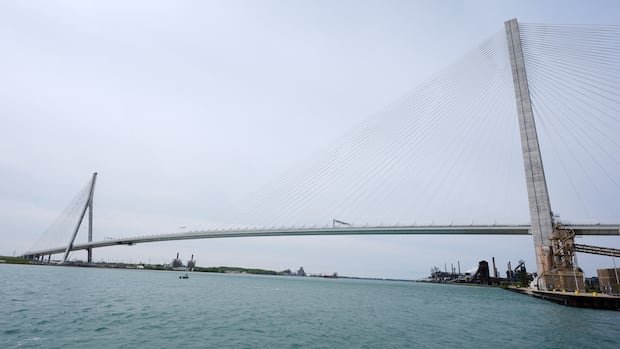
The Gordie Howe International Bridge spans 2.4 kilometres across the Detroit River, linking Windsor, Ontario, directly to Detroit, Michigan, with six vehicle lanes plus dedicated pedestrian and cycling paths.
Construction began in 2018 after a 2012 agreement negotiated by former Michigan Governor Rick Snyder, with Canada funding the entire $4.4 billion CAD project under a shared ownership arrangement with Michigan.
The structure stands physically complete and ready for operations, designed to replace the nearly 100-year-old Ambassador Bridge, which currently handles the busiest commercial border crossing between the two countries.
United States Request and Federal Government Response
Prime Minister Mark Carney stated on Friday that Canada agreed to the delay at the explicit request of the United States, noting the need to address unresolved matters before traffic could begin crossing.
The Windsor-Detroit Bridge Authority, through interim CEO Chuck Andary, issued a matching statement confirming both nations had decided to postpone the opening to allow time for outstanding issues to be settled.
The scheduled ribbon-cutting ceremony for June 12 was cancelled without prior public notice, shifting focus to bilateral discussions led on the American side by Commerce Secretary Howard Lutnick and U.S. Ambassador to Canada Pete Hoekstra.
Trade Tensions and Presidential Demands
President Donald Trump had threatened in February 2026 to block the bridge opening unless Canada agreed to transfer at least half ownership and additional concessions during ongoing trade negotiations.
Internal divisions within the Trump administration surfaced when Commerce Secretary Howard Lutnick opposed immediate opening, reflecting broader efforts to leverage the project in talks over tariffs and market access.
More than 9.2 million vehicles crossed between Windsor and Detroit in 2025 via the Ambassador Bridge and Blue Water Bridge combined, underscoring how any prolonged delay directly affects daily commercial flows critical to Canadian exporters.

Provincial and Municipal Reactions in Ontario
Windsor Mayor Drew Dilkens described the postponement as a "darn shame" and urged the federal government not to concede ground in trade discussions, posting that Canada need not fall on bent knee to secure the bridge opening.
The delay highlights federal-provincial coordination challenges, as Ontario relies on efficient border infrastructure to support manufacturing supply chains that feed into the broader Canadian economy under Bank of Canada interest rate pressures.
Local officials in Windsor emphasised that the project, fully funded by Canadian taxpayers, represents a strategic national asset whose timing should not be dictated solely by American political demands.
Economic Implications for Canadian Trade and Border Efficiency
The new bridge was expected to reduce congestion at the Ambassador Bridge and improve commercial trade efficiency for goods moving between Ontario's industrial heartland and American markets.
Detroit Regional Chamber president Sandy Baruah stated that an opening on July 1, August 1 or September 1 would not cause excessive concern, framing the matter as a long-term investment rather than an immediate crisis.
U.S. Senator Elissa Slotkin of Michigan called the situation a minor hiccup, yet Canadian analysts note that even short delays compound costs for exporters facing housing affordability challenges and elevated cost-of-living pressures at home.
What Happens Next
Discussions between Canadian and American officials will continue under the leadership of Ambassador Pete Hoekstra and Commerce Secretary Howard Lutnick, with Michigan Governor Gretchen Whitmer expressing hope that the opening can return to schedule soon.
The Windsor-Detroit Bridge Authority will monitor progress on outstanding issues while the physically complete structure remains idle, awaiting final bilateral approval before vehicles can use the six lanes.
Prime Minister Mark Carney's government must balance the need for a strong trade deal with the United States against domestic expectations that Canadian-funded infrastructure serves Canadian interests first.
By Alex Thompson, Staff Writer
This article was produced with AI-assisted research and editorial support. Reporting is based on sources cited in the article.
What's Your Reaction?
 Like
0
Like
0
 Dislike
0
Dislike
0
 Love
0
Love
0
 Funny
0
Funny
0
 Wow
0
Wow
0
 Sad
0
Sad
0
 Angry
0
Angry
0

Canada Correspondent at Global1.News. Based in Toronto, covering Canadian politics, energy, trade, and US-Canada relations. Provides the Canadian perspective on North American and global affairs.














Comments (0)