
Putin, Zelensky, Trump Hold Parallel Calls Before G7 Summit
The Parallel Calls On Sunday, as U.S. President Donald Trump marked his 80th birthday, Ukrainian President Volodymyr Zelensky held a direct telephone conversation with the American leader. The exchange centered on immediate steps that could advance negotiations to halt Russia's invasion of Ukraine, now in its fifth year. Zelensky used the call to relay the most recent battlefie
The Parallel Calls
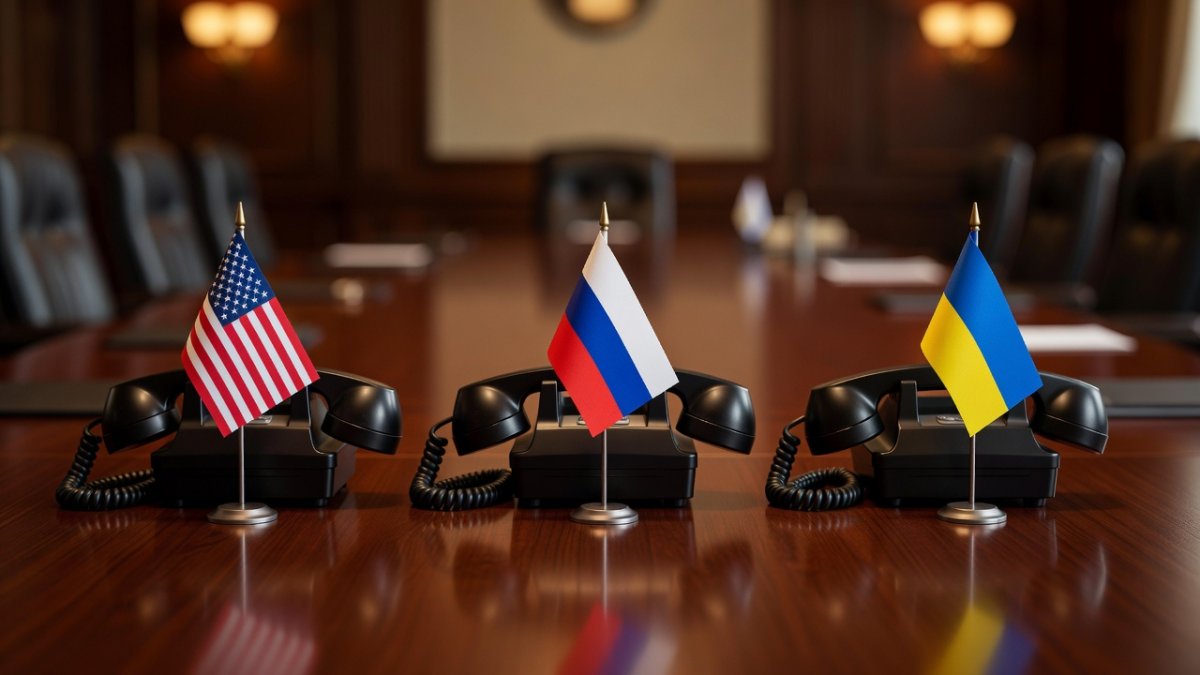
On Sunday, as U.S. President Donald Trump marked his 80th birthday, Ukrainian President Volodymyr Zelensky held a direct telephone conversation with the American leader. The exchange centered on immediate steps that could advance negotiations to halt Russia's invasion of Ukraine, now in its fifth year. Zelensky used the call to relay the most recent battlefield assessments, emphasizing that Ukraine's defensive posture had grown more resilient in recent weeks despite sustained Russian pressure.
Separately, Russian President Vladimir Putin conducted his own phone discussion with Trump. Kremlin aide Yury Ushakov later described the exchange as friendly yet frank, with the primary focus placed on the memorandum of understanding under negotiation between Washington and Tehran. These parallel conversations illustrate the layered diplomatic channels operating simultaneously, each shaped by distinct regional priorities and power centers within the Kremlin.
Trump has consistently urged both Moscow and Kyiv to reach a settlement, having initially claimed he could resolve the conflict within a single day of assuming office. The Sunday calls occurred against a backdrop of stalled U.S.-led mediation efforts that once sought to bridge the two sides but have since been overtaken by developments elsewhere.
Kremlin's Account
According to Kremlin aide Yury Ushakov, the Putin-Trump conversation addressed the drafting of a memorandum of understanding between the United States and Iran. Ushakov stated that Trump expressed optimism that an agreement was close and that results from the difficult negotiations could be announced soon. The Kremlin account framed the tone as constructive, reflecting established patterns of direct leader-to-leader communication that bypass lower-level foreign ministry channels.
Ushakov further reported that Putin conveyed to Trump that Ukrainian strikes on Russian civilian infrastructure would not alter the fundamental battlefield realities facing Kyiv. This message aligns with longstanding Kremlin assessments delivered through senior aides who maintain direct access to the presidential administration. Such attributions underscore the centralized decision-making structure in Moscow, where Ushakov serves as a key conduit for conveying presidential positions to foreign counterparts.
The Kremlin's emphasis on the Iran track during the call highlights how Russian foreign policy continues to monitor U.S. engagements across multiple theaters, even as the Ukraine conflict remains a core concern for the security council and defense ministry.
Zelensky's Position
Following his Sunday conversation with Trump, President Zelensky announced on social media that the two leaders had identified several ideas capable of advancing peace while protecting civilian lives. He confirmed that these proposals would be examined in greater detail during their scheduled meeting at the G7 summit in France on Tuesday. Zelensky also briefed Trump on recent battlefield developments, asserting that Ukraine's overall position had strengthened.
From Kyiv's perspective, the upcoming G7 working session represents an opportunity to secure continued Western support amid ongoing Russian advances that have shown signs of losing momentum. Ukrainian officials have consistently argued that any sustainable settlement must account for territorial integrity and security guarantees, positions reinforced through regular consultations with NATO and EU partners.
Zelensky's public framing of the call as productive reflects the Ukrainian leadership's strategy of maintaining open lines with Washington while navigating the constraints imposed by battlefield realities and the need for sustained international backing.
The Iran Factor
U.S.-led efforts to conclude the conflict in Ukraine have been largely sidelined by the parallel war involving Iran, according to multiple diplomatic assessments. The shift in focus has reduced the intensity of shuttle diplomacy that previously sought to bring Russian and Ukrainian negotiators together under American auspices. This reordering of priorities has allowed Russian forces to maintain pressure on the front lines without immediate high-level intervention from Washington.
European Union and NATO capitals have expressed concern that prolonged distraction in the Middle East could weaken collective leverage over Moscow. Officials in Brussels and at NATO headquarters have continued to stress the importance of coordinated sanctions and military assistance to Ukraine, even as attention in Washington has turned toward the Iranian negotiations.
The sidelining effect demonstrates how interconnected global crises can reshape the diplomatic calendar, forcing smaller powers such as Ukraine to compete for attention within an already crowded U.S. foreign policy agenda dominated by Kremlin calculations and regional power balances.
Kushner and Witkoff's Dual Role
U.S. presidential special representatives Steve Witkoff and Jared Kushner, who have been deeply engaged in Iranian affairs, are expected to return to Russia in the near term, according to Ushakov's account of the Putin-Trump call. Their earlier involvement in shuttle diplomacy between Moscow and Kyiv has been interrupted since the U.S.-Israeli strikes on Iran in February. The dual mandate assigned to these envoys illustrates the Trump administration's preference for a small circle of trusted advisers managing multiple high-stakes files simultaneously.
From the Kremlin standpoint, the anticipated return of Witkoff and Kushner signals a potential resumption of direct contacts, though the pace remains tied to progress on the Iran memorandum. Russian officials have historically viewed such personal envoys as extensions of presidential authority rather than standard diplomatic channels, a perspective rooted in the centralized foreign policy apparatus surrounding Putin.
Ukraine and its European partners have watched these movements closely, recognizing that any renewed Russian-American dialogue could influence the terms under discussion at the forthcoming G7 session. The arrangement underscores the personalistic elements of current U.S. diplomacy and their intersection with established Kremlin power structures.
Battlefield Context
Russian advances on the Ukrainian front have shown signs of losing steam in recent weeks, even as Moscow continues near-daily strikes on Ukrainian cities using drones and missiles. In response, Ukraine has intensified its own aerial operations targeting Russian oil infrastructure, a development Putin referenced during his Sunday conversation with Trump. Ushakov conveyed the Kremlin's position that such Ukrainian actions would not alter the critical situation facing Kyiv on the ground.
European and NATO assessments have noted the cumulative strain on Russian logistics and manpower after years of high-intensity operations. At the same time, Ukrainian forces have sought to exploit vulnerabilities in Russia's rear areas, particularly within the energy sector that supports the broader war economy. These reciprocal strikes have become a defining feature of the conflict's current phase.
The battlefield dynamics described by both sides reflect the grinding attrition that has characterized Europe's largest conflict since World War II, with thousands of civilians and hundreds of thousands of troops reported killed since the full-scale invasion began in February 2022.

Analysis
The parallel telephone calls on Sunday reveal a diplomatic landscape in which the Ukraine peace process operates alongside, and sometimes subordinate to, U.S.-Iranian negotiations. This dual-track structure carries implications for how quickly any settlement might emerge, particularly given the Kremlin's insistence that battlefield realities remain unchanged by Ukrainian long-range strikes. Interpretation of these developments suggests that Moscow continues to prioritize leverage on the ground while monitoring Washington's bandwidth across theaters.
Trump's willingness to engage both Putin and Zelensky directly, combined with the anticipated return of Witkoff and Kushner to Russia, points to a personalized approach that could either accelerate or further complicate talks. Ukrainian and European perspectives emphasize the need for security guarantees that address the power imbalance created by Russia's invasion, while Kremlin statements continue to frame Ukrainian actions as incapable of shifting the strategic balance.
Ultimately, the interaction between the Iran memorandum and the stalled Ukraine process will test whether personal diplomacy at the presidential level can overcome entrenched positions. The coming G7 session in France offers one immediate venue for clarifying these overlapping tracks, though outcomes will depend on how the various power centers in Moscow, Kyiv, and Washington align their priorities in the weeks ahead.
By Irina Volkov, Staff WriterThis article was produced with AI-assisted research and editorial support. Reporting is based on sources cited in the article.
What's Your Reaction?
 Like
0
Like
0
 Dislike
0
Dislike
0
 Love
0
Love
0
 Funny
0
Funny
0
 Wow
0
Wow
0
 Sad
0
Sad
0
 Angry
0
Angry
0
Russia/Eastern Europe Correspondent at Global1.News. Covering Russian politics, energy, security, and the shifting dynamics of the post-Soviet space. Provides clear-eyed analysis on one of the world's most opaque regions.












Comments (0)