
Prime Minister Research Chair Scheme 2026: India's Push to Attract Global Research Talent
India's Ministry of Education launched the Prime Minister Research Chair Scheme on June 1, 2026, targeting 120 research fellows and chairs over five years to address a critical gap where national R&D spending stands at just 0.64% of GDP against a global average of 1.8%. India's Persistent R&D Investment Challenge India ranks sixth globally in nominal GDP at $4.15 trillion yet a
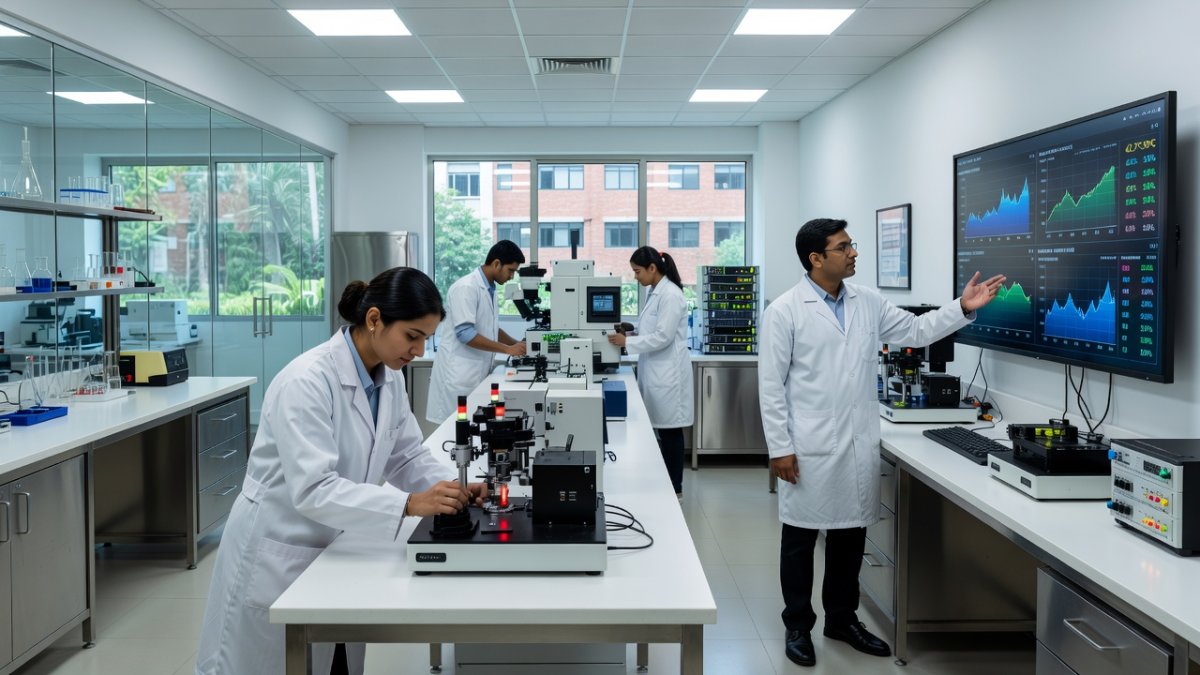
India's Ministry of Education launched the Prime Minister Research Chair Scheme on June 1, 2026, targeting 120 research fellows and chairs over five years to address a critical gap where national R&D spending stands at just 0.64% of GDP against a global average of 1.8%.
India's Persistent R&D Investment Challenge
India ranks sixth globally in nominal GDP at $4.15 trillion yet allocates only 0.64% of GDP to research and development. This figure trails China's 2.4% and the United States' 3.5% by wide margins. The disparity directly constrains innovation output in priority sectors and limits the country's ability to compete in high-technology domains.
Low R&D intensity affects university rankings, patent filings, and industry-academia linkages across the higher education framework. Successive governments have acknowledged this shortfall in policy documents, yet actual expenditure has remained stagnant relative to peer economies. The new scheme arrives as a targeted intervention within the education ministry's broader push to elevate research quality in government-funded institutions.
Unveiling the Prime Minister Research Chair Scheme 2026
The Department of Higher Education opened applications for the Prime Minister Research Chair Scheme on June 1, 2026. The initiative will support 120 positions across three distinct categories over a five-year period. Young Research Fellows require less than five years post-PhD experience, Senior Fellows need five to ten years, and Research Chairs demand more than ten years of expertise.
Maximum funding reaches Rs 14 crore for Research Chairs, approximately Rs 6.5 crore for Senior Fellows, and around Rs 4 crore for Young Research Fellows. Annual fellowship fees range from Rs 0.15 crore to Rs 0.60 crore depending on category and seniority. These resources cover salaries, equipment, travel, and consumables under the oversight of an Empowered Committee chaired by the Principal Scientific Advisor to the Government of India.
Funding Structures and Thematic Priorities
Thirteen thematic areas receive explicit priority under the scheme. These include artificial intelligence, quantum computing and supercomputing, semiconductors, cybersecurity, healthcare and medical technology, biotechnology, energy and climate change, advanced materials, space and defence, next-generation communication technologies, manufacturing, agriculture and food technologies, blue economy, and atomic energy.
Resource allocation aligns with national missions in semiconductors and quantum technologies while extending support to healthcare and climate-related research. Indian researchers returning from abroad can now access sustained funding streams comparable to international standards, reducing the incentive to remain overseas.
Role of the Seven Lead Institutions
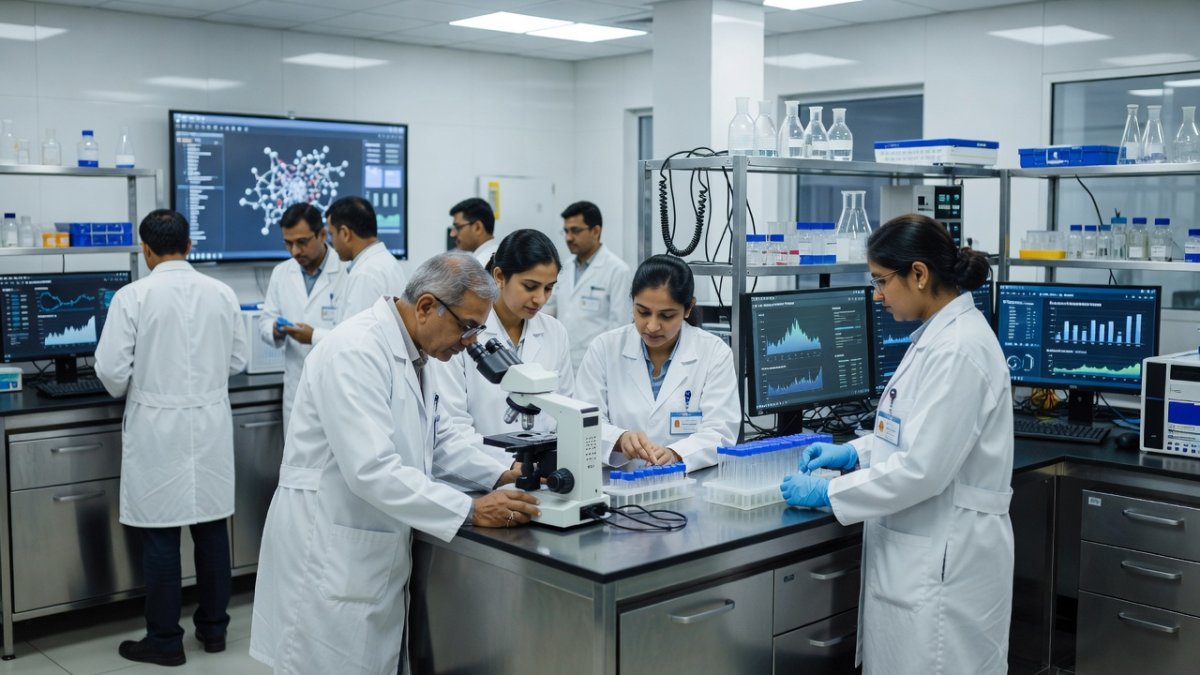
Seven premier institutions anchor implementation: IIT Delhi, IIT Bombay, IIT Madras, IIT Kanpur, IIT Hyderabad, IIT (ISM) Dhanbad, and the Indian Institute of Science Bengaluru. These lead institutions coordinate thematic clusters, mentor selected fellows, and facilitate access to national laboratories under DST, DBT, ICMR, and CSIR.
Host institutions must hold top NIRF rankings among government-funded higher education institutions. This criterion ensures that funds flow to environments already equipped with basic infrastructure, thereby accelerating research output rather than building capacity from scratch.
Eligibility Criteria and Application Process
Eligibility extends to Indian nationals working abroad, OCI cardholders, and PIOs. Applicants must propose projects within the thirteen thematic areas and secure endorsement from one of the approved host institutions. The Empowered Committee evaluates proposals on scientific merit, alignment with national priorities, and potential for technology translation.
Applications opened on June 1, 2026, with rolling deadlines across multiple cycles. Successful candidates receive multi-year grants that include both fellowship remuneration and substantial project funding, creating a clear pathway for mid-career and senior researchers to relocate back to India.
Implications for Brain Drain Reversal and Research Ecosystem
The scheme directly targets brain drain by offering compensation and research autonomy that rival positions in North America and Europe. With funding levels reaching Rs 14 crore for senior chairs, returning scientists can establish competitive laboratories without the resource constraints historically faced in Indian academia.
Integration with the existing higher education and national laboratory network strengthens institutional capacity in AI, semiconductors, and healthcare technology. Students and early-career researchers at IITs and IISc gain exposure to international-standard projects, improving doctoral training quality and employability in high-tech sectors.
Long-term outcomes include higher publication impact, increased patent filings, and stronger industry linkages in strategic domains. The 0.64% GDP spending baseline suggests that scaling such schemes remains essential if India is to close the innovation gap with China and the United States.
The Bottom Line
The Prime Minister Research Chair Scheme 2026 represents a concrete policy response to India's documented R&D underinvestment. By committing up to Rs 14 crore per chair across 120 positions and prioritising thirteen critical technologies, the Ministry of Education has created structured incentives for diaspora researchers to return. Success will depend on timely disbursement, rigorous peer review, and sustained budgetary support beyond the initial five-year window. For Indian science and technology institutions, the scheme offers a measurable opportunity to elevate global competitiveness while retaining talent within the national ecosystem.
— By Dr. Raj Patel, Staff WriterThis article was produced with AI-assisted research and editorial support. Reporting is based on sources cited in the article.
What's Your Reaction?
 Like
0
Like
0
 Dislike
0
Dislike
0
 Love
0
Love
0
 Funny
0
Funny
0
 Wow
0
Wow
0
 Sad
0
Sad
0
 Angry
0
Angry
0

India/South Asia Correspondent at Global1.News. Analytical voice with a background in science and health journalism. Based in New Delhi, covering Indian politics, education, healthcare, technology, and policy. Breaks down complex data into clear, actionable reporting.















Comments (0)