
National Museum Lagos Revamp Amplifies Calls for Return of Looted African Treasures
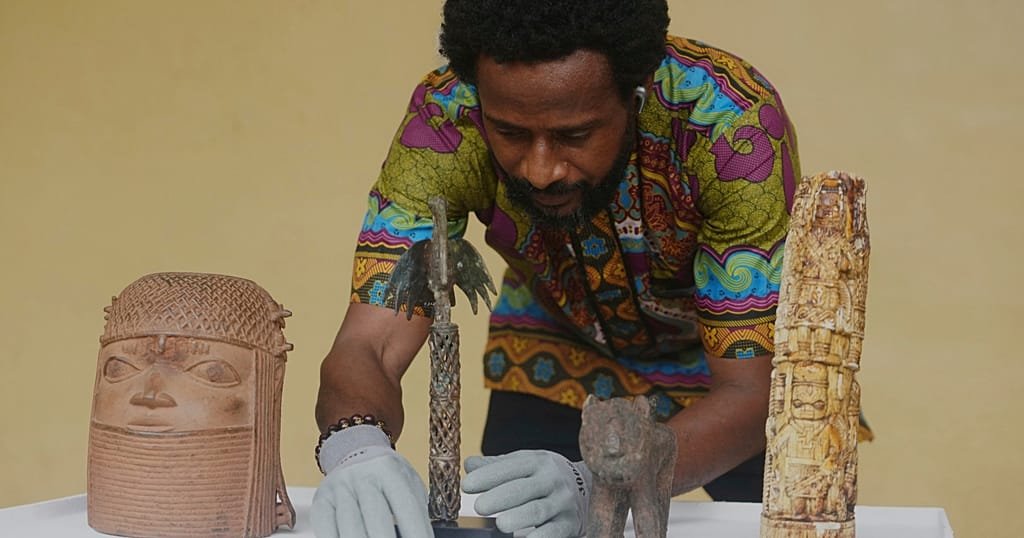
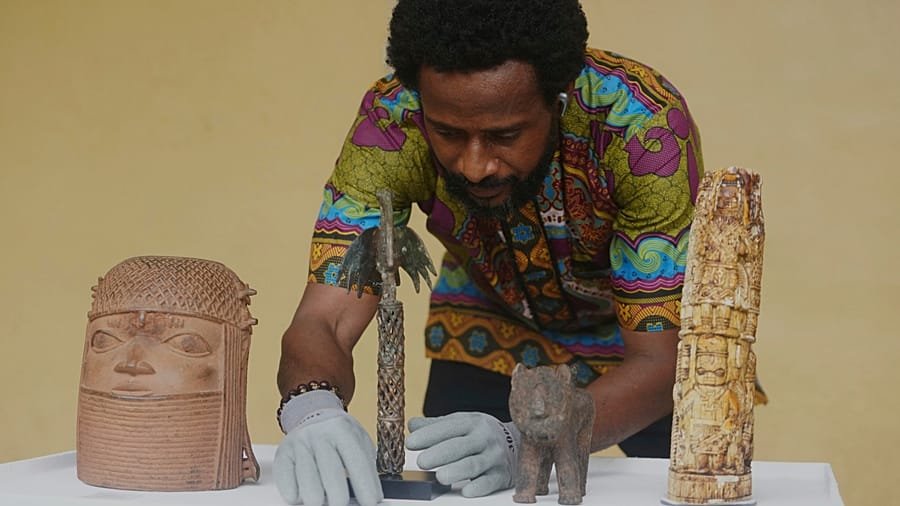
Nigeria's National Museum in Lagos has unveiled a striking renovation of one of its historic galleries, where visitors can now touch 16th-century engraved elephant tusks as Afrobeats plays softly through overhead speakers — a sensory experience that signals a new chapter in Africa's fight to reclaim its cultural heritage. National Museum Lagos Revamp Amplifies Calls for Return
Nigeria's National Museum in Lagos has unveiled a striking renovation of one of its historic galleries, where visitors can now touch 16th-century engraved elephant tusks as Afrobeats plays softly through overhead speakers — a sensory experience that signals a new chapter in Africa's fight to reclaim its cultural heritage.
National Museum Lagos Revamp Amplifies Calls for Return of Looted African Treasures
Dakar, Senegal – This Week — Gazing at two large engraved 16th-century elephant tusks on display at Nigeria's National Museum in Lagos, a guide recently surprised visitors with an unexpected invitation: "You can touch them gently." That moment captures the spirit of a bold renovation project that opened in April 2026 at one of West Africa's most important cultural institutions.
The renovated gallery — part of the National Museum Lagos, established in 1957 — represents a carefully orchestrated effort to modernise how Nigerians and international visitors engage with the country's vast archaeological and ethnographic heritage. Funded by IHS Nigeria in partnership with the National Commission for Museums and Monuments (NCMM), the project was officially commissioned by Hannatu Musawa, Nigeria's Minister for Arts, Culture, Tourism and the Creative Economy.
Echoes of the Past — A Journey Through Nigerian Civilisations
The permanent exhibition, titled "Echoes of the Past: A Timeline of Antiquities in Nigeria," traces the country's civilisational arc from the Nok culture — which flourished around 500 BC in present-day Kaduna State — through the extraordinary brass and ivory works of the Kingdom of Benin, ending with the 1897 British punitive expedition that looted thousands of artefacts from Benin City. Curator Nkechi Adedeji and head of exhibition Olusegun Adeleye, 51, spent months assembling the display, which features some of the most significant archaeological objects found on the continent.
Interior designer Tinuke Odunfa created the gallery's layout, which breaks decisively from the traditional hands-off museum model. Several items, particularly those made of wood and metal, are positioned so that visitors can touch and "feel them", Adeleye explained. Low ambient lighting casts a soft glow across the gallery, giving the space a quiet, reflective atmosphere — a deliberate departure from the fluorescent brightness of older museum halls across the continent.
"Everything was intentional in terms of how the space should be experienced," Odunfa told AFP. "The colours, how the space leads you."
Afrobeats, Instagram, and a New Generation of Museum-Goers
The gallery's white walls are lined with artefacts encased in glass, arranged chronologically, each accompanied by brief notes. But what sets this space apart is the atmosphere: Afrobeats — the Nigerian genre that has conquered global charts through artists like Burna Boy, Wizkid, and Davido — plays softly on overhead speakers, creating a bridge between ancient craftsmanship and contemporary culture.
Since the renovated gallery opened in April, it has been drawing significantly more visitors than before, Adedeji said. Its Instagram-ready spaces are attracting schoolchildren, young adults, and "content creators" who photograph and film their visits, spreading images of the collection across social media platforms.
"They come here, do content, and before you know it, it is all over the place," Adedeji said. "Youths are coming in droves now."
Oyin Isioye, a 25-year-old photographer visiting the museum for the first time, summed up the impact. "I love the way the artefacts are displayed," she said. "I learned a lot of things — where the artefacts are from, what they represent."
Empty Cases and a Message to the British Museum
In one corner of the gallery, three empty display cases carry a handwritten message in Nigerian Pidgin: "British museum, how far??" — a pointed question meaning "what's up?" directed at the London institution that holds the world's largest collection of Benin Bronzes.
The installation sends an unambiguous message: Nigeria is ready to receive its looted heritage. Western museums, including those in Britain, the Netherlands, and Germany, have in recent years returned several hundred artefacts, but countless more remain in galleries across Europe and America.
"This renovation shows that we can protect and preserve our objects ourselves," said Adedeji. "We do not need any other country to do it for us."
The Netherlands has returned 119 artefacts to the Oba's Palace in Benin City. Germany transferred ownership of more than 1,000 Benin Bronzes to Nigerian institutions. Switzerland's Rietberg Museum in Zurich has agreed to return 11 sacred objects in 2026, while the University of Zurich will send 14 Benin Bronzes to the National Museum Lagos this summer. The British Museum, however, faces legal barriers under the 1963 British Museum Act, which restricts permanent deaccession of its collection, though it has engaged in loan discussions.
Senegal's Own Cultural Heritage Movement
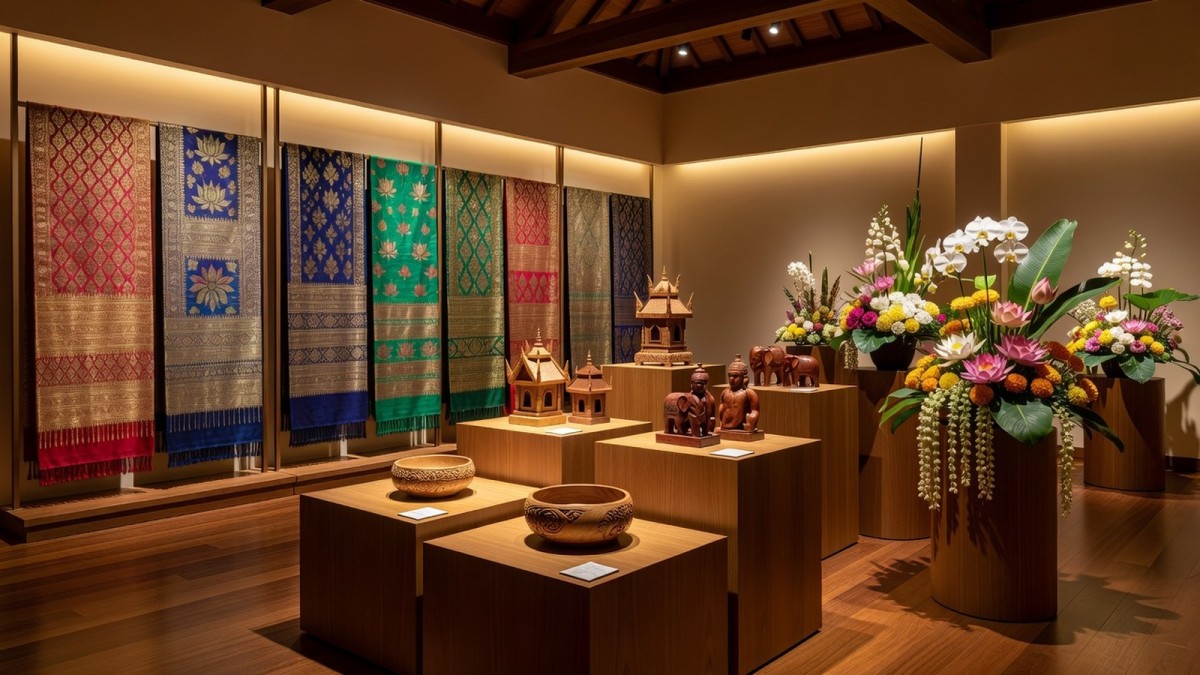
This moment of cultural reclamation resonates far beyond Nigeria's borders. Senegal has pursued its own museum modernisation efforts, with renovations at the Musée Théodore Monod in Dakar and exhibitions such as the recent Thieydim showcases that celebrate traditional craftsmanship alongside contemporary artistic interpretations.
Senegal's rich musical heritage — from Youssou N'Dour's mbalax rhythms to Baaba Maal's Fulani-infused compositions and Orchestra Baobab's timeless Afro-Cuban fusion — has long demonstrated how the continent's cultural expressions travel and transform. The decision to play Afrobeats inside the Lagos gallery echoes this tradition of pairing heritage with living culture, ensuring that history is not a static exhibit but a breathing conversation.
The Dakar Biennale, Africa's premier contemporary art exhibition, and the Saint-Louis Jazz Festival, which draws musicians from across the diaspora, have similarly positioned Senegalese cultural institutions as spaces where heritage and innovation meet. The lesson from Lagos is that museums across the continent can follow this path — making African history accessible, interactive, and relevant to younger generations raised on digital content.
Challenges and the Road Ahead for African Repatriation
Plans for a major new facility — the Museum of West African Art (MOWAA) in Benin City, designed by Ghanaian-British architect David Adjaye — have faced significant setbacks, including land title disputes and governance disagreements between the Oba of Benin, the Edo State government, and federal authorities. The controversy underscores the complexity of building new cultural infrastructure, even as the continent enters what many are calling a repatriation renaissance.
Nigerian authorities are actively seeking partners to support further museum upgrades in anticipation of more returned artefacts. Another gallery at the Lagos museum has already been shut for renovation, alongside sites nationwide. The political will is clear: African institutions are no longer willing to accept the argument that they lack the capacity to care for their own heritage.
The renovations at the National Museum Lagos, modest in scale but powerful in symbolism, demonstrate that the continent is building the infrastructure to receive, preserve, and display its recovered cultural treasures. From Dakar to Nairobi, from Accra to Johannesburg, cultural institutions are investing in the spaces and expertise that will define Africa's cultural narrative for the next century.
What It Means for Africa's Cultural Renaissance
The Lagos gallery is more than a renovated space — it is a statement about who tells African stories and how. The fusion of touchable artefacts, Afrobeats soundscapes, social media engagement, and pointed political messaging speaks to a generation of Africans who refuse to treat their heritage as a distant, irrelevant past.
For Africa's creative economy, the implications are significant. Museums that attract young visitors, content creators, and international tourists generate economic activity while strengthening cultural identity. Tourism circuits connecting Lagos, Dakar, Accra, and Nairobi — each with its own repatriation stories — could transform how the world experiences African art and history.
As more returned artefacts arrive on the continent — from Germany, Switzerland, the Netherlands, and American institutions — the question is no longer whether restitution will happen, but how prepared African institutions are to receive what is coming home. The National Museum Lagos, with its renovated gallery, Afrobeats, and empty cases asking "how far??", offers a compelling answer: we are ready.
By Amara Diop, Staff Writer
This article was produced with AI-assisted research and editorial support. Reporting is based on sources cited in the article.
What's Your Reaction?
 Like
0
Like
0
 Dislike
0
Dislike
0
 Love
0
Love
0
 Funny
0
Funny
0
 Wow
0
Wow
0
 Sad
0
Sad
0
 Angry
0
Angry
0

West Africa/Sahel Correspondent at Global1.News. Dakar-based journalist covering politics, security, climate, and development across Francophone and Anglophone West Africa. Tells the stories of a region undergoing profound transformation.














Comments (0)