
Lab-Grown Diamonds Impact on Sierra Leone's Mining Communities
The Mud Pits of Kono Still Draw Men Each Dawn In the diamond-rich district of Kono, Sierra Leone, small groups of men continue to wade into waterlogged pits at first light. They sift through gravel and mud with the same tools their fathers used, hoping a stone will appear before the rains return. Even as prices for natural diamonds have dropped sharply, the daily search goes on
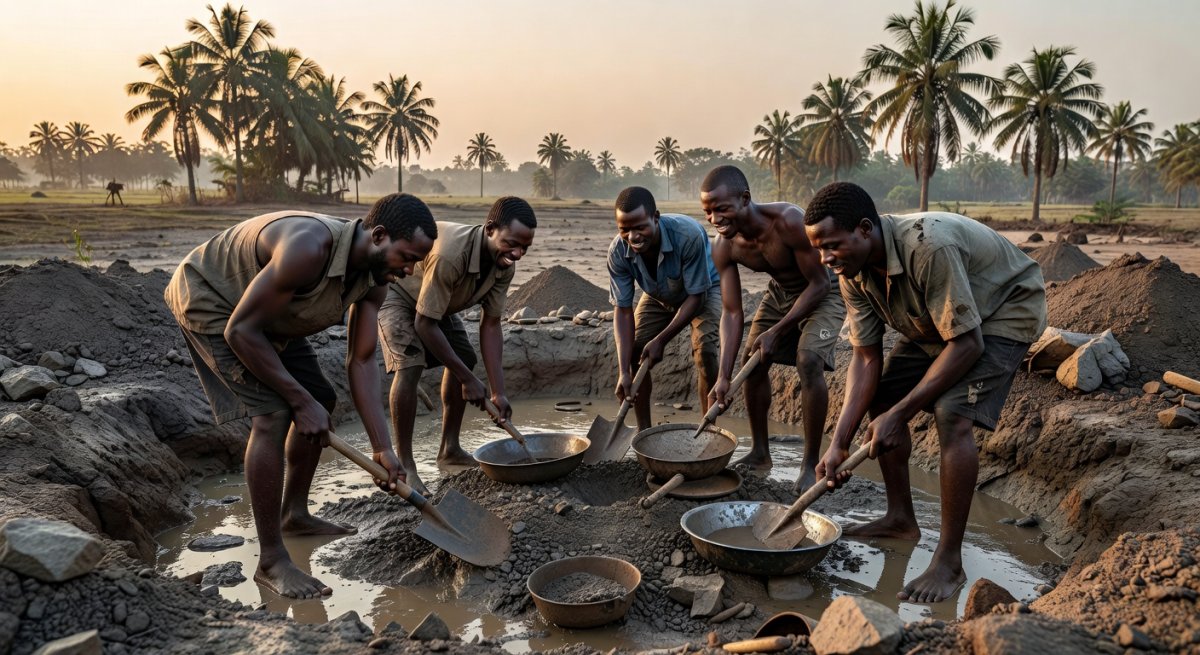
The Mud Pits of Kono Still Draw Men Each Dawn
In the diamond-rich district of Kono, Sierra Leone, small groups of men continue to wade into waterlogged pits at first light. They sift through gravel and mud with the same tools their fathers used, hoping a stone will appear before the rains return. Even as prices for natural diamonds have dropped sharply, the daily search goes on because few other steady jobs exist in the area. The closure of Koidu Holdings, Sierra Leone’s largest industrial diamond mine, removed roughly one thousand formal positions and left many families relying once more on these informal sites.
Diamonds Entered Daily Life in the 1930s and Never Left
Diamond mining has formed the backbone of Kono’s economy since commercial operations began in the 1930s. The stones paid for roads, schools, and markets that connected remote villages to larger towns. Over generations, entire communities learned to measure seasons not only by planting cycles but also by the arrival of diamond buyers. That long relationship explains why the recent price decline feels so personal: it touches memories of relative stability as well as the hardships that followed.
Conflict Once Fed on the Same Stones
The eleven-year civil war that ended in 2002 drew much of its fuel from diamond revenues. More than fifty thousand people lost their lives during the fighting. Augustine Shekho, now governor of Kono, still carries the memory of his mother being killed in those years. After the war, the Kimberley Process was introduced in 2003 to keep conflict diamonds out of legitimate markets. Many families in Kono welcomed the new rules, hoping they would allow the stones to support peace instead of violence.
Lab-Grown Diamonds Made in Asia Reach African Markets
Lab-grown diamonds, produced mainly in India and China through HPHT and CVD methods, now sell for up to seventy percent less than natural stones. Retail prices for polished natural diamonds have fallen about forty percent in the past four years. Rohit Mehta, chief executive of Forlink Ventures in Surat, India, notes that the lab-grown stones are cheaper, carry fewer ethical concerns for some buyers, and require less environmental disruption during production. These advantages have shifted demand away from mined gems and placed new pressure on places like Kono.
Daniel, Shekho, and Abubakar Amara Speak of Daily Realities
Daniel, a foreman at an informal small-scale mine in Kono, describes the uncertainty plainly: “Sometimes for the whole of the year you can’t get anything. It is by the grace of God that you find a diamond. We are just dreaming, really. We still have that hope.” Governor Augustine Shekho observes that lower diamond values have reduced earnings for miners, constrained investment, and weakened local economic activity. Primary-school teacher Abubakar Amara puts it more bluntly: “To me the diamonds have failed us. What have those diamonds done for our community, for Kono, for Sierra Leone?” Their words reflect both long-standing attachment to the resource and growing frustration with its uneven benefits.
De Beers and the Kimberley Process Try New Approaches
In response to these pressures, De Beers launched the Gemfair project, which supplies equipment, training, and transparent pricing to artisanal miners. The effort aims to improve traceability and give small operators a clearer path to formal markets. Combined with the Kimberley Process rules already in place, such initiatives seek to keep natural diamonds competitive by emphasizing their origin stories and community ties. Whether these steps can offset the price advantage of lab-grown stones remains an open question for Kono’s miners.
West Africa’s Longer Conversation About Natural Wealth
From my vantage in Senegal, the story unfolding in Kono echoes conversations heard across West Africa about gold, phosphates, and other resources. Communities in many countries still weigh the promise of mineral wealth against the reality of volatile global prices and external competition. The experience of Sierra Leone reminds us that local livelihoods depend not only on what lies beneath the soil but also on how distant technologies and markets evolve. As lab-grown diamonds gain ground, the men and women of Kono continue their work, carrying both the weight of history and the quiet persistence that has long defined life in these hills.
By Amara Diop, Staff WriterThis article was produced with AI-assisted research and editorial support. Reporting is based on sources cited in the article.
What's Your Reaction?
 Like
0
Like
0
 Dislike
0
Dislike
0
 Love
0
Love
0
 Funny
0
Funny
0
 Wow
0
Wow
0
 Sad
0
Sad
0
 Angry
0
Angry
0

West Africa/Sahel Correspondent at Global1.News. Dakar-based journalist covering politics, security, climate, and development across Francophone and Anglophone West Africa. Tells the stories of a region undergoing profound transformation.















Comments (0)