
MND Local: Scorpion stings surge across Puerto Vallarta
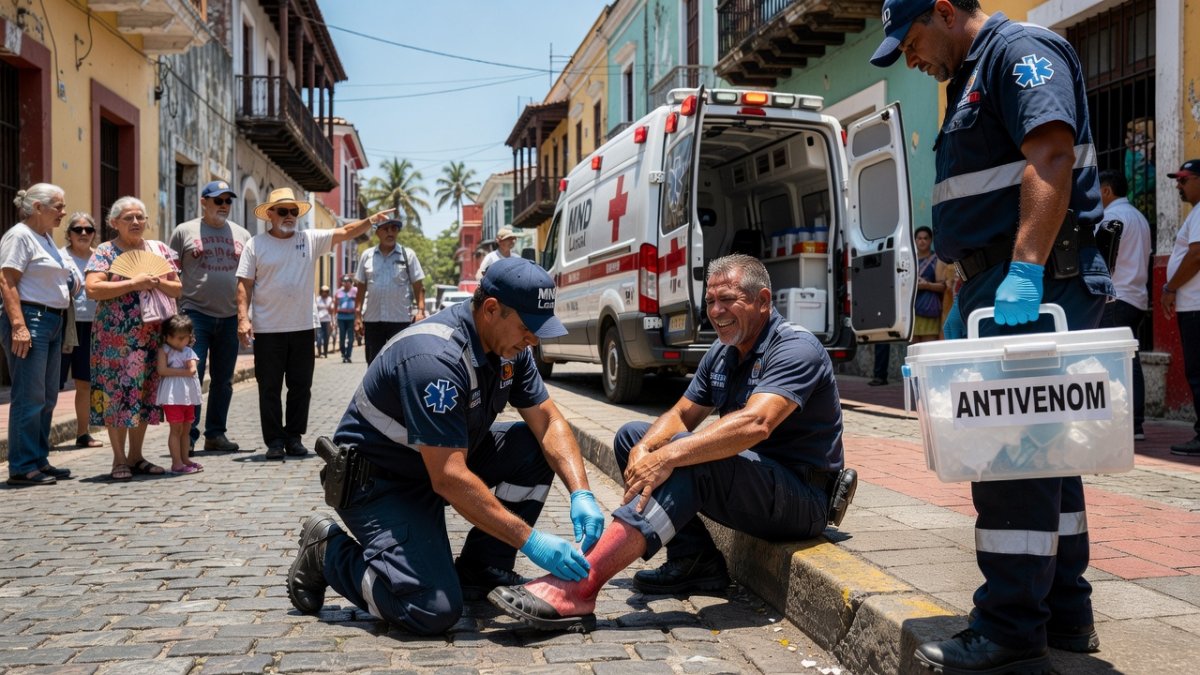
Scorpion Sting Surge Alarms Puerto Vallarta: Over 1,200 Cases Reported as Rainy Season Peaks
Breaking: A Community on Edge
Good morning, mis queridos lectores. Here in Mexico City I’m following a story that hits close to home for our coastal families. Puerto Vallarta health authorities confirmed yesterday that scorpion stings have climbed sharply this year, with 1,248 cases logged through the first week of September—already 47 percent higher than the same period in 2023. The surge has left both longtime vallartenses and visiting families shaken, turning what many once dismissed as a seasonal nuisance into a genuine public-health concern.
Dr. Elena Vargas, director of the Regional Hospital of Puerto Vallarta, told me the numbers began climbing in late May. “We’re seeing patients of every age—construction workers, hotel staff, even toddlers who wandered onto patios at dusk,” she said. “Most arrive with intense pain and sweating, but a handful each week need antivenom and overnight observation.”
Why the Numbers Are Rising Now
Local epidemiologists point to a combination of heavy spring rains, rapid urban expansion into hillside neighborhoods, and warmer nighttime temperatures that keep scorpions active longer. The species most often responsible is Centruroides suffusus, the Mexican bark scorpion, whose venom can trigger severe neuromuscular reactions in children and the elderly.
According to data shared by the Jalisco Ministry of Health, the municipalities of Puerto Vallarta and neighboring Bahía de Banderas together account for 18 percent of all reported scorpion incidents in the state this year. Construction sites along the new Libramiento highway corridor have disturbed rocky habitats, pushing the arachnids into homes and hotel gardens. “People are building faster than we can educate them about sealing entry points,” explained biologist Marco Reyes of the University of Guadalajara’s coastal research station.
Real Stories from the Front Lines
María del Carmen López, 42, a housekeeper at a beachfront resort in Zona Hotelera, described the moment she was stung while shaking out towels on a balcony. “It felt like a hot needle, then my arm went numb and I started shaking,” she recalled. Her employer drove her to the clinic within 15 minutes; she received two vials of antivenom and returned to work the next day. “We can’t afford days off, so we’re all learning to check shoes and corners with flashlights.”
Tourist families have also been affected. Canadian visitor Thomas Berger and his eight-year-old daughter were staying in a hillside Airbnb when the girl cried out at 2 a.m. “Her little foot swelled and she vomited twice,” Berger said. “The paramedics arrived fast and the hospital staff spoke perfect English. We’re grateful, but we’ll think twice about renting without screens next time.”
Medical Response and Antivenom Supply
Jalisco’s health network maintains a stockpile of 3,200 vials of Fab antivenom at strategic hospitals along the coast. Dr. Vargas confirmed that the regional warehouse has not yet experienced shortages, but she warned that any further spike could strain supplies. “We coordinate weekly with the federal Ministry of Health,” she noted. “If cases keep rising, we may request an emergency shipment from the national laboratory in Mexico City.”
Most stings are treated with pain management, antihistamines, and observation for six to eight hours. Severe cases—roughly 6 percent this season—require intravenous antivenom and cardiac monitoring. No fatalities have been recorded in Puerto Vallarta so far, a fact officials credit to rapid response times averaging under 25 minutes.
Economic Ripple Effects on Tourism
Puerto Vallarta’s tourism board reported a 9 percent dip in direct bookings for October compared with last year, though operators insist the decline is not solely sting-related. Still, several all-inclusive properties have added nightly “scorpion sweeps” and distributed informational cards to guests. “Transparency builds trust,” said hotel association president Luis Ramírez. “We’d rather guests hear the facts from us than read sensational headlines.”
Local economy analysts estimate that each severe case costs an average of 4,200 pesos in medical fees and lost wages—small for insured visitors but significant for service workers. Community clinics have begun offering free home-sealing workshops every Saturday morning in neighborhoods such as Pitillal and Versalles.
Prevention That Actually Works
Health promoters emphasize simple, consistent habits. Shake out shoes and clothing before wearing them. Install door sweeps and repair window screens. Keep firewood and garden debris away from house foundations. For families with young children, nighttime checks with a black-light flashlight can reveal scorpions glowing under UV light—a tip shared widely on local WhatsApp groups.
Pharmacies across the city now stock over-the-counter sting kits containing antiseptic wipes and cold packs, while the municipal government has launched a text-alert system: residents can text “ALACRÁN” to 22888 to receive prevention tips and the nearest clinic location.
Looking Ahead
With the rainy season expected to continue through October, officials are bracing for another 300–400 cases before the dry months return. A joint task force of municipal, state, and federal agencies will meet next week to evaluate whether additional public-education funding is needed.
For now, the message from Puerto Vallarta is one of cautious vigilance rather than panic. “We’ve lived with scorpions for generations,” Dr. Vargas reminded me. “With a little preparation and quick action, we keep our families safe.”
This is Rosa Martinez for Global1 News, reporting from Mexico City. 🇲🇽
This article was produced with AI-assisted research and editorial support. Reporting is based on sources cited in the article.
What's Your Reaction?
 Like
0
Like
0
 Dislike
0
Dislike
0
 Love
0
Love
0
 Funny
0
Funny
0
 Wow
0
Wow
0
 Sad
0
Sad
0
 Angry
0
Angry
0

Latin America/Andes Correspondent at Global1.News. Based in Bogota, covering politics, environment, energy, and social movements across the Andean region. Passionate about environmental journalism and communities protecting their land.















Comments (0)