
Malaysia Rare Earth Strategy Refining Hub Lynas Kuantan
Intro - Malaysia's strategic positioning as a rare earth refining hub Malaysia is positioning itself as a significant refining hub in the global rare earth elements supply chain. The country combines existing industrial infrastructure with newly identified domestic reserves and a policy framework that restricts raw material exports. This approach aims to capture more value from
Intro - Malaysia's strategic positioning as a rare earth refining hub
Malaysia is positioning itself as a significant refining hub in the global rare earth elements supply chain. The country combines existing industrial infrastructure with newly identified domestic reserves and a policy framework that restricts raw material exports. This approach aims to capture more value from rare earth processing while attracting international partners seeking alternatives to dominant suppliers.
The strategy builds on Malaysia's established role in handling rare earth concentrates from overseas mines. Government decisions, including the raw rare earth export ban effective January 1, 2024, signal a clear intent to develop downstream capabilities rather than simply exporting unprocessed materials.
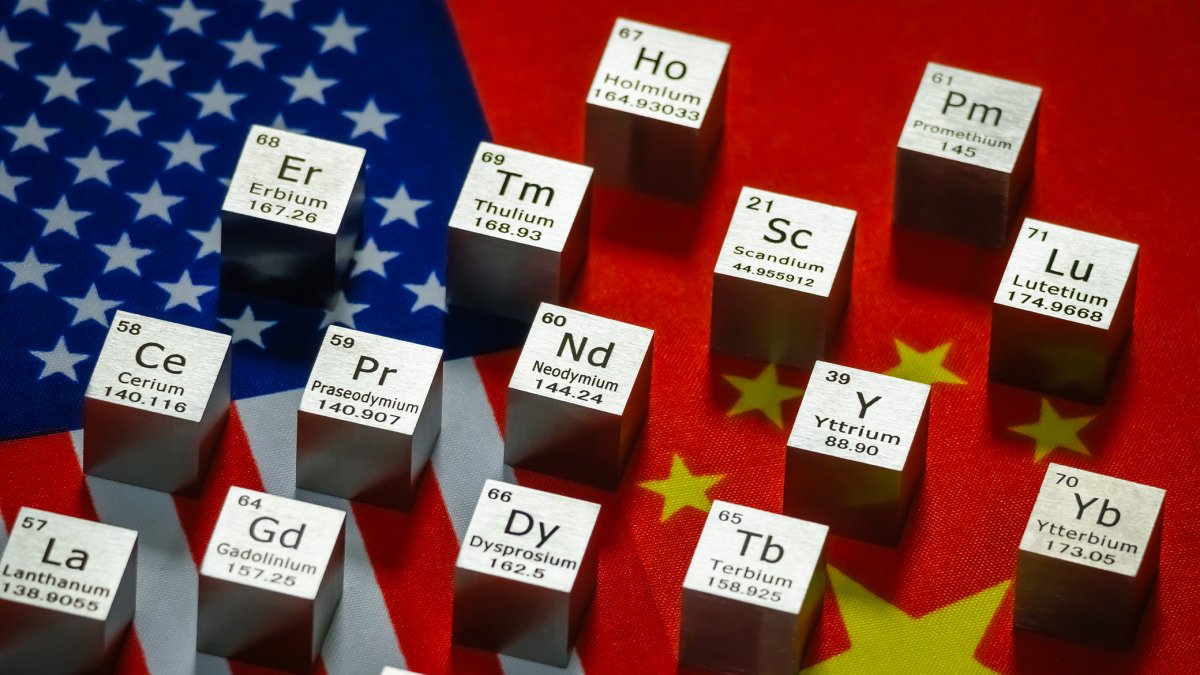
Lynas Kuantan - the existing processing infrastructure
The Lynas Advanced Materials Plant in Kuantan, Pahang, serves as the cornerstone of Malaysia's current rare earth refining capacity. This facility, operated by the Australian-listed Lynas Rare Earths, is the largest rare earth processing plant outside China and accounts for approximately 10 percent of global rare earth supply. Concentrate from the Mt Weld mine in Western Australia is shipped to Kuantan for separation and refining into high-value products such as NdPr oxide.
The plant employs around 600 people, with more than 95 percent being Malaysian nationals. In March 2026, the Atomic Energy Licensing Board relicensed the facility through 2036, subject to five-year reviews and a requirement to cease production of radioactive waste residue by 2031. NdPr oxide produced at the site commands prices around RM395,000 per 200 kg bag and is essential for permanent magnets used in electric vehicle motors and wind turbines.
Malaysia's own reserves and the export ban policy
Malaysia holds substantial untapped rare earth resources in the form of non-radioactive ionic-adsorption clay deposits. Government estimates place these NR-REE reserves at 16.1 million tonnes, with a potential value of approximately RM809.6 billion. These clays are considered lower-risk from a radioactivity standpoint compared to some other deposit types.
The raw rare earth export ban implemented on January 1, 2024, prevents the shipment of unprocessed material abroad. This policy is designed to encourage local refining and attract investment in separation and downstream manufacturing facilities. Officials have emphasized that the measure supports long-term industrial development rather than immediate revenue from raw exports.
Japan-Malaysia cooperation and Japan's supply chain diversification
Japan has maintained a long-standing partnership with Malaysia's rare earth sector through corporate and governmental channels. Sojitz Corporation and the Japan Oil, Gas and Metals National Corporation have participated in a joint venture with Lynas for more than a decade, providing both financing and technical support for the Kuantan operations.
Japanese efforts to reduce dependence on Chinese rare earth supplies have progressed from roughly 90 percent reliance to 58 percent through overseas investments. During a June 2026 summit, Prime Minister Takaichi Sanae and Prime Minister Anwar Ibrahim agreed to expand cooperation on rare earths and other critical minerals. These discussions align with Japan's broader strategy of securing stable supplies for its automotive, electronics, and renewable energy industries.
Geopolitical context - US-Japan framework, China export controls
The United States-Japan Critical Minerals Framework concluded in October 2025 explicitly references cooperation involving Malaysia. This trilateral dimension reflects shared concerns about supply concentration and the need for diversified processing capacity. At the same time, China has continued to tighten export controls on rare earth products, prompting G7 finance ministers to address supply vulnerabilities during their January 2026 meeting.
Malaysia's approach reflects a sector-specific neutrality that allows engagement with multiple partners without exclusive alignment. This stance enables the country to benefit from technology transfers and investment from Japan while maintaining commercial relations with other market participants.
Challenges - environmental concerns, the magnet gap
Environmental management remains a central issue for Malaysia's rare earth ambitions. The licensing conditions imposed on the Lynas facility highlight ongoing scrutiny of waste handling and radioactivity. Public acceptance and regulatory compliance will determine whether additional refining projects can proceed at scale.
Another structural challenge is the so-called magnet gap. While Malaysia can expand refining output, it currently lacks significant domestic capacity to manufacture finished rare earth magnets. Without parallel development of magnet production and end-use manufacturing, the country risks remaining primarily an intermediate processor rather than capturing higher-value segments of the supply chain.
What to Watch For
Future developments to monitor include progress on Malaysia's NR-REE resource development and any new joint ventures for separation facilities. Regulatory milestones, such as the 2031 waste residue deadline at Kuantan, will test operational continuity. Japan's additional investments in deep-sea mining research and e-waste recycling may also influence the broader supply picture and Malaysia's role within it.
Observers will also track whether Malaysia attracts magnet manufacturing or electric vehicle component production to close the downstream gap. Continued diplomatic engagement between Tokyo and Kuala Lumpur, alongside evolving G7 and ASEAN mineral strategies, will shape the trajectory of this emerging refining hub.
By Kenji Tanaka, Staff Writer
This article was produced with AI-assisted research and editorial support. Reporting is based on sources cited in the article.
What's Your Reaction?
 Like
0
Like
0
 Dislike
0
Dislike
0
 Love
0
Love
0
 Funny
0
Funny
0
 Wow
0
Wow
0
 Sad
0
Sad
0
 Angry
0
Angry
0

Japan Correspondent at Global1.News. Tokyo-based voice covering Japanese politics, technology, economy, and culture. Tracks the intersection of tradition and innovation in one of the world's most dynamic societies.













Comments (0)