
Keith Richards created the most iconic riff in rock in his sleep – and other key moments from the new Rolling Stones biography
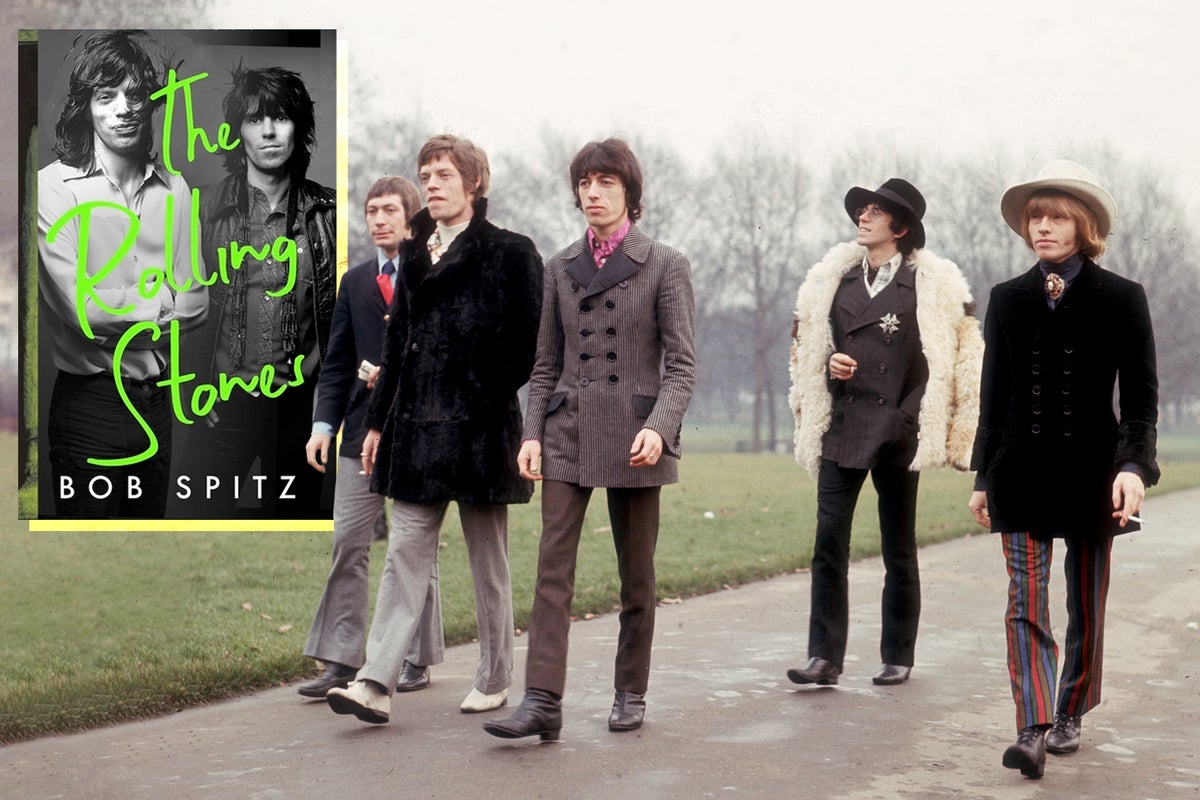
Keith Richards Dreamt Up Rock’s Most Iconic Riff – And the New Rolling Stones Biography Lays Bare the Band’s Most Explosive Chapters
The world’s greatest rock’n’roll band has always traded in myth, but a freshly published biography cuts through the haze with forensic detail. Drawing on diaries, police records and fresh interviews, the book maps the Stones’ journey from blues-obsessed Londoners to global provocateurs. Among its revelations is the origin story of “(I Can’t Get No) Satisfaction,” which Keith Richards claims arrived fully formed during a dream in a Florida hotel room in May 1965.
The Midnight Riff That Changed Everything
Richards woke to find his portable cassette recorder still running. On the tape, the opening bars of what became one of the most recognisable guitar figures in history played on a loop, followed by the sound of snoring. “It was just there,” he later recalled. The riff, played on a Gibson fuzz box, anchored a song that reached number one in both Britain and America and sold more than one million copies in its first month. The biography notes that Richards initially dismissed the track as “a bit basic,” yet Mick Jagger recognised its commercial punch immediately. Within weeks the single displaced The Beatles’ “Help!” at the top of the UK charts, signalling a shift in the cultural centre of gravity from Liverpool to London.
Altamont: When the Dream Turned Violent
The book devotes an entire chapter to the disastrous free concert at Altamont Speedway in December 1969. Hired as security, the Hells Angels stabbed spectator Meredith Hunter to death in front of the stage while the Stones played “Under My Thumb.” Contemporary reports put the crowd at 300,000; the biography cites newly released film outtakes showing Jagger pleading for calm between songs. The event, coming just four months after Woodstock, crystallised the end of the 1960s utopian experiment. Sales of the Stones’ subsequent album, “Let It Bleed,” nevertheless surged to four million copies worldwide, illustrating the public’s enduring appetite for the band’s dark glamour.
The Rock and Roll Circus That Never Toured
Filmed over two nights in December 1968, “The Rolling Stones Rock and Roll Circus” was intended as a television spectacular featuring John Lennon, Eric Clapton and Marianne Faithfull. The biography reveals that the BBC rejected the programme after executives deemed it “too chaotic.” The project remained unseen until 1996, when its release on home video introduced a new generation to the Stones’ theatrical ambitions. Archival notes show the band spent £40,000 of their own money on the production, a sum equivalent to roughly £800,000 today. The failure stung Jagger, who later described the episode as “a beautiful mess that proved we could not be contained by television.”
Anita Pallenberg, Marianne Faithfull and the Women Who Redefined the Stones
The arrival of Anita Pallenberg and Marianne Faithfull in 1965–66 transformed the band’s social and creative orbit. Pallenberg, an Italian-German actress and model, became Richards’ partner and occasional songwriting muse; Faithfull, already a chart-topping singer, entered a turbulent relationship with Jagger. The biography quotes a 1967 letter from Brian Jones in which he complained that the two women “ran the show” during recording sessions for “Their Satanic Majesties Request.” Faithfull’s distinctive vocal on “Sister Morphine” and Pallenberg’s influence on the band’s image receive fresh attention. Both women, the book argues, supplied the intellectual and stylistic counterweight that kept the Stones from becoming merely a blues-revival act.
The Redlands Raid and Its Legal Aftermath
On 12 February 1967, police raided Keith Richards’ Sussex country house, Redlands. Officers found cannabis and amphetamines; Jagger was later charged with possessing four amphetamine tablets belonging to Faithfull. The trial, covered extensively by Fleet Street, resulted in Jagger’s three-month sentence (later quashed on appeal) and Richards’ one-year term (also overturned). The biography includes previously unpublished court transcripts showing that the judge referred to the Stones as “a menace to society.” The episode boosted album sales of “Between the Buttons” by 60 per cent in the UK and cemented the band’s outlaw reputation. Richards later reflected that the raid “made us public enemy number one, which suited us fine.”
Why These Stories Still Matter
More than five decades later, the Stones remain the only act from the British Invasion still touring at stadium scale. Their 2022 European dates grossed £175 million, according to industry analysts. The new biography does not sanitise the band’s excesses; instead it demonstrates how chaos and calculation coexisted. From a dream-captured riff to the blood-soaked stage at Altamont, each episode reveals a group that understood spectacle as both art form and survival strategy. Readers seeking simple nostalgia will be disappointed. Those prepared to confront the full, contradictory legacy of rock’s longest-running soap opera will find a compelling, if cautionary, portrait of fame’s enduring cost.
This is Erica Thornton for Global1 News, reporting from London. 🇬🇧
This article was produced with AI-assisted research and editorial support. Reporting is based on sources cited in the article.
What's Your Reaction?
 Like
0
Like
0
 Dislike
0
Dislike
0
 Love
0
Love
0
 Funny
0
Funny
0
 Wow
0
Wow
0
 Sad
0
Sad
0
 Angry
0
Angry
0

US Politics and Policy Correspondent at Global1.News. Based in Washington DC, covering American politics, policy, elections, and the courts. Knows how the system works and tells you what it actually means.














Comments (0)