
Japan Welcomes US-Iran Peace Deal for Energy Security
Japan Welcomes US-Iran Peace Deal Framework for Energy Stability On June 15, 2026, Prime Minister Sanae Takaichi issued a measured statement welcoming the US-Iran memorandum of understanding announced the previous day. The framework, intended to conclude the conflict that began on February 28, 2026, was described by the Prime Minister as a significant step toward regional de-es
Japan Welcomes US-Iran Peace Deal Framework for Energy Stability
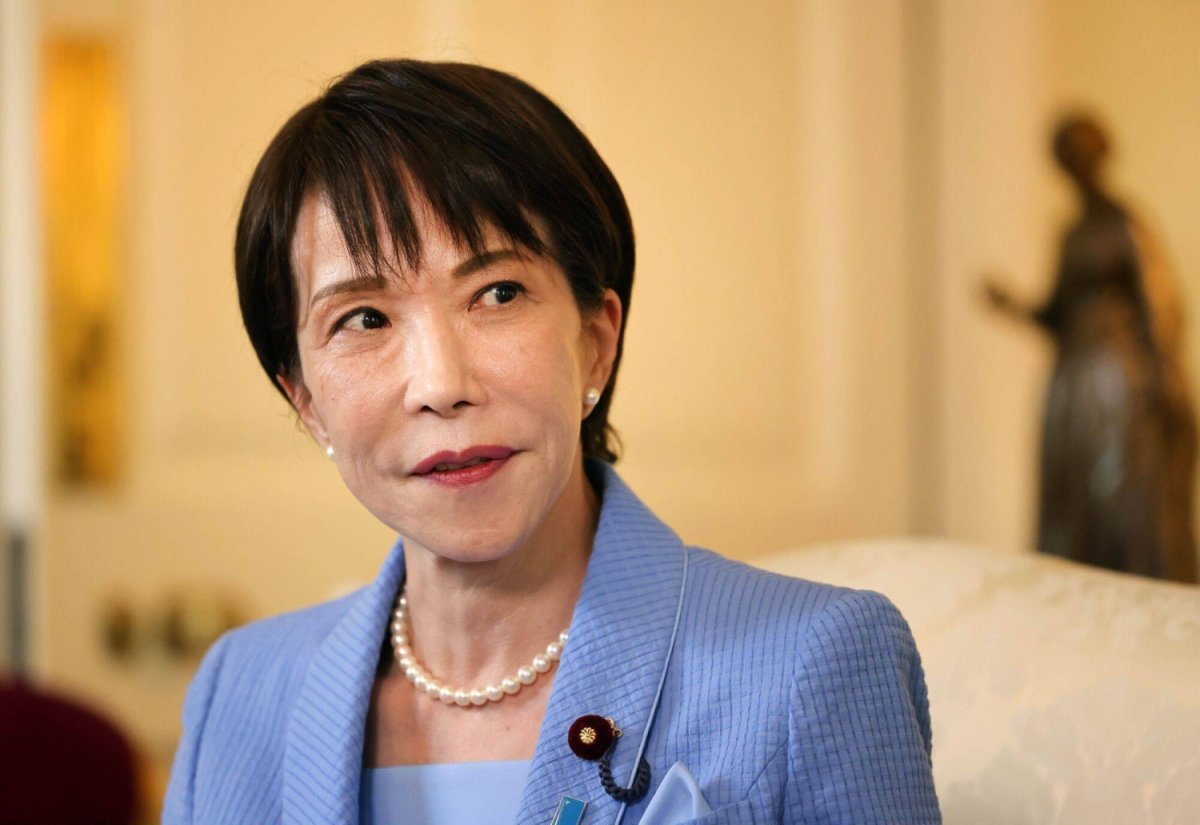
On June 15, 2026, Prime Minister Sanae Takaichi issued a measured statement welcoming the US-Iran memorandum of understanding announced the previous day. The framework, intended to conclude the conflict that began on February 28, 2026, was described by the Prime Minister as a significant step toward regional de-escalation. Her remarks emphasized the need for a final agreement that resolves outstanding nuclear questions while restoring predictable energy flows through the Strait of Hormuz.
Japanese officials immediately began internal assessments of how the 60-day implementation window would affect tanker schedules and strategic petroleum reserves. The Ministry of Economy, Trade and Industry (METI) convened emergency briefings to model potential price trajectories once the naval blockade is lifted and Iranian assets totaling $35 billion are released. Takaichi’s calibrated language avoided premature celebration, reflecting Japan’s consistent preference for verifiable outcomes over declarative announcements.
Corporate Japan, particularly refiners and trading houses, monitored the statement for indications of renewed supply reliability. The war had already produced sharp spikes in crude and fertilizer prices, prompting several firms to accelerate diversification of procurement routes. Takaichi’s call for completion of nuclear provisions signaled that Tokyo would continue to align its diplomacy with verification requirements rather than short-term commercial relief alone.
Core Terms of the 60-Day Framework
The 60-day framework announced on June 14, 2026, outlines a sequenced series of measures to be completed by mid-August. Primary elements include a mutual cessation of military operations, encompassing activities linked to Lebanon, the reopening of the Strait of Hormuz to commercial traffic, the lifting of the US naval blockade, and the phased release of $35 billion in previously frozen Iranian assets. These steps are designed to restore basic maritime access and financial channels without immediately resolving all nuclear-related disputes.
Japanese analysts noted that the separation of energy and maritime provisions from final nuclear arrangements allows for incremental confidence-building. The framework does not specify verification mechanisms for nuclear activities, leaving that task for subsequent negotiations. METI and the Ministry of Foreign Affairs (MOFA) have therefore prepared contingency models that assume partial rather than complete implementation within the 60-day period.
The scheduled formal signing in Geneva on June 19, 2026, will place Japan among the observer delegations. Tokyo’s participation is expected to focus on ensuring that any maritime and energy clauses contain explicit timelines and monitoring provisions. Officials have stressed that the framework’s value lies in its enforceability rather than its breadth, given Japan’s heavy reliance on uninterrupted passage through the Strait of Hormuz.
Energy Security and Japan's Strait of Hormuz Dependency
Japan currently sources approximately 87 percent of its crude oil from Middle Eastern suppliers whose shipments must transit the Strait of Hormuz. The 2026 conflict exposed the vulnerability of this concentration, producing both price volatility and temporary disruptions to scheduled deliveries. METI maintains strategic stockpiles equivalent to roughly 140 days of consumption, yet prolonged closure of the strait would still require rapid adjustments to refinery throughput and industrial allocations.
Following the June 14 framework announcement, METI accelerated reviews of tanker routing options and insurance arrangements. Several major trading companies began recalibrating June and July cargo schedules in anticipation of reopened access. The agency also examined fertilizer feedstock costs, which had risen sharply because of elevated energy prices and constrained ammonia shipments from the region.
Longer-term planning includes modest increases in procurement from non-Hormuz sources, though infrastructure and contractual limitations constrain rapid substitution. BOJ staff have incorporated higher energy price scenarios into their inflation projections, noting that even partial restoration of Hormuz traffic could moderate upward pressure on consumer prices. The framework’s emphasis on a 60-day implementation timeline has therefore prompted METI to treat the coming weeks as a critical test of supply-chain resilience rather than an immediate return to pre-war stability.
Diplomatic Strategy Under Prime Minister Takaichi
Throughout the 2026 conflict, Prime Minister Sanae Takaichi maintained a policy of balanced engagement with both Washington and Tehran while coordinating closely with MOFA. This approach allowed Japan to preserve channels of communication even as military operations continued. Tokyo’s statements consistently linked any improvement in bilateral energy ties to progress on nuclear verification, a position reiterated in the June 15 response to the framework.
MOFA has prepared a Geneva delegation that will observe the June 19 signing without assuming a mediation role. Officials have emphasized that Japan’s contribution lies in supporting transparent implementation mechanisms rather than proposing new negotiating text. The strategy also includes quiet consultations with Gulf Cooperation Council members to ensure that any reopening of the strait is accompanied by regional security assurances.
Takaichi’s government has avoided unilateral initiatives that might complicate the US-Iran bilateral track. Instead, it has focused on multilateral forums where Japan can advocate for predictable energy transit rules. This measured posture reflects both Japan’s limited leverage in the conflict and its acute interest in stable maritime access, allowing Tokyo to support de-escalation without appearing to prioritize commercial interests over non-proliferation objectives.
Economic Ripple Effects Across Japanese Industry
The 2026 conflict drove sustained increases in crude acquisition costs and downstream fertilizer prices, affecting both agricultural cooperatives and petrochemical producers. Refiners adjusted crude slates and drew down inventories more rapidly than planned, prompting METI to authorize additional releases from national stockpiles in May. The June 14 framework has introduced the possibility of gradual cost relief, yet corporate procurement teams continue to hedge against incomplete implementation.
Trading houses have begun modeling scenarios in which the $35 billion asset release improves Iranian export capacity within the 60-day window. Such modeling incorporates potential changes in insurance premiums once the naval blockade ends. BOJ staff are monitoring second-round effects on electricity tariffs and industrial output, noting that even modest reductions in energy prices could ease pressure on the central bank’s inflation target.
Automotive and electronics manufacturers, while less directly exposed, have incorporated higher logistics costs into quarterly forecasts. Several firms have accelerated supplier diversification programs initiated during earlier supply shocks. The framework’s timeline therefore serves as a planning benchmark rather than a guaranteed inflection point, with most companies maintaining conservative assumptions until verifiable improvements in Hormuz transit volumes are confirmed.
Nuclear Negotiations and the Road Ahead
Prime Minister Takaichi’s June 15 statement explicitly urged that remaining nuclear issues be addressed before any final agreement. Japan’s historical advocacy for robust International Atomic Energy Agency verification aligns with this position, and MOFA has indicated that Tokyo will support additional protocols during the post-Geneva phase. The framework’s deliberate separation of nuclear questions from immediate energy and maritime measures has been viewed in Tokyo as a pragmatic sequencing choice rather than a permanent deferral.
Japanese officials expect the June 19 Geneva signing to produce only a political declaration, with technical negotiations on verification continuing afterward. METI and MOFA are preparing joint assessments of how different verification outcomes could affect long-term crude supply reliability. The government has also signaled willingness to participate in any multilateral financing arrangements that might accompany verified Iranian compliance, consistent with past contributions to regional energy infrastructure projects.
Forward-looking analysis within the administration treats the 60-day framework as the beginning of a longer stabilization process. Success will be measured not by the speed of asset releases but by the durability of maritime access and the credibility of nuclear safeguards. Takaichi’s government intends to maintain its balanced diplomatic posture while pressing for concrete verification milestones that protect Japan’s critical energy interests.
Tags: Japan Iran peace deal, Sanae Takaichi, Strait of Hormuz, energy security, MOFA, Middle East oil, nuclear talks, Geneva 2026
By Kenji Tanaka, Staff Writer
This article was produced with AI-assisted research and editorial support. Reporting is based on sources cited in the article.
What's Your Reaction?
 Like
0
Like
0
 Dislike
0
Dislike
0
 Love
0
Love
0
 Funny
0
Funny
0
 Wow
0
Wow
0
 Sad
0
Sad
0
 Angry
0
Angry
0

Japan Correspondent at Global1.News. Tokyo-based voice covering Japanese politics, technology, economy, and culture. Tracks the intersection of tradition and innovation in one of the world's most dynamic societies.











Comments (0)