
Japan national volleyball player arrested over suspected cannabis possession
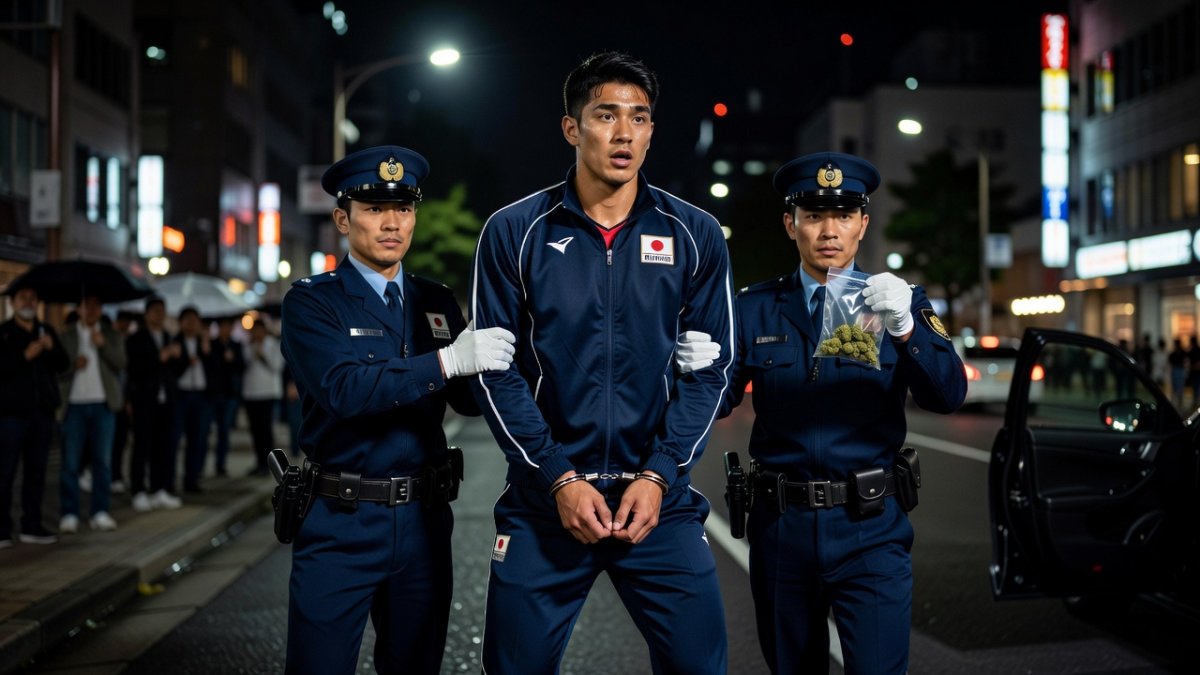
Japan Volleyball National Team Member Shunichiro Sato Detained in Tokyo Cannabis Case
The Incident and Immediate Police Response
Tokyo Metropolitan Police arrested Shunichiro Sato, a 26-year-old outside hitter for Japan’s men’s national volleyball team, on Wednesday afternoon after officers discovered approximately 4.2 grams of dried cannabis in his possession inside a pachinko parlor in Itabashi Ward. According to the official police statement released Thursday morning, Sato was approached during a routine inspection prompted by reports of suspicious behavior near the gaming machines. The substance was confirmed through field testing and later laboratory analysis at the Metropolitan Police Department’s forensic division.
Sato, who has represented Japan in the Volleyball Nations League and the 2023 FIVB World Cup, was taken into custody without incident. He reportedly admitted to the officers that the material was cannabis he had purchased online from an overseas vendor two weeks earlier. No other individuals were detained at the scene, and investigators are now tracing the digital transaction trail to determine the source and any potential distribution network.
Player Profile and Competitive Record
Born in Osaka, Sato rose through the youth ranks at the Japan Volleyball Association’s elite academy before joining the national senior squad in 2021. Standing at 192 centimeters, he has recorded 187 points across 42 international matches, with a spike success rate of 48.3 percent in the most recent VNL season. His club career includes stints with Panasonic Panthers in the V.League, where he contributed to two league championships. Sponsors such as Mizuno and a major sports nutrition firm have featured him in campaigns emphasizing discipline and peak physical conditioning.
Colleagues describe Sato as a reserved yet technically precise athlete whose work ethic extended to data-driven training regimens. He frequently posted training analytics on closed team platforms, highlighting metrics such as jump height and reaction time captured by wearable sensors. This arrest now places those endorsements and future contracts under immediate review.
Japan’s Strict Legal Framework on Cannabis
Under Japan’s Cannabis Control Law, possession of even small quantities of cannabis remains a criminal offense punishable by up to five years in prison and fines reaching ¥3 million. Unlike many jurisdictions that have moved toward decriminalization or medical legalization, Japan maintains one of the most restrictive regimes in the developed world. The National Police Agency reported 2,847 cannabis-related arrests nationwide in 2023, a 14 percent increase from the previous year, with a growing share involving online purchases delivered through international mail.
Legal experts note that recent amendments have focused on tightening controls around synthetic cannabinoids and imported products rather than easing restrictions. “The law treats cannabis as a gateway substance with zero tolerance,” explained Professor Haruto Nakamura of Keio University Law School in an interview. “Courts have consistently imposed suspended sentences for first-time offenders only when the quantity is minimal and there is clear evidence of remorse and rehabilitation planning.”
Reactions from the Volleyball Community and National Team
The Japan Volleyball Association issued a brief statement Thursday afternoon confirming Sato’s removal from the national training camp ahead of the 2025 Asian Championship qualifiers. Head coach Masahiro Sekita told reporters at a hastily arranged press conference that the organization would conduct an internal review of athlete support systems, including mental health resources and education on prohibited substances. “We are shocked and disappointed,” Sekita said. “Our program emphasizes compliance with Japanese law above all else.”
Teammates expressed a mixture of surprise and concern. Middle blocker Yuki Ishikawa, who has played alongside Sato since 2022, posted a measured message on his verified social media account: “We support fair competition and respect for the rules that govern our sport and our country. I hope Shunichiro receives the guidance he needs.” Several corporate partners have paused promotional activities featuring Sato pending the outcome of his legal proceedings.
Broader Implications for Japanese Sports and Emerging Industries
This case arrives at a moment when Japan’s sports economy is increasingly intertwined with technology platforms and global sponsorship markets. Volleyball’s growing visibility through streaming services and data analytics partnerships has attracted investment from firms developing athlete performance software. An arrest of this nature risks damaging perceptions among international investors who already navigate Japan’s conservative regulatory environment.
Forward-thinking analysts point to the tension between Japan’s zero-tolerance stance and shifting global attitudes. While medical cannabis research advances in countries such as Canada and Germany, Japanese pharmaceutical companies remain cautious about pursuing cannabinoid-derived therapies domestically. The Sato incident may accelerate internal discussions within sports federations about implementing proactive screening technologies and confidential counseling programs to prevent similar lapses among elite athletes.
Data from the Japan Anti-Doping Agency shows that cannabis-related violations accounted for 11 percent of all sanctions issued to Japanese athletes between 2019 and 2023. Most cases involved trace amounts detected in out-of-competition tests rather than direct possession charges. Experts argue that education programs must evolve alongside digital marketplaces that make controlled substances more accessible to young adults, including those in high-performance environments.
Looking Ahead: Legal Proceedings and Policy Considerations
Sato is scheduled for an initial hearing at the Tokyo Summary Court next week. His legal team has indicated they will request bail and emphasize his clean disciplinary record prior to this incident. Should he receive a suspended sentence, the Japan Volleyball Association’s bylaws allow for potential reinstatement after a period of monitored rehabilitation, though commercial endorsements are likely to remain restricted.
Policy observers suggest the case could feed into ongoing debates about whether Japan should introduce limited medical cannabis pathways, particularly as the country positions itself as a hub for health-technology innovation. Any legislative movement, however, would require careful navigation of public opinion and alignment with existing narcotics statutes. For now, Sato’s situation underscores the personal and professional costs of violating Japan’s enduring prohibition on cannabis.
This is Kenji Tanaka for Global1 News, reporting from Tokyo. 🇯🇵
This article was produced with AI-assisted research and editorial support. Reporting is based on sources cited in the article.
What's Your Reaction?
 Like
0
Like
0
 Dislike
0
Dislike
0
 Love
0
Love
0
 Funny
0
Funny
0
 Wow
0
Wow
0
 Sad
0
Sad
0
 Angry
0
Angry
0

Japan Correspondent at Global1.News. Tokyo-based voice covering Japanese politics, technology, economy, and culture. Tracks the intersection of tradition and innovation in one of the world's most dynamic societies.













Comments (0)