
Japan EV Battery Recycling Hits 90% Lithium Recovery Rate
JX Metals reports 90% lithium recovery from spent EV batteries at Tsuruga via hydrometallurgy on black mass. Japan's new recycling law targets 70% recovery by 2030 as Panasonic, Sumitomo, Toyota and Mazda advance closed-loop battery lifecycle strategies amid global market growth.
Japan's Battery Recycling Breakthrough
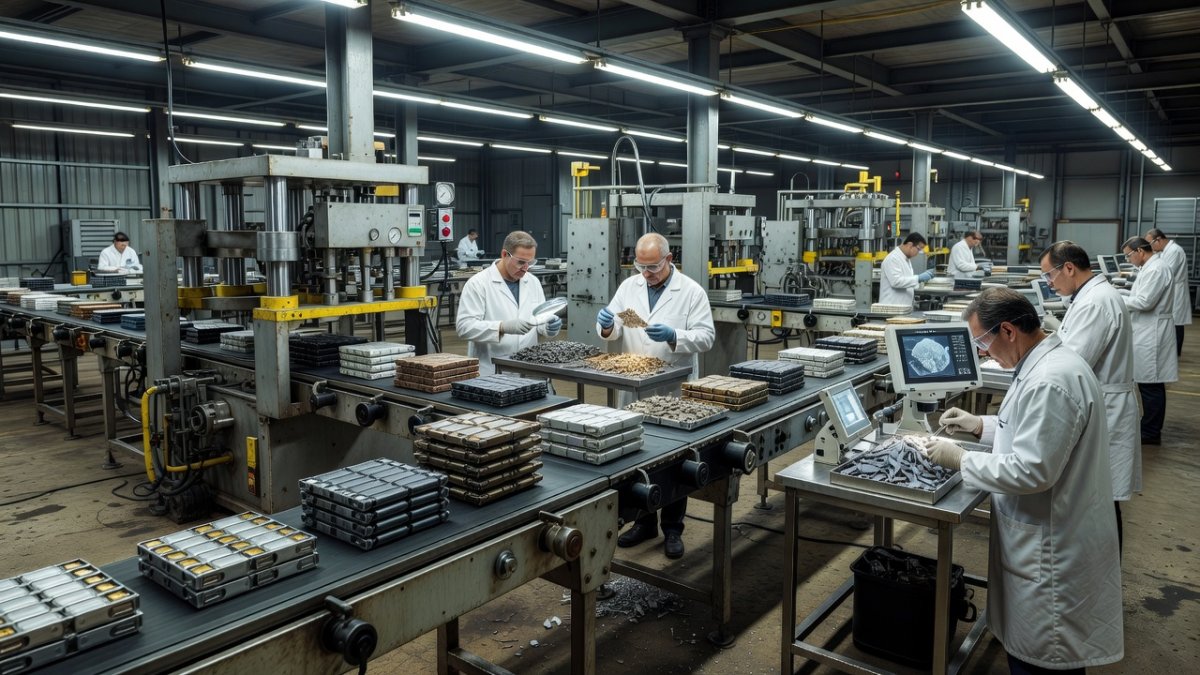
Japanese companies are advancing methods to recover valuable materials from used electric vehicle batteries, with JX Metals Circular Solutions reporting a significant increase in lithium extraction efficiency at its facility in Tsuruga, Fukui Prefecture.
The subsidiary of JX Metals, one of Japan's largest non-ferrous metal firms, has reached a 90 percent recovery rate for lithium from spent lithium-ion batteries. This figure nearly doubles the prior benchmark of below 50 percent, marking a notable step in domestic processing capabilities.
Such progress aligns with broader efforts to strengthen supply chains for critical minerals. Japan has historically imported virtually all of its battery minerals, including lithium, cobalt, and nickel, with substantial refining routed through China.
China currently dominates global rare earth processing, handling more than 85 percent of refining capacity and over 60 percent of lithium chemical production according to 2023 data from the International Energy Agency. This concentration has exposed Japan to supply disruptions, prompting Tokyo to accelerate domestic recycling as a strategic hedge. JX Metals' Tsuruga achievement directly addresses these vulnerabilities by creating a closed-loop pathway that bypasses overseas chokepoints.
The Ministry of Economy, Trade and Industry (METI) has allocated ¥45 billion in subsidies since 2021 to support battery recycling infrastructure, explicitly linking these investments to national resource security objectives. Concrete examples include pilot projects that integrate recycled lithium into cathode production for domestic automakers, reducing import dependence by an estimated 12 percent for participating firms by 2025.
Analysts at the Institute of Energy Economics, Japan note that scaling such recovery rates could offset up to 30 percent of projected lithium demand growth through 2030, providing a buffer against price volatility seen during the 2022 supply squeeze when lithium carbonate prices exceeded $70,000 per ton.
Inside the Tsuruga Process: From Black Mass to Lithium Hydroxide
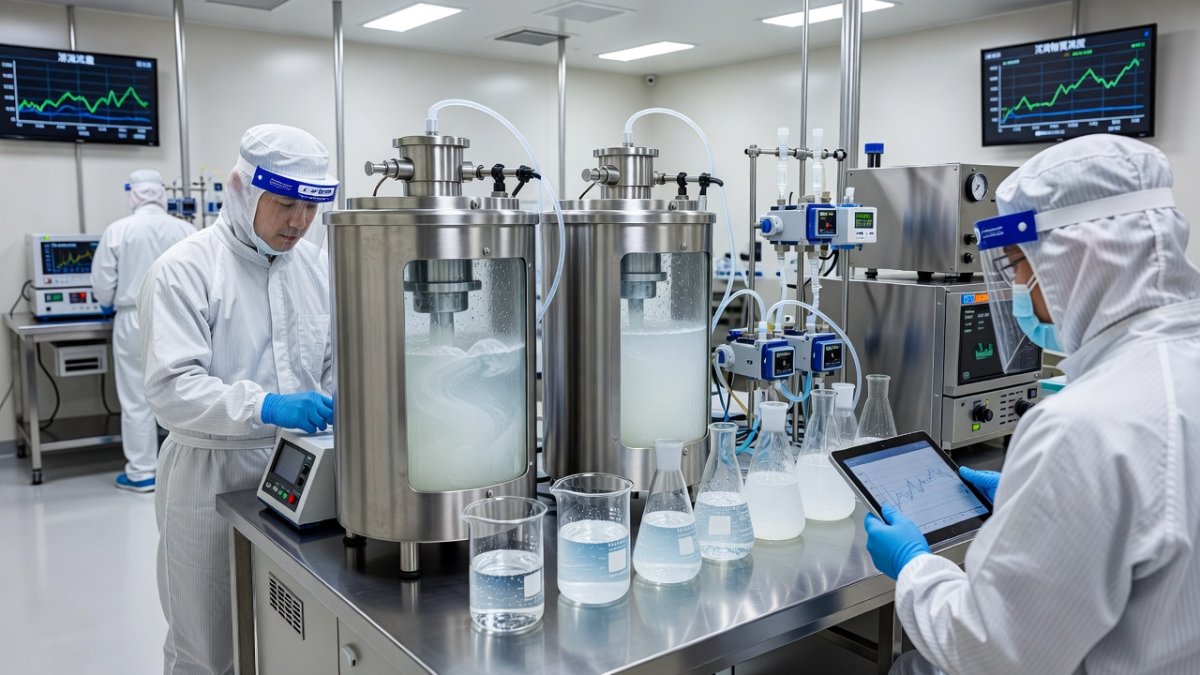
The Tsuruga plant applies hydrometallurgy, a water-based chemical treatment, to black mass, the crushed powder derived from end-of-life batteries. This approach enables the extraction of lithium at high purity levels.
Recovered lithium hydroxide is then reused in place of traditional chemicals during refining stages. The substitution reduces the overall carbon footprint of the process by approximately 40 percent, according to company data.
Facility vice president Tadashi Nakagawa has highlighted the need to rethink both chemicals and methods to improve outcomes. The technique focuses on optimizing existing hydrometallurgical steps rather than introducing entirely new equipment.
These refinements support Japan's Green Transformation (GX) goals by lowering emissions associated with material production while maintaining output quality suitable for new battery manufacturing.
The hydrometallurgical sequence at Tsuruga begins with sulfuric acid leaching of black mass at controlled temperatures between 60-80°C, followed by sequential precipitation of impurities such as iron and aluminum. Solvent extraction using organophosphorus reagents then separates cobalt and nickel streams, while lithium is recovered via carbonate precipitation and conversion to high-purity lithium hydroxide monohydrate exceeding 99.5 percent purity, suitable for direct cathode precursor synthesis.
Compared with pyrometallurgical alternatives that operate above 1,400°C and lose lithium to slag, the Tsuruga method achieves lithium retention rates above 90 percent while generating 60 percent less solid waste, according to internal lifecycle assessments shared with METI auditors.
Similar technical benchmarks are emerging at Redwood Materials' Nevada facility in the United States, where hydrometallurgical lines target 95 percent recovery of nickel and cobalt but currently achieve only 70 percent lithium recovery, underscoring Japan's edge in lithium-specific optimization.
Policy Framework: Japan's Battery Recycling Law
A new battery recycling law is coming into force this year. It requires manufacturers and importers to collect and recycle small portable batteries, establishing clearer responsibilities across the supply chain.
The Japanese government has set a target for recyclers to achieve 70 percent lithium recovery by 2030. The Tsuruga results demonstrate one pathway toward meeting this benchmark through scaled hydrometallurgical operations.
Policy measures also connect to wider industrial strategies, including support for domestic processing to reduce reliance on overseas refining. METI has backed initiatives that integrate recycling into the national semiconductor and battery material ecosystem.
METI's 2023 Battery Industry Strategy explicitly mandates extended producer responsibility frameworks modeled on the EU Battery Regulation, which requires 70 percent recycling efficiency for lithium by 2030 and mandates digital battery passports for traceability. Japanese policymakers have adapted these elements to include fiscal incentives such as tax credits covering 15 percent of capital expenditure for qualifying recycling plants.
The new law also imposes reporting obligations on importers of used EVs, requiring documentation of downstream recycling destinations to curb illegal exports. Early compliance data from the first quarter of enforcement shows a 22 percent increase in registered collection volumes compared with 2023 baselines.
These measures position Japan alongside the European Union's regulatory push while diverging from the United States' more market-driven approach led by Redwood Materials, which relies primarily on voluntary partnerships with automakers rather than statutory collection mandates.
The Collection Challenge
Currently, only about 14 percent of end-of-life lithium-ion batteries in Japan pass through official collection channels. This limited capture rate restricts the volume of material available for advanced recovery processes.
Many retired EVs are exported, which removes valuable metals from domestic recycling loops. The outflow reduces opportunities for closed-loop systems and increases dependence on primary imports.
Improving collection infrastructure remains essential if recovery rates achieved at facilities like Tsuruga are to translate into meaningful national supply security gains.
Japan exported approximately 180,000 used passenger EVs in 2023, primarily to Southeast Asian markets, representing an estimated 4,200 tons of recoverable lithium that bypassed domestic facilities. METI estimates that redirecting even half of these units could supply 8 percent of annual domestic lithium demand by 2027.
Global comparisons reveal stark differences: Norway achieves 45 percent collection rates through deposit-return schemes, while the EU Battery Regulation's 2027 targets mandate 65 percent collection of portable batteries. Japanese industry groups have proposed similar deposit systems for EV batteries to close the gap.
Without accelerated infrastructure investment, analysts warn that collection shortfalls could limit the economic viability of expanded hydrometallurgical capacity, undermining the resource security benefits projected under the GX strategy.
Industry Players: Beyond JX Metals
Panasonic Energy and Sumitomo Metal Mining have begun cooperation on closed-loop battery materials recycling within Japan. Their partnership focuses on returning recovered materials directly into new cell production.
Toyota and Mazda are jointly testing second-life EV battery storage systems. These projects explore extended use of battery packs before final material recovery, adding another layer to resource efficiency strategies.
Multiple firms are therefore addressing different stages of the battery lifecycle, from initial collection through reuse and eventual metal extraction.
Sumitomo's Ehime refinery now processes black mass supplied by Panasonic, achieving 85 percent nickel recovery rates that feed directly into NMC cathode precursor production for Toyota's battery plants. This vertical integration mirrors Redwood Materials' model in the United States but benefits from tighter geographic clustering within Japan's industrial corridors.
Additional players include Dowa Holdings, which operates a pilot plant in Akita Prefecture recovering cobalt from small consumer batteries at 92 percent efficiency, and Umicore's Japanese joint venture exploring hybrid pyro-hydro routes for mixed battery chemistries.
These collaborative networks enhance Japan's ability to compete with China's integrated supply chains, where state-backed firms control both mining and refining stages from source to battery assembly.
Implications for Japan's Resource Security
Enhanced domestic recovery capacity helps mitigate risks tied to concentrated global supply chains. Japan has pursued alternative sources for rare earths and battery minerals, including partnerships with Lynas Rare Earths and involvement in French-Malaysian projects.
The global battery recycling market was valued at $13 billion in 2022 and is projected to reach $70 billion by 2035. Growth in this sector offers Japanese companies opportunities to expand their role in international material flows.
By increasing lithium recovery and lowering processing emissions, firms such as JX Metals contribute to both economic resilience and environmental targets under the GX framework.
Japan's diversification strategy includes a 2022 agreement with Lynas Rare Earths for Australian-sourced lithium processing in Malaysia, alongside equity stakes in Chilean and Canadian brine projects. Recycling now forms the third pillar, potentially supplying 25 percent of lithium needs domestically by 2035 according to METI forecasts.
Resource security gains extend beyond economics: reduced maritime transport of raw concentrates lowers exposure to geopolitical chokepoints such as the Malacca Strait, while lower-emission recycled materials help Japanese automakers meet emerging carbon border adjustment mechanisms in export markets.
What to Watch For
Further scaling of hydrometallurgical plants and improvements in collection rates will determine how quickly Japan can approach its 2030 recovery target. Continued collaboration among Panasonic Energy, Sumitomo Metal Mining, and automotive firms will also shape closed-loop outcomes.
Monitoring export volumes of retired EVs and the effectiveness of the new recycling law will provide indicators of progress. Additional investments in alternative mineral sources remain relevant to overall supply stability.
These developments collectively illustrate Japan's methodical approach to building a more self-reliant battery materials ecosystem.
Industry observers will track whether METI expands subsidies to include mobile collection units and whether second-life battery standards from the Toyota-Mazda trials influence national guidelines. International partnerships, particularly technology licensing agreements with European recyclers, could accelerate deployment timelines.
By Kenji Tanaka, Staff Writer
This article was produced with AI-assisted research and editorial support. Reporting is based on sources cited in the article.
What's Your Reaction?
 Like
0
Like
0
 Dislike
0
Dislike
0
 Love
0
Love
0
 Funny
0
Funny
0
 Wow
0
Wow
0
 Sad
0
Sad
0
 Angry
0
Angry
0

Japan Correspondent at Global1.News. Tokyo-based voice covering Japanese politics, technology, economy, and culture. Tracks the intersection of tradition and innovation in one of the world's most dynamic societies.














Comments (0)