
Andy Burnham's Gaza Apology: What the UK's Likely Next PM Must Deliver
Andy Burnham, expected to become UK PM, apologised for Labour's Gaza response. A Middle East Eye podcast examines what he must deliver: sanctions, ICC cooperation, and settlement trade bans to regain Palestinian and Muslim trust.
In a recent Middle East Eye podcast, editor-in-chief David Hearst examined Andy Burnham's July 9 apology for Labour's early handling of Israel's military campaign in Gaza. The discussion highlighted how the statement, delivered by the man widely expected to lead Labour into government by late July 2026, carries weight beyond routine political positioning. Burnham's words arrive against a backdrop of documented Palestinian suffering that has drawn condemnation from the United Nations and multiple human rights organisations.
Andy Burnham's Gaza Apology: What the UK's Likely Next PM Must Deliver
London, United Kingdom – July 16, 2026 — The apology from the man expected to become Britain's next prime minister has opened a rare window for recalibrating UK policy on Gaza. But translating words into measurable change for Palestinian communities will require concrete steps on sanctions, arms, and international law.
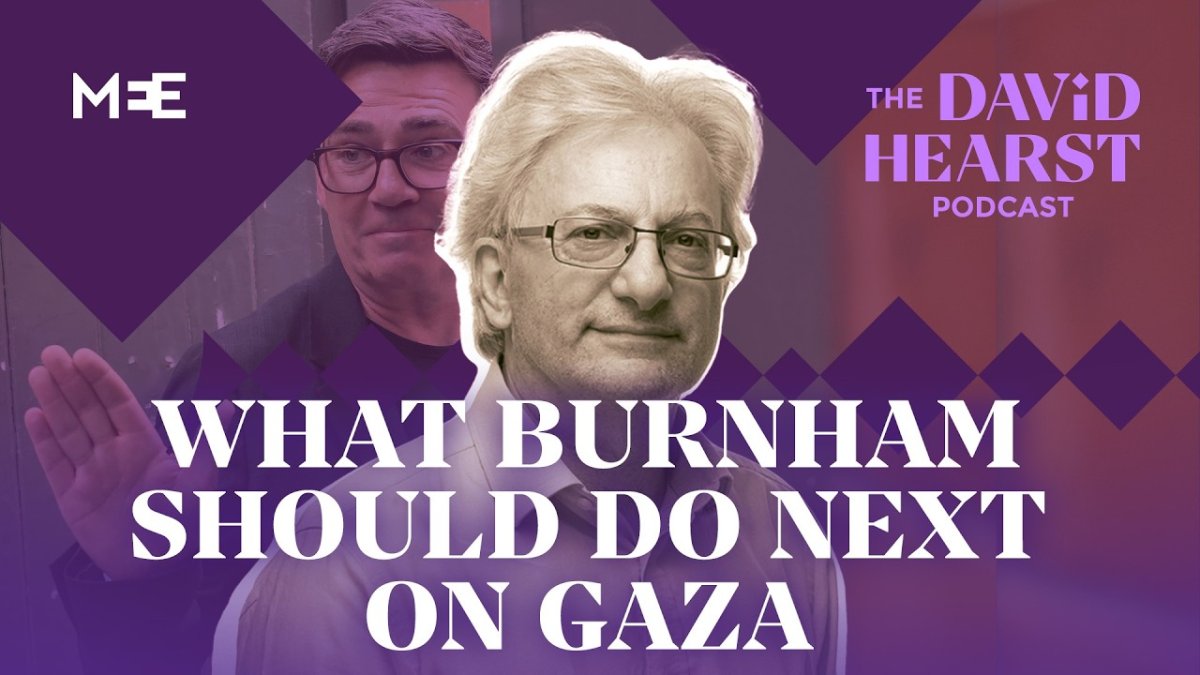
The Apology: What Burnham said and why it matters
Andy Burnham stated plainly that many people felt Labour had not responded adequately at the outset of Israel's military action in Gaza. "I know many people feel that at the start of Israel's military action in Gaza, my party didn't get it right, and I am sorry about that," he said. "The response has too often not been good enough. We need to do better." He described the conditions in Gaza as "unbearable suffering" that represents a "scar on our collective conscience."
The apology stands out because Burnham raised the issue without external pressure. As Hearst noted in the podcast, Burnham was already positioned to assume the party leadership. Choosing to address Gaza therefore signals an awareness that past positions have damaged Labour's standing with key voter groups. Over 73,000 Palestinians have been killed since October 2023, according to available figures, a toll that has left deep scars across Palestinian communities and their supporters worldwide.
From Starmer to Burnham: The shift in Labour's Gaza policy
Keir Starmer's earlier defence of Israel's right to restrict electricity and water supplies to Gaza marked one end of the spectrum. Burnham's intervention points toward a different approach. He endorsed sanctions on far-right Israeli ministers, the existing ban on UK arms exports to Israel, and the government's decision to recognise Palestine. These steps mark a departure from the initial reluctance to criticise Israeli conduct.
The change reflects broader international developments. The International Criminal Court issued arrest warrants for Benjamin Netanyahu and Yoav Gallant in November 2024 on charges including crimes against humanity. Burnham stopped short of labelling the situation genocide, insisting that determination belongs to international courts rather than politicians. Yet the UN and dozens of rights groups have already reached that conclusion based on patterns of destruction and deprivation in Gaza.
Keir Starmer's October 2023 remarks defending Israel's decision to cut electricity and water supplies to Gaza drew immediate criticism from human rights groups including Amnesty International and the Palestinian Centre for Human Rights. Speaking on LBC radio on 12 October, Starmer stated that Israel had the right to withhold essential services under international law, a position that contrasted sharply with calls from the UN Office for the Coordination of Humanitarian Affairs for immediate restoration of supplies to prevent a humanitarian catastrophe in the Strip.
Labour's traditional support among Muslim voters, estimated at 80-90% in the 2019 general election according to YouGov polling, has since collapsed in several constituencies. This shift became evident in the February 2024 Rochdale by-election, where Labour lost a seat with a large Muslim population to independent candidate George Galloway, who campaigned explicitly on Gaza. Similar losses occurred in the July 2024 general election in areas such as Blackburn and Birmingham Hodge Hill, where turnout among Muslim communities dropped and votes moved to pro-Palestine independents.
Jeremy Corbyn's approach during his leadership differed markedly, as he consistently condemned Israeli actions in Gaza through parliamentary motions and public statements, including his 2014 visit to the Strip with the Palestine Solidarity Campaign. In contrast, Starmer's early alignment with Israel's security narrative alienated these voters, prompting the Liberal Democrats to gain ground in suburban seats like Richmond Park and the Green Party to secure increased support in urban wards such as Bristol Central.
These electoral reversals have forced internal Labour reviews by the party's National Executive Committee, highlighting how Gaza policy now intersects with domestic electoral calculations ahead of the 2026 leadership transition.
What Burnham Has Promised vs What He Hasn't: The gap between words and action
Burnham called for expanded sanctions on Israeli settlers and a ban on trade with settlements. He also stated, "There is increasing evidence that war crimes appear to have been committed" and added, "We must now do more to strengthen our approach." These commitments address some immediate policy levers available to a future UK government.
However, the apology leaves several areas unaddressed. Burnham offered no explicit commitment to support enforcement of the ICC warrants or to implement a comprehensive ban on imports from all settlements. Middle East experts have urged stronger measures on these fronts, noting that partial steps have historically failed to alter the trajectory of settlement expansion or military operations. The distinction between words of regret and concrete policy change remains the central test.
The Palestinian and Muslim Response: Communities watching closely
Palestinian families and the UK's Muslim communities have followed Labour's evolving statements with caution shaped by years of perceived inaction. The party's earlier positions contributed to widespread alienation among Muslim voters, a constituency that has historically supported Labour in significant numbers. Burnham's apology acknowledges this fracture but does not yet restore trust.
Daily life under occupation and displacement continues to shape Palestinian responses. Communities in Gaza and the West Bank measure political statements against the reality of restricted movement, destroyed infrastructure, and loss of life. Hearst emphasised that the apology carries consequences that extend beyond rhetoric, particularly for voters who have organised around the demand for accountability.
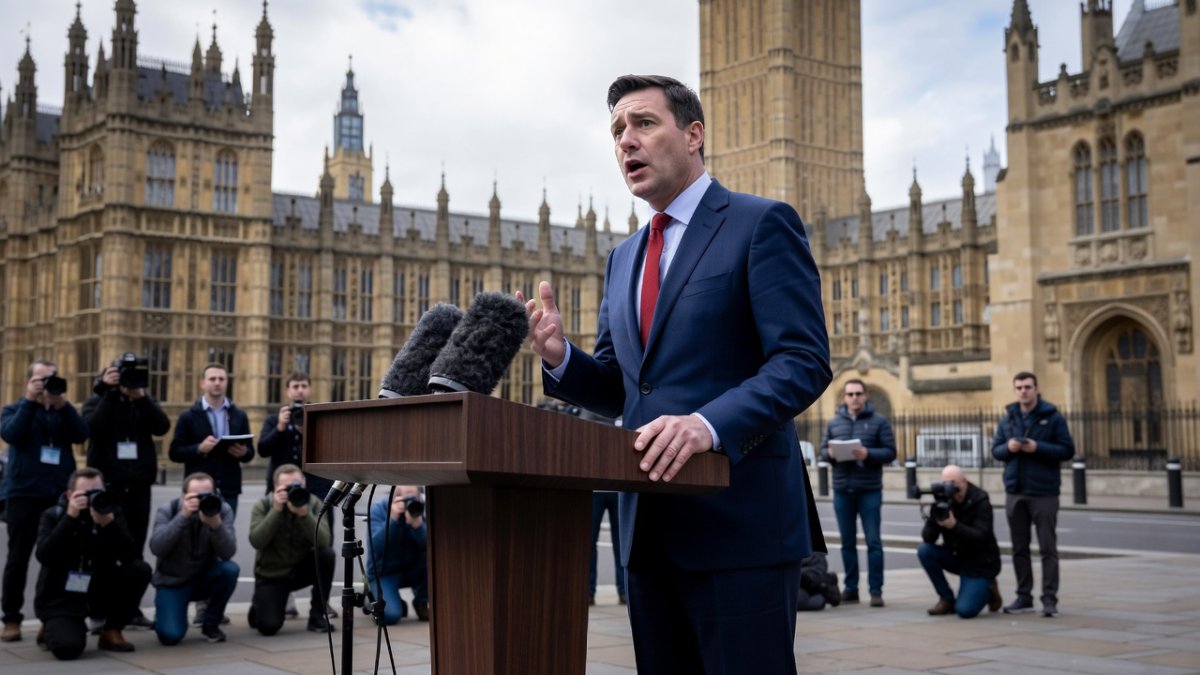
What This Means: Analysis of what Burnham should actually do on ICC, settlement goods, arms embargo, and Palestine recognition
Experts recommend that Burnham move beyond general calls for sanctions by actively supporting the ICC's work, including cooperation with arrest warrant enforcement. A full prohibition on settlement goods would close existing loopholes that allow products from occupied territory to reach UK markets. Strengthening the arms embargo to cover all components and dual-use items would align policy with the scale of destruction documented since October 2023.
Recognition of Palestine, already praised by Burnham as government policy, requires follow-through in international forums. Consistent diplomatic pressure at the United Nations and other bodies would give substance to the recognition. These steps would address the human impact on Palestinian civilians whose lives have been upended by prolonged conflict and blockade. Local economies in Gaza have collapsed under restrictions, while families across the occupied territories face ongoing uncertainty about basic services and safety.
David Hearst observed that the apology should be taken seriously precisely because it was not required. Translating that seriousness into policy requires closing the distance between stated regret and enforceable measures that protect civilian lives.
A comprehensive UK policy shift under Burnham would involve reinstating a full arms embargo through the Export Control Act 2002, directing the Department for Business and Trade to halt all licences for components used by the Israel Defense Forces. Additional measures could include formal cooperation with the International Criminal Court under the Rome Statute, adoption of selective BDS measures targeting settlement goods via the Office of Financial Sanctions Implementation, and upgrading the Palestinian diplomatic mission in London to full embassy status with ambassadorial accreditation.
European peers have already advanced further: Ireland passed the Occupied Territories Bill in 2018 banning imports from settlements, Spain suspended arms exports in 2024 citing EU Common Position 2008/944/CFSP, Belgium's Flemish region blocked military shipments, and Norway's sovereign wealth fund divested from companies linked to West Bank settlements through its Government Pension Fund Global. These steps exceed current UK restrictions maintained under the Strategic Export Control regime.
UK policy remains tethered to Washington, where the Biden administration continued military aid packages through 2025 while the incoming Trump team has signalled potential expansion of Abraham Accords frameworks. Any British divergence risks friction with the US State Department and NATO coordination on Middle East security, particularly regarding joint intelligence sharing at RAF bases in Cyprus.
For Palestinian families in Gaza, such changes could translate to restored access to clean water via UNRWA infrastructure, reduced risk of airstrikes on residential areas in Khan Younis and Jabalia, and renewed pathways for medical evacuations through the Rafah crossing, directly affecting daily survival amid ongoing blockade conditions.
Conclusion: The test of leadership
Burnham's apology opens space for a recalibration of Labour's approach to Gaza. The coming months will reveal whether the statement leads to concrete actions on ICC support, settlement trade, and arms controls. Palestinian communities and their allies will judge the outcome by tangible changes in UK policy rather than additional statements of concern. The gap between acknowledgment of past shortcomings and the implementation of remedies remains the measure of whether this moment produces lasting difference.
By Fatima Al-Rashid, Staff Writer
This article was produced with AI-assisted research and editorial support. Reporting is based on sources cited in the article.
What's Your Reaction?
 Like
0
Like
0
 Dislike
0
Dislike
0
 Love
0
Love
0
 Funny
0
Funny
0
 Wow
0
Wow
0
 Sad
0
Sad
0
 Angry
0
Angry
0
Gulf/MENA Correspondent at Global1.News. Based in Doha, covering Gulf politics, energy markets, diplomacy, and development across the Middle East and North Africa. Tracks the economic transformation of the Gulf states.










Comments (0)