
Iran-US war latest: Trump ends ‘final decision’ meeting without announcing deal and outlines key demands
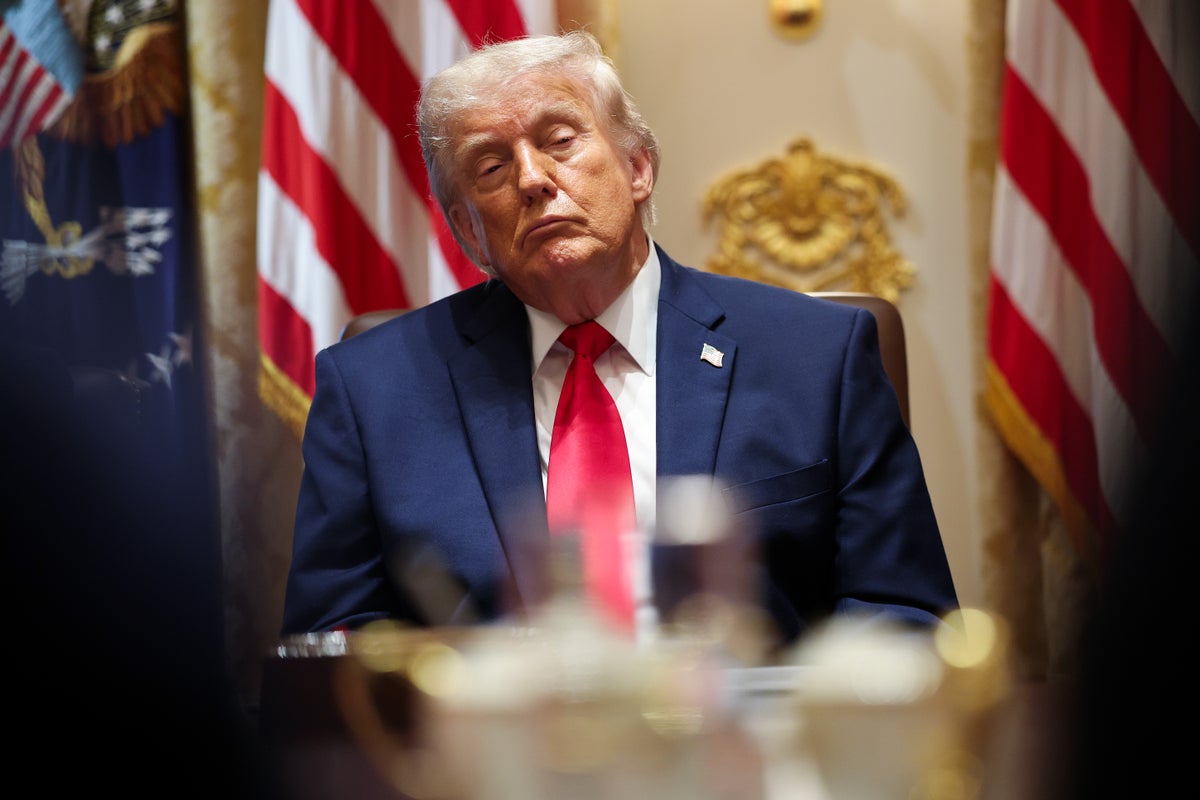
The failure of US President Donald Trump to emerge from a high-stakes “final decision” meeting with an announced agreement has left the prospect of renewed military confrontation with Iran hanging in the balance. With tensions already heightened by recent exchanges of strikes, the absence of a breakthrough signals that Washington remains prepared to escalate once more if diplomatic channels collapse. The warning from Defence Secretary Pete Hegseth that the United States is “more than capable” of resuming attacks underscores the narrow margin for error in the current standoff.
This development arrives at a moment when global attention is fixed on the potential for wider disruption across the Middle East. Markets have already registered unease over energy supplies, while regional allies weigh the consequences of any fresh round of hostilities. The lack of a concluded deal does not automatically mean an immediate return to open conflict, yet it removes one layer of restraint that might otherwise have contained the crisis.
The Meeting That Produced No Agreement
President Trump’s session, billed in advance as the moment for a conclusive choice on next steps, concluded without the public unveiling of any settlement. Officials had framed the gathering as an opportunity to align military, diplomatic and economic considerations into a single coherent position. Instead, the outcome left observers with a clearer sense of American red lines but little indication of Iranian willingness to meet them. The decision not to declare a deal at this stage reflects the complexity of the issues under discussion. Multiple strands of policy—ranging from nuclear restrictions to regional proxy activity—require simultaneous progress before any package can be presented as viable. By ending the meeting without fanfare, the administration has preserved flexibility while signalling that patience is finite.Key Demands Placed on the Table
In the wake of the meeting, President Trump set out a series of explicit conditions that would need to be addressed before any lasting accommodation could be reached. These demands were presented as non-negotiable benchmarks rather than opening positions for further bargaining. Their precise wording has yet to be fully elaborated in public statements, yet the overall thrust points toward verifiable limits on Iran’s nuclear programme and a reduction in support for armed groups operating beyond its borders. Such requirements carry significant implications for Tehran’s internal calculations. Compliance would involve tangible concessions that previous Iranian leaderships have resisted. Non-compliance, conversely, would reinforce the narrative in Washington that diplomatic efforts have been exhausted. The articulation of these demands therefore serves both as a diplomatic marker and as preparation for any subsequent justification of renewed pressure.Defence Secretary Hegseth’s Warning on Renewed Force
Defence Secretary Pete Hegseth’s intervention added a sharper edge to the post-meeting messaging. His statement that Washington remains “more than capable” of resuming attacks if talks fail was delivered in measured but unambiguous terms. It was intended to remove any impression that the United States lacks either the will or the operational capacity to act again should circumstances require it. This form of public signalling is common in periods of heightened tension, yet it carries added weight when delivered by the official responsible for military execution. Hegseth’s remarks simultaneously reassure domestic audiences of American readiness and warn adversaries against testing that readiness. They also reflect an institutional view within the Pentagon that any pause in operations is conditional rather than permanent.Regional and Global Stakes
The absence of an announced agreement reverberates far beyond the immediate protagonists. Neighbouring states have already begun contingency planning for possible disruptions to maritime traffic and energy exports. Even a limited resumption of hostilities could affect shipping lanes that remain vital to international commerce, raising the spectre of price volatility in oil and gas markets. For European governments, the situation presents a familiar dilemma: how to support American security objectives while avoiding entanglement in another protracted Middle Eastern conflict. Asian economies, heavily dependent on Gulf energy supplies, are monitoring developments with equal concern. In this sense, the outcome of the Washington meeting is not merely a bilateral matter but a test of how far the current crisis can be contained before it spills into wider economic and strategic consequences.What Comes Next
Attention now shifts to whether Iran will respond substantively to the demands outlined by President Trump or whether further military exchanges will follow. The coming days will reveal whether back-channel communications can still bridge the gap or whether both sides have settled into positions that make renewed confrontation more likely. Hegseth’s warning suggests that any perceived stalling will be met with a swift return to operational planning. In the absence of a deal, the emphasis will fall on maintaining credible deterrence while leaving just enough diplomatic space for an eventual climb-down. The situation remains fluid, and the margin for miscalculation remains uncomfortably narrow.By Erica Thornton, Staff Writer
This article was produced with AI-assisted research and editorial support. Reporting is based on sources cited in the article.
What's Your Reaction?
 Like
0
Like
0
 Dislike
0
Dislike
0
 Love
0
Love
0
 Funny
0
Funny
0
 Wow
0
Wow
0
 Sad
0
Sad
0
 Angry
0
Angry
0

Erica Thornton
US Politics and Policy Correspondent at Global1.News. Based in Washington DC, covering American politics, policy, elections, and the courts. Knows how the system works and tells you what it actually means.












Comments (0)