
Indonesia and Singapore Reaffirm Open Malacca Strait — What It Means for Korea's Energy Security
Indonesia and Singapore Reaffirm Open Malacca Strait — What It Means for Korea's Energy Security The July 2026 Leaders' Retreat and Core Commitments The second Singapore-Indonesia Leaders' Retreat convened in Jakarta on July 6, 2026, produced a clear reaffirmation of the principle that the Strait of Malacca must remain open and accessible to all vessels in accordance with the U
The July 2026 Leaders' Retreat and Core Commitments
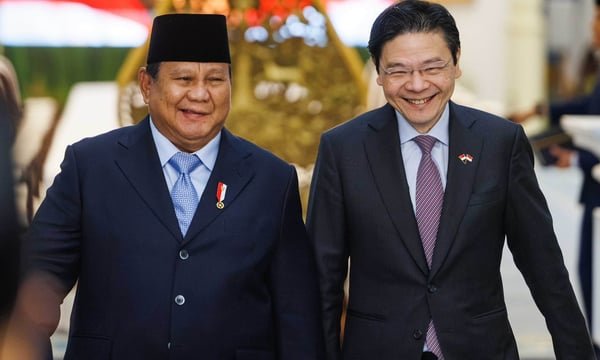
The second Singapore-Indonesia Leaders' Retreat convened in Jakarta on July 6, 2026, produced a clear reaffirmation of the principle that the Strait of Malacca must remain open and accessible to all vessels in accordance with the United Nations Convention on the Law of the Sea. Indonesian President Prabowo Subianto and Singapore Prime Minister Lawrence Wong jointly emphasized their shared interest in preserving the strait as a free passage, directly addressing earlier suggestions by Indonesian Foreign Minister Purbaya Yudhi Sadewa in April 2026 that a levy might be considered.
Prabowo Subianto stated explicitly that Indonesia and Singapore, as the two countries directly bordering the strait, hold a common stake in maintaining unrestricted transit. Lawrence Wong described the two nations as strategically aligned on security and openness, citing recent disruptions in the Strait of Hormuz as evidence of the risks posed by any constriction of critical sea lanes. These statements effectively set aside the levy proposal and restored policy clarity for international shipping.
UNCLOS Framework and Regional Precedents
The leaders' joint position rests on longstanding obligations under UNCLOS, which designates the Strait of Malacca as an international strait subject to transit passage rights. This legal foundation has historically prevented unilateral restrictions by littoral states. The 2026 retreat reinforced this interpretation without introducing new enforcement mechanisms or timelines, consistent with the gradual approach both governments have taken toward maritime governance.
Regional precedents, including coordinated patrols under the Malacca Strait Patrols framework, illustrate how Indonesia and Singapore have managed security concerns while preserving commercial access. The current reaffirmation aligns with this pattern rather than signaling an abrupt policy shift.
Korea's Heavy Reliance on Malacca Transit
South Korea routes approximately 70 percent of its energy imports through the Strait of Malacca, making the waterway a central artery for national energy security. As the world's fifth-largest crude oil importer, Korea faces direct exposure to any change in transit conditions. Disruptions would immediately affect refinery operations and downstream industries that depend on steady feedstock supplies.
The Korea Maritime Institute has repeatedly modeled scenarios in which even temporary closures raise delivered energy costs by double-digit percentages. Ministry of Oceans and Fisheries assessments similarly highlight the strait's irreplaceable role in Korea's import logistics, given the absence of viable alternative routes of comparable capacity.
Strategic Interests of Korean Shipping and Energy Firms
Major Korean carriers including HMM and Hyundai Glovis maintain extensive schedules through the strait, transporting both crude and refined products. Any levy or administrative friction would increase voyage costs and complicate fleet deployment. These companies have therefore monitored the April 2026 levy discussion closely and welcomed the July reaffirmation as a stabilizing signal.
Hyundai Glovis, in particular, coordinates large-scale energy shipments that feed Korea's petrochemical complexes. HMM's container and bulk operations similarly depend on predictable transit times. Both firms participate in industry consultations with the Ministry of Oceans and Fisheries to develop contingency routing and inventory strategies.
Policy Implications for Korean Energy Security Planning
The 2026 outcome encourages Korean policymakers to treat the Malacca Strait as a stable corridor in the medium term while still pursuing diversification. The Ministry of Oceans and Fisheries continues to evaluate expanded use of the Lombok-Makassar route and increased strategic storage capacity at domestic terminals. These measures complement rather than replace reliance on the primary strait.
Academic analysis at the Korea Maritime Institute underscores that freedom of navigation remains the lowest-cost option for Korea's import profile. Policy documents therefore emphasize diplomatic engagement with Indonesia and Singapore alongside technical investments in fleet efficiency and alternative sourcing from the Middle East and the Americas.
Cross-Border Energy Cooperation and Korean Relevance
Alongside the maritime commitment, the retreat oversaw the signing of 26 cooperation agreements, including an MoU between Indonesia's Danantara sovereign wealth fund and Singaporean entities Keppel Electric, Sembcorp Industries, and Singapore Energy Interconnections. These instruments target expanded cross-border electricity trade, illustrating how the two countries are linking maritime stability with regional energy infrastructure.
Korean observers note that stable Malacca transit supports not only oil and gas imports but also the broader supply chains that deliver components for Korea's own energy transition projects. Any future electricity interconnection schemes in Southeast Asia could eventually intersect with Korean technology exports, provided the underlying sea lanes remain reliable.
Outlook for Korea's Maritime Diplomacy
The Jakarta reaffirmation supplies Korean diplomacy with a clear reference point for future engagement. Seoul can cite the joint statement when coordinating positions in ASEAN forums or multilateral shipping discussions. Continued quiet diplomacy with both Jakarta and Singapore will help ensure that operational practices match the stated policy of open access.
Over the longer horizon, Korea's energy security will benefit from sustained monitoring by the Korea Maritime Institute and proactive fleet management by HMM and Hyundai Glovis. The 2026 retreat demonstrates that the principal littoral states continue to prioritize commercial predictability, a development that directly serves Korea's import-dependent economy.
By Prof. David Park, Staff WriterThis article was produced with AI-assisted research and editorial support. Reporting is based on sources cited in the article.
What's Your Reaction?
 Like
0
Like
0
 Dislike
0
Dislike
0
 Love
0
Love
0
 Funny
0
Funny
0
 Wow
0
Wow
0
 Sad
0
Sad
0
 Angry
0
Angry
0

East Asia/Technology Correspondent at Global1.News. Seoul-based voice covering Korean politics, technology, business, and culture. Analyzes how technology and geopolitics intersect across East Asia.













Comments (0)