
India's Semaglutide Generics: 60% Price Drop Reshapes Care
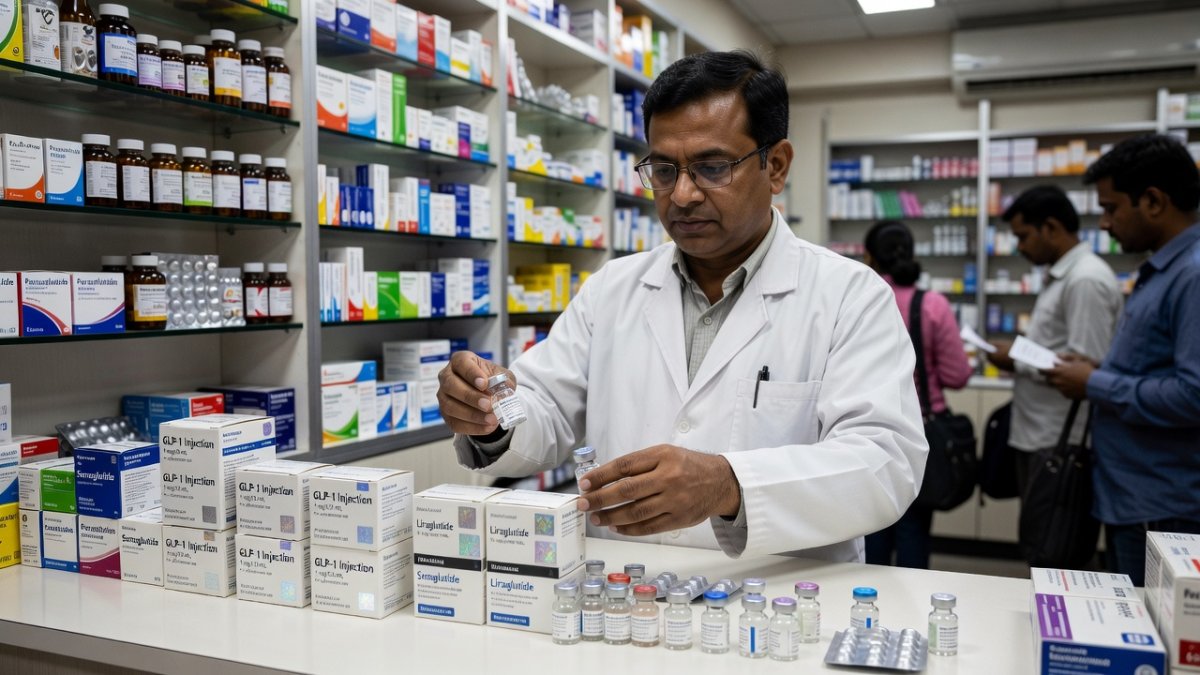
India’s semaglutide market underwent a decisive shift after the molecule’s patent expired on 20 March 2026. More than 50 branded generic versions entered the market within weeks, slashing monthly treatment costs from Rs 8,800–16,400 to Rs 3,000–4,000—a 60-70% reduction. For a country that harbours the world’s second-largest diabetes population and 254 million adults with genera
India’s semaglutide market underwent a decisive shift after the molecule’s patent expired on 20 March 2026. More than 50 branded generic versions entered the market within weeks, slashing monthly treatment costs from Rs 8,800–16,400 to Rs 3,000–4,000—a 60-70% reduction. For a country that harbours the world’s second-largest diabetes population and 254 million adults with generalised obesity according to the ICMR-INDIAB study, this price collapse carries immediate public-health implications. India’s pharmaceutical sector, valued at over $50 billion and ranked third globally by volume, has long positioned itself as the “pharmacy of the world,” exporting affordable generics to more than 200 countries. The rapid domestic rollout of semaglutide therefore extends beyond national borders, potentially reshaping global reference pricing for GLP-1 therapies and accelerating access in other emerging economies where originator costs remain prohibitive.
Patent Expiry Ignites 60% Price Collapse in India’s GLP-1 Market
New Delhi, India – July 6, 2026 — The Central Drugs Standard Control Organisation (CDSCO) and Drug Controller General of India (DCGI) cleared the first wave of semaglutide generics within 90 days of patent expiry, triggering the fastest price erosion ever recorded for a GLP-1 receptor agonist in India.
Patent Expiry and Rapid Generic Proliferation
The March 2026 patent cliff removed legal barriers that had kept semaglutide prices elevated since its 2022 introduction. CDSCO’s expedited review pathway allowed 50-plus formulations from established manufacturers to reach pharmacy shelves by June. Monthly therapy costs fell from Rs 8,800–16,400 to Rs 3,000–4,000, representing a 60-70% reduction. NATCO Pharma’s initial launch at Rs 1,290 per vial delivered a 90% discount relative to the originator, forcing immediate competitive responses. Policy analysts note that this velocity of entry exceeds previous Indian generic waves for oncology or antiretrovirals, reflecting both matured manufacturing capacity and heightened post-pandemic demand for metabolic therapies. The DCGI simultaneously issued guidance limiting direct-to-consumer advertising of GLP-1 agonists, signalling early regulatory caution amid the market surge. These developments position India as a potential global supplier of affordable semaglutide, with export applications already filed by three manufacturers.
Compared with earlier Indian generic waves, semaglutide’s patent cliff unfolded at unprecedented speed. Imatinib generics took 14 months to reach 30% price erosion after 2006, tenofovir required 11 months for meaningful competition post-2011, and sofosbuvir achieved 60% cuts only after 18 months of staggered launches beginning in 2015. GLP-1 acceleration stemmed from pre-built peptide synthesis infrastructure, CDSCO’s 90-day abbreviated pathway, and post-COVID regulatory familiarity with biologics. These factors compressed the typical 18–24-month timeline into weeks, enabling 50-plus approvals and immediate 60–70% price drops that earlier oncology and antiviral entries never matched.
Policy analysts at the National Institute of Pharmaceutical Education and Research (NIPER) Mohali have modelled the fiscal implications of this compressed timeline, projecting that CDSCO’s reliance on existing originator dossiers will save manufacturers an estimated Rs 180–220 crore in redundant clinical trials over the next three years. This cost avoidance is expected to translate into sustained price stability even as demand scales, provided the Indian Pharmacopoeia Commission enforces updated peptide impurity thresholds by Q4 2026. Furthermore, the Department of Pharmaceuticals’ Production Linked Incentive (PLI) scheme 2.0 now explicitly includes GLP-1 agonists, offering up to 10% capital subsidy for capacity expansion in Hyderabad and Visakhapatnam clusters, thereby anchoring long-term domestic supply security.

India’s Escalating Obesity and Diabetes Crisis
The ICMR-INDIAB study documents 254 million adults with generalised obesity and 351 million with abdominal obesity, figures that have doubled in two decades. India now ranks second globally in diabetes prevalence, with an estimated 74 million adults living with the condition. Against this backdrop, Novo Nordisk launched Wegovy on 24 June 2025, yet uptake remained limited to higher-income cohorts because of the Rs 16,400 monthly price. Real-world adherence data reveal that 84% of Indians attempt weight loss annually, yet only 4.7% sustain clinically meaningful reductions beyond 12 months. Public-health economists argue that the new price band could expand eligible patients from roughly 2 million to more than 15 million within three years. ICMR researchers emphasise that abdominal obesity drives disproportionate cardiovascular risk in South Asian populations, making cost-effective GLP-1 access a potential lever for reducing future hospitalisations. State-level insurance schemes in Tamil Nadu and Kerala have already begun pilot reimbursement discussions, underscoring the therapy’s transition from lifestyle drug to essential medicine.
NFHS-5 data reveal a pronounced urban-rural obesity divide that is rapidly narrowing. While urban obesity stands at 29.8% among women and 24.1% among men, rural rates have climbed to 15.4% and 12.7% respectively—more than doubling since NFHS-4. This shift expands the potential generic semaglutide population beyond metros into tier-2 and tier-3 districts where cold-chain logistics and endocrinologist density remain limited. Consequently, state procurement programmes and Ayushman Bharat pilots must prioritise rural distribution networks and primary-care titration training to convert price reductions into equitable access rather than perpetuating urban concentration of therapy.
Manufacturers Compete on Price and Formulation
NATCO’s Rs 1,290 vial set the benchmark, prompting Dr Reddy’s to introduce Obeda at Rs 2,850 per month and Eris Lifesciences, in partnership with NATCO, to launch Sundae at Rs 3,100. Sun Pharma, Zydus Lifesciences, Lupin, Torrent, Cipla and Mankind Pharma have each filed or launched competing products, collectively projecting a fivefold expansion of the Indian GLP-1 market by 2030. Novo Nordisk responded with 38% and 48% price cuts on Ozempic and Wegovy respectively, yet still remains 30-40% above the lowest generic offerings. Industry analysts highlight that Indian manufacturers benefit from vertically integrated peptide synthesis capacity developed during the COVID-19 vaccine scale-up, enabling rapid semaglutide production at lower cost. Patient-level savings are projected to reach Rs 1.2 lakh annually for those previously on originator therapy, freeing household resources for nutrition and monitoring. However, supply-chain observers caution that vial and pen-device quality must remain consistent across the new entrants to avoid therapeutic failures.
Export momentum is accelerating alongside domestic competition. NATCO, Dr Reddy’s and Sun Pharma have submitted WHO prequalification dossiers for semaglutide, targeting supply to African and Southeast Asian markets where originator pricing exceeds $300 monthly. Early projections indicate Indian generics could capture 12–15% of global GLP-1 volume outside high-income countries by 2028, generating $1.8–2.2 billion in annual export revenue. This outward orientation mirrors the antiretroviral and hepatitis-C precedents that established India as the default supplier for donor-funded programmes, positioning domestic manufacturers to influence international reference prices and expand access in regions still awaiting affordable GLP-1 options.
Regulatory Oversight and Emerging Safety Concerns
The DCGI has restricted promotional claims linking GLP-1 agonists to cosmetic weight loss and mandated prescription-only status. CDSCO’s pharmacovigilance cell has initiated active surveillance for gastrointestinal adverse events and potential thyroid signals reported in global trials. Self-medication risks are elevated because social-media promotion of “generic Ozempic” has already appeared on Indian platforms despite the advertising ban. Experts from the Indian Pharmacopoeia Commission stress the need for batch-level bioequivalence data beyond initial approvals, particularly for peptide injectables where immunogenicity can vary. State drug controllers in Maharashtra and Karnataka have begun random pharmacy inspections to verify cold-chain compliance, recognising that semaglutide stability is temperature-sensitive. Without strengthened post-marketing surveillance, the very affordability that expands access could also amplify misuse among non-obese individuals seeking rapid weight reduction.
India’s DCGI/CDSCO pathway for semaglutide generics aligns closely with US FDA ANDA and EMA Article 10(1) requirements yet compresses review to 90 days through reliance on originator reference data and targeted dissolution studies. The Indian Pharmacopoeia Commission is simultaneously updating monographs to include peptide-specific impurity limits and immunogenicity assays, harmonising with USP and EP standards. This convergence facilitates future mutual-recognition agreements while maintaining rigorous local oversight, reducing duplication for manufacturers seeking multi-jurisdictional approvals and accelerating global availability of quality-assured Indian semaglutide.
What This Means for India
The price collapse aligns with Ayushman Bharat’s goal of expanding access to high-cost chronic therapies. If state insurance programmes incorporate selected generics, annual public expenditure on diabetes complications could decline measurably within five years. Private insurers are already revising reimbursement schedules, potentially lowering premiums for metabolic-disease riders. Primary-care physicians will require updated training on titration protocols and monitoring, an area where ICMR has begun developing modular curricula. Long-term, India’s emergence as a low-cost semaglutide producer may influence global reference pricing, pressuring originator companies to negotiate volume-based contracts in other emerging markets. The policy challenge lies in balancing rapid access with safeguards that prevent inappropriate prescribing and ensure sustained therapeutic benefit.
Private insurers are adapting quickly to the new pricing landscape. ICICI Lombard and HDFC Ergo have introduced optional GLP-1 riders covering up to Rs 36,000 annually for generic semaglutide when prescribed for BMI ≥27 with comorbidities, while Star Health and Niva Bupa are piloting similar add-ons for group policies. Early actuarial modelling suggests these riders could reduce claims for bariatric procedures and cardiovascular events by 8–12% over five years, enabling modest premium offsets. Insurer engagement therefore complements public schemes by extending coverage to middle-income households previously priced out of originator therapy.
The Bottom Line
India’s semaglutide generic revolution demonstrates how patent expiry, combined with mature domestic manufacturing, can rapidly democratise access to a transformative therapy. The 60-70% price reduction arrives at a moment when obesity and diabetes threaten to overwhelm the healthcare system. Success will depend on rigorous pharmacovigilance, physician education and insurance integration. If these elements align, India could convert an expensive imported molecule into a scalable public-health tool, offering a template for future high-cost metabolic therapies. Comparable precedents—such as the 2005–2010 antiretroviral price collapse and the 2018 direct-acting antiviral hepatitis-C programme—illustrate that sustained outcomes require not only affordability but also robust supply-chain integrity and continuous medical education. Should India replicate those successes, the current semaglutide wave may serve as a replicable blueprint for other high-cost chronic-disease therapies entering the post-patent era.
Next-generation agents such as retatrutide and orforglipron, anticipated in India by 2027–2028, will intensify competition further. Their superior efficacy profiles could render current semaglutide generics interim therapies, prompting manufacturers to accelerate cost-reduction strategies and formulation improvements. Indian firms with established peptide capacity are already positioning for these launches, ensuring the market remains dynamic and prices continue trending downward even as therapeutic options expand.
— By Dr. Raj Patel, Staff Writer
This article was produced with AI-assisted research and editorial support. Reporting is based on sources cited in the article.
What's Your Reaction?
 Like
0
Like
0
 Dislike
0
Dislike
0
 Love
0
Love
0
 Funny
0
Funny
0
 Wow
0
Wow
0
 Sad
0
Sad
0
 Angry
0
Angry
0

India/South Asia Correspondent at Global1.News. Analytical voice with a background in science and health journalism. Based in New Delhi, covering Indian politics, education, healthcare, technology, and policy. Breaks down complex data into clear, actionable reporting.













Comments (0)