
Hoekstra Denies US Talks with Alberta Separatists Ahead...
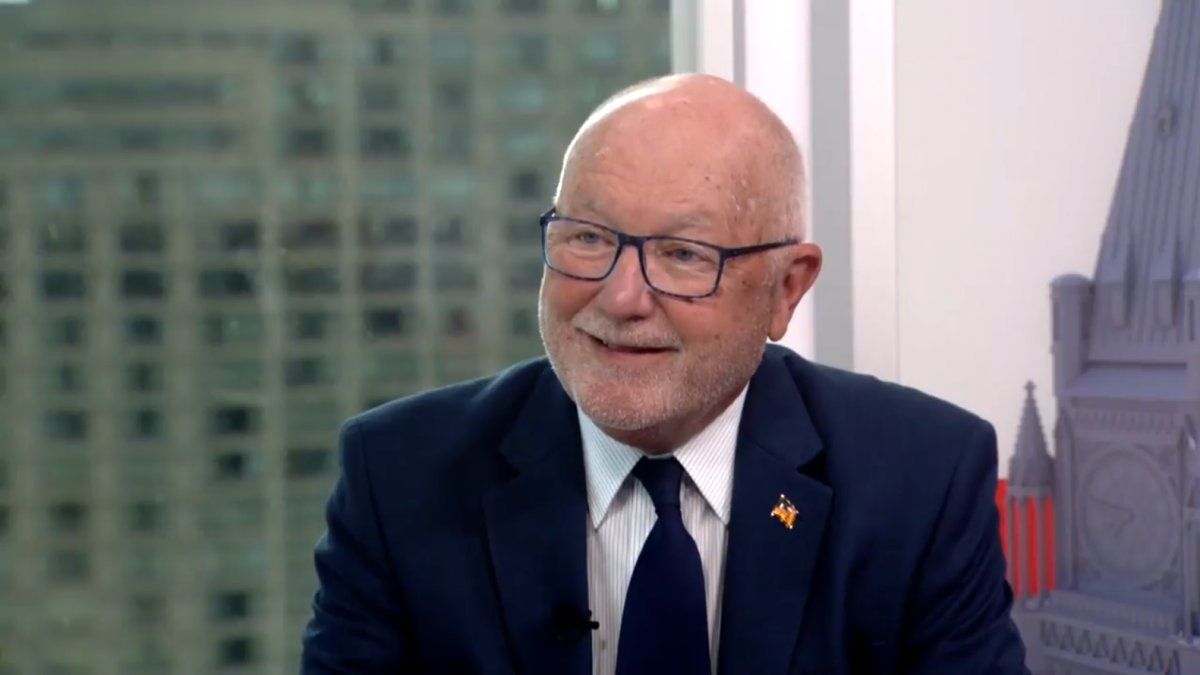
Hoekstra Denies US Talks with Alberta Separatists US Ambassador Pete Hoekstra has directly contradicted claims that the Trump administration is engaging with Alberta separatists. In an interview with Global News, Hoekstra stated plainly that no such meetings or strategic discussions are taking place. This denial comes amid reports suggesting otherwise and carries immediate weig
Hoekstra Denies US Talks with Alberta Separatists
US Ambassador Pete Hoekstra has directly contradicted claims that the Trump administration is engaging with Alberta separatists. In an interview with Global News, Hoekstra stated plainly that no such meetings or strategic discussions are taking place. This denial comes amid reports suggesting otherwise and carries immediate weight for Canadian unity and cross-border diplomacy. The ambassador's comments address assertions made by Jeffery Rath of the Alberta Prosperity Project, who has maintained that three meetings occurred with State Department officials since April.
The core contradiction centres on whether American officials have entertained ideas of supporting Alberta's separation from Canada. Hoekstra's position rejects any notion of active involvement. His remarks arrive as Alberta prepares for a referendum scheduled for October 2026, an event announced by Premier Danielle Smith on May 21. Observers note that any perception of foreign interference could complicate already sensitive federal-provincial relations and ongoing trade negotiations under CUSMA.
Canadian officials have long viewed external commentary on internal unity matters with caution. Hoekstra's denial provides a measure of reassurance that the United States is not actively encouraging division. At the same time, the ambassador emphasised that separatists remain free to make their own statements without official endorsement. This distinction matters because it separates public claims from verified diplomatic activity.
The significance extends beyond Alberta. Any suggestion of American support for separation risks straining relations with the federal government in Ottawa. Hoekstra's clear rejection of meetings helps maintain the formal stance that the United States deals with Canada as a single sovereign partner. For Albertans and other Canadians, the ambassador's words reduce uncertainty about potential external influence on the upcoming referendum process.
Public reaction in Canada has focused on the need for clarity from Washington. Hoekstra's statement supplies that clarity by ruling out strategic engagement with separatist groups. The denial aligns with longstanding American practice of avoiding direct involvement in Canadian constitutional questions while still acknowledging economic ties that cross the border.
What the Ambassador Said in the Global News Interview
During the Global News interview, Ambassador Pete Hoekstra offered several direct responses that clarified the American position. When asked about meetings with separatists, he replied: "No, we're not meeting with the separatists and strategizing this at all." He added that "separatists can say whatever they want," signalling that unsubstantiated claims would not alter official policy. These statements form the central record of the exchange and leave little room for interpretation regarding active coordination.
Hoekstra also addressed whether President Trump wants Alberta to remain part of Canada. His answer was measured: "That's the president's call... we are not going to take a position on that." The phrasing avoids endorsement of either unity or separation. It reflects a deliberate choice to remain neutral on an internal Canadian matter while still acknowledging the question's relevance to bilateral relations.
The ambassador further noted that "Canadians get upset about a number of things," a comment that appeared to recognise domestic sensitivities without engaging them directly. This tone suggests awareness of how American statements can resonate in Canadian political debate. Throughout the interview, Hoekstra maintained a consistent line that prioritised official channels over informal or separatist contacts.
The Global News conversation represents the second of two installments and provides the most authoritative recent account of American thinking on the topic. Hoekstra's exact words carry weight because they come from the sitting ambassador rather than unnamed sources. They directly challenge the narrative advanced by Jeffery Rath and limit the scope for speculation about hidden American support.
Observers will likely parse these remarks for any subtle signals. Yet the language remains straightforward in denying meetings and refusing to stake out a position on Alberta's future within Canada. The interview therefore serves as the clearest public rebuttal available from the current administration.
Separatist Claims Collide with Diplomatic Reality
Jeffery Rath, leader of the Alberta Prosperity Project, has asserted that three meetings took place with State Department officials since April. He further claimed that a US$500-billion line of credit was discussed during those encounters. A Financial Times report cited sources supporting the occurrence of the three meetings, though it did not confirm the credit figure or any formal outcomes. These assertions now stand in direct contrast to Ambassador Hoekstra's denial.
The absence of independent verification beyond the Financial Times sourcing leaves the claims open to scrutiny. No official American record has surfaced confirming the meetings or the proposed financial arrangement. Rath's statements therefore rest on his own account and the cited sources rather than documented diplomatic agreements. This gap affects the credibility of the Alberta Prosperity Project's public narrative.
Diplomatic reality, as articulated by Hoekstra, prioritises established government-to-government channels. The ambassador's rejection of any strategising with separatists undercuts the notion that the United States has extended concrete offers. Without corroboration from American officials, the US$500-billion figure remains an unverified element in the broader discussion.
The collision between Rath's claims and Hoekstra's statements places the Alberta Prosperity Project in a position where its assertions require stronger evidence to gain wider acceptance. Canadian audiences, already attentive to the October 2026 referendum timeline, will weigh the ambassador's words against separatist messaging. The lack of confirmation from the State Department limits the immediate impact of the reported discussions.
Observers note that such discrepancies are common when unofficial actors seek to shape public perception ahead of political events. Hoekstra's interview supplies the counterpoint that official policy does not include engagement with separatist groups. This clarification narrows the space for speculation about American financial or political backing.
US Policy on Canadian Unity: Then and Now
American policy toward Canadian unity has historically favoured a single, stable neighbour. In 1995, President Bill Clinton publicly called for a united Canada during the Quebec referendum period. That stance reflected a preference for continuity in bilateral relations and avoidance of fragmentation that could affect trade and security cooperation. The current administration's approach, as expressed by Ambassador Hoekstra, maintains a similar reluctance to intervene while updating the language of neutrality.
Treasury Secretary Bessent described Alberta as a "natural partner for the U.S." in January comments. This economic framing highlights shared interests in energy and resources without venturing into constitutional questions. Hoekstra's later remarks build on that foundation by explicitly declining to take a position on whether Alberta should stay within Canada. The shift appears to be one of emphasis rather than substance.
Canadian officials and observers have generally welcomed clarity that avoids any appearance of external encouragement for separation. Hoekstra's statement that the matter is "the president's call" while refusing to stake out a position aligns with past practice of non-interference. It also acknowledges that domestic Canadian debates remain the responsibility of Canadian governments and voters.
The evolution from Clinton's direct call for unity to the present administration's more reserved phrasing reflects changes in diplomatic style. Both approaches ultimately support stable relations with Canada as a whole. Hoekstra's interview reinforces that the United States continues to conduct business through federal channels, including those involving Canada-U.S. Trade Minister Dominic LeBlanc in CUSMA discussions.
Observers in Ottawa and provincial capitals will monitor whether future statements maintain this balance. The historical record shows consistent American interest in a united Canada, tempered by recognition that internal matters are for Canadians to decide. Hoekstra's comments fit within that established pattern.
Alberta's Referendum and Public Opinion Trends
Premier Danielle Smith announced on May 21 that Alberta will hold a referendum in October 2026. The vote will address questions related to separation, setting the stage for a significant provincial decision. Legal context requires the referendum to operate within Canada's constitutional framework, meaning any outcome would still need federal negotiation and potential amendment processes.
An Ipsos poll conducted in June 2026 placed support for separation at 19 percent, a decline of 10 points since January. This drop indicates softening public backing in the months following the announcement. Federal-provincial dynamics remain central, as Ottawa has consistently maintained that separation would require broad agreement and could not be achieved unilaterally.
The timing of the referendum places additional pressure on all parties to clarify positions. Ambassador Hoekstra's denial of meetings with separatists arrives against this backdrop and may influence how Albertans assess external involvement. Public opinion trends suggest that voters are responding to domestic factors as much as any reported international contacts.
Premier Smith's announcement has already prompted debate about economic implications, resource management, and the practical steps that would follow a positive vote. Federal officials continue to emphasise that Canada remains one country and that constitutional change follows established rules. The Ipsos numbers provide a current snapshot that may shift again before October 2026.
Albertans and other Canadians will watch how the campaign unfolds and whether further polling reflects continued decline or stabilisation in support. The legal and political requirements surrounding the referendum ensure that the outcome cannot be determined solely by provincial sentiment. Hoekstra's comments add an external data point without altering the fundamentally Canadian character of the decision.
What Comes Next for Bilateral Relations
CUSMA negotiations continue to involve Canada-U.S. Trade Minister Dominic LeBlanc, who represents federal interests in trade matters. Ambassador Hoekstra's statements on separatists occur alongside these ongoing discussions, underscoring that economic cooperation proceeds through established government channels. The distinction between trade talks and internal Canadian political debates remains important for both countries.
Implications for Canadian sovereignty centre on the principle that external actors do not determine constitutional outcomes. Hoekstra's refusal to take a position on Alberta staying within Canada respects that boundary while still allowing economic commentary, such as Treasury Secretary Bessent's description of Alberta as a natural partner. This balance preserves formal respect for Canadian jurisdiction.
Practical meaning for Albertans and all Canadians lies in continued access to continental markets and predictable trade rules. Any perception that the United States is engaging separatist groups could have complicated these arrangements. The ambassador's denial reduces that risk and keeps focus on federal-level engagement.
Observers will watch for further statements from Washington or Ottawa that clarify boundaries ahead of the October 2026 referendum. Dominic LeBlanc's role in CUSMA provides one avenue for sustained dialogue. The overall trajectory points toward maintenance of existing bilateral structures rather than disruption tied to provincial political movements.
Canadians across regions have an interest in stable relations that support jobs and investment. Hoekstra's interview supplies reassurance that the United States is not inserting itself into the referendum process. This clarity allows domestic debate to proceed without added external variables.
Tags: Pete Hoekstra, Alberta separatists, Jeffery Rath, Alberta referendum, US Canada relations, Danielle Smith, Canadian sovereignty
By Alex Thompson, Staff Writer
This article was produced with AI-assisted research and editorial support. Reporting is based on sources cited in the article.
What's Your Reaction?
 Like
0
Like
0
 Dislike
0
Dislike
0
 Love
0
Love
0
 Funny
0
Funny
0
 Wow
0
Wow
0
 Sad
0
Sad
0
 Angry
0
Angry
0

Canada Correspondent at Global1.News. Based in Toronto, covering Canadian politics, energy, trade, and US-Canada relations. Provides the Canadian perspective on North American and global affairs.












Comments (0)