
How bad will wildfires get this year? Officials set to share outlook

Canada Prepares for 2026 Wildfire Season as Federal and Provincial Officials Set to Release Spring Outlook
Officials from Natural Resources Canada and provincial wildfire agencies are scheduled to release the national spring wildfire outlook later this week, providing the first detailed assessment of conditions expected across the country this summer. The announcement arrives against the backdrop of sustained high fire risk following the 2025 season, which burned nearly 90,000 square kilometres and ranked as the second-worst on record.
Context from Recent Fire Seasons
Canada’s wildfire history shows clear escalation in both frequency and scale since the early 2000s. The 2023 season set the modern benchmark, scorching more than 150,000 square kilometres and triggering evacuations of over 200 communities. While 2024 brought modest relief in some regions, 2025 again pushed resources to their limits, with total area burned reaching 89,700 square kilometres by mid-September. British Columbia and Alberta accounted for roughly 60 percent of that total, but significant activity also occurred in Saskatchewan, Manitoba, and the Northwest Territories.
These figures matter beyond simple acreage. Each square kilometre of intense crown fire releases an estimated 1,200 to 1,800 tonnes of carbon, according to Natural Resources Canada’s 2024 emissions inventory. The 2025 season therefore contributed an additional 120 to 160 million tonnes of CO₂-equivalent to the atmosphere, roughly equivalent to the annual emissions of 35 million passenger vehicles.
What the Upcoming Outlook Will Likely Address
The spring outlook, coordinated through the Canadian Interagency Forest Fire Centre, integrates snowpack data, long-range weather forecasts, and fuel-moisture measurements collected over the winter. Sources familiar with the preparation indicate the report will emphasize three variables: spring precipitation deficits in the western provinces, above-normal temperatures forecast for the Prairies and northern Ontario through July, and the continued presence of drought-stressed timber in regions that escaped major burns last year.
Unlike previous years when early snowmelt dominated discussion, this season’s briefing is expected to highlight “legacy fuel” conditions—standing dead timber and deep organic layers that remain dry even after modest winter snowfall. “We are no longer dealing with single-season anomalies,” said Dr. Michael Wotton, a senior research scientist with the Canadian Forest Service, in a recent technical briefing. “We are managing cumulative fuel loads built up over multiple dry years.”
Regional Risk Variations
While national headlines often focus on British Columbia and Alberta, the 2026 outlook is anticipated to flag elevated risk in central Saskatchewan and northwestern Ontario. In Ontario’s Far North, the 2025 season burned 11,400 square kilometres, much of it in remote spruce-lichen woodland where suppression is logistically difficult. Communities such as Fort Albany and Attawapiskat remain concerned about repeat evacuations if lightning activity spikes early.
Quebec, which experienced relatively contained fires in 2025, may see increased activity if the current La Niña pattern weakens by June. Meteorologists at Environment and Climate Change Canada note that a transition toward neutral or weak El Niño conditions historically correlates with hotter, drier summers across the eastern half of the country.
Preparedness and Resource Allocation
Federal and provincial governments have increased baseline funding for wildfire management. The 2025 federal budget allocated an additional $680 million over five years for expanded aerial fleet contracts and Indigenous-led fire-guard programs. Provinces have similarly adjusted: British Columbia added 14 new airtankers to its roster, while Alberta increased its seasonal firefighter complement by 18 percent.
These measures address capacity gaps exposed in 2025, when crews were rotated from as far away as New Brunswick and the Yukon to support western operations. Still, experts caution that no amount of equipment fully offsets the physical limits of terrain and weather windows. “You can have 50 helicopters on standby,” noted Alberta Wildfire Information Officer Lena Redcrow, “but if the Haines Index hits extreme and winds exceed 40 kilometres per hour, you are largely in a monitoring posture until conditions moderate.”
Impacts on Communities and Economy
Direct economic losses from the 2025 season exceeded $4.2 billion when timber, infrastructure, and tourism impacts are combined. Insurance claims related to smoke damage and business interruption in urban centres such as Calgary and Edmonton reached record levels. Health authorities recorded a 22 percent increase in respiratory-related emergency visits across the Prairies during peak smoke periods.
Indigenous communities continue to bear disproportionate burdens. In 2025, 47 First Nations were under evacuation order at some point, with average displacement times of 19 days. Several bands have since accelerated development of community wildfire protection plans that incorporate traditional burning practices alongside modern fuel management.
Longer-Term Implications
The pattern of consecutive severe seasons raises questions about forest management policy. Some forest ecologists argue that decades of aggressive fire suppression have created denser stands more prone to catastrophic crown fires. Others emphasize that climate-driven drying is the dominant factor and that prescribed burning alone cannot reverse temperature trends already observed.
Public-health researchers are also tracking cumulative exposure. A forthcoming study from the University of Toronto’s Dalla Lana School of Public Health estimates that repeated smoke events may be contributing to measurable declines in lung function among children in northern communities, even when fires remain hundreds of kilometres away.
For residents of southern cities, the practical takeaway is that smoke-related air-quality advisories are no longer rare summer anomalies. Toronto Public Health issued 14 special statements in 2025, compared with an average of three per year between 2015 and 2019.
The upcoming outlook will not predict individual fires but will frame the probability ranges that emergency managers use to pre-position resources. Canadians living in or near forested regions can expect continued emphasis on FireSmart home assessments and updated evacuation-route planning. For the broader public, the data will reinforce that wildfire smoke has become a recurring seasonal public-health consideration rather than an occasional inconvenience.
This is Alex Thompson for Global1 News, reporting from Toronto. 🇨🇦
This article was produced with AI-assisted research and editorial support. Reporting is based on sources cited in the article.
What's Your Reaction?
 Like
0
Like
0
 Dislike
0
Dislike
0
 Love
0
Love
0
 Funny
0
Funny
0
 Wow
0
Wow
0
 Sad
0
Sad
0
 Angry
0
Angry
0
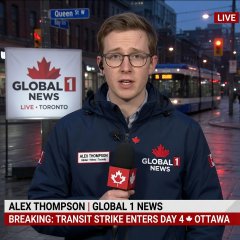
Canada Correspondent at Global1.News. Based in Toronto, covering Canadian politics, energy, trade, and US-Canada relations. Provides the Canadian perspective on North American and global affairs.













Comments (0)