
Hezbollah Rejects Renewed US-Backed Ceasefire Between Israel and Lebanon
Ceasefire Renewal Under Fire A recent BBC News report detailed Hezbollah's outright rejection of the renewed ceasefire deal between Israel and Lebanon, describing scenes of heightened tension in Beirut as officials absorbed the implications. This development represents a major diplomatic blow to efforts aimed at stabilizing the border region following months of fragile calm. Th
Ceasefire Renewal Under Fire
A recent BBC News report detailed Hezbollah's outright rejection of the renewed ceasefire deal between Israel and Lebanon, describing scenes of heightened tension in Beirut as officials absorbed the implications. This development represents a major diplomatic blow to efforts aimed at stabilizing the border region following months of fragile calm. The rejection underscores deep divisions that continue to shape Lebanese politics and security dynamics. International actors now face renewed uncertainty about whether diplomatic channels can prevent a return to open conflict along the frontier.
Naim Qassem, Hezbollah Secretary-General, called the negotiations futile and humiliating for Lebanon in his public statement. He argued that the proposed terms undermined national dignity and failed to address core Lebanese concerns. Qassem's words emphasized that any agreement perceived as one-sided would face strong internal opposition. This position reflects Hezbollah's longstanding stance on resisting external pressure in security matters.
The November 2024 ceasefire has served as the primary barrier preventing renewed large-scale conflict between the parties. Hezbollah's rejection places this arrangement at immediate risk and raises questions about enforcement mechanisms. Without broad acceptance, sporadic incidents could escalate quickly into wider exchanges. Regional stability hinges on whether alternative diplomatic paths can be identified in the coming weeks.
International observers, including UNIFIL personnel, are monitoring the situation closely from their positions along the Blue Line. UNIFIL has expressed concern that the rejection could complicate its monitoring mandate. Multiple parties, including the United States and European governments, continue to urge restraint while assessing next steps. The coming days will test the resilience of existing de-escalation frameworks.
The Pilot Security Zones
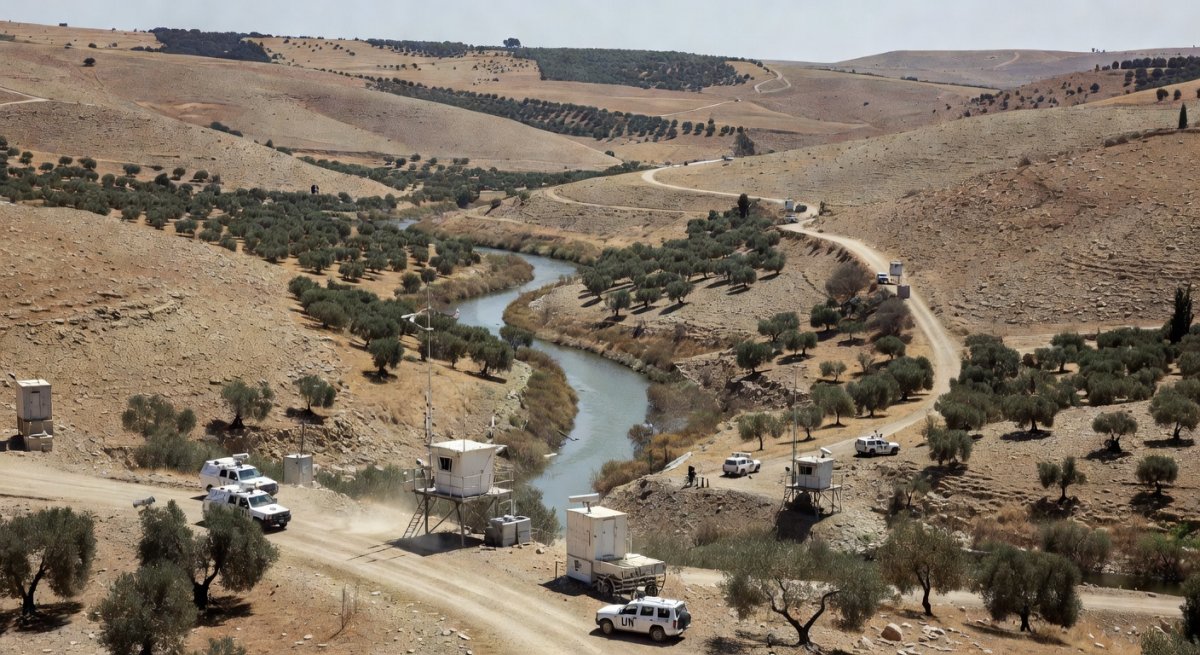
A view of the Blue Line demarcation zone between Israel and Lebanon in the Litani River region. (Global 1 News)
The proposed pilot security zones would be established inside Lebanon along the Blue Line in the southern Litani River region. These areas are designed to create monitored buffers that limit unauthorized movements and reduce friction points. The zones cover key segments of the frontier where past incidents have occurred most frequently. Their geographic scope focuses on locations identified through joint assessments by Lebanese and international officials.
A 60-day trial period was outlined for the zones, during which the Lebanese Armed Forces would enforce compliance with UNIFIL oversight. Daily patrols and checkpoint operations would form the core of the practical implementation. Coordination centers would facilitate real-time information sharing between LAF units and UNIFIL observers. This structure aims to build confidence through verifiable actions on the ground.
The critical condition attached to the zones remains contingent on a complete cessation of fire by Hezbollah, according to US State Department sources. Israel retains its self-defense rights under the framework should violations occur. This clause was included to address Israeli security requirements while allowing Lebanon to demonstrate control. The conditionality reflects the delicate balance negotiators sought to achieve.
US logistical support and intelligence assistance would be provided to the Lebanese Armed Forces to strengthen their operational capacity. Training programs and equipment deliveries were scheduled to begin immediately upon acceptance. American officials emphasized that such support would remain conditional on sustained Lebanese performance. This element was intended to enhance enforcement credibility throughout the trial period.
Hezbollah's Rejection: Sovereignty or Strategy?
Naim Qassem stated that the pilot zones constitute a violation of Lebanon's sovereignty. He argued that external forces should not dictate security arrangements inside Lebanese territory. Qassem's position frames the proposal as an infringement on national authority rather than a cooperative security measure. This argument resonates with Hezbollah's core messaging on resistance to foreign influence.
Internal Lebanese dynamics reveal clear divisions, with Prime Minister Najib Mikati supporting renewal of the ceasefire terms. Speaker Nabih Berri has expressed reservations about certain provisions. These differences highlight the fragmented nature of Lebanon's political landscape when addressing sensitive security issues. Domestic consensus remains elusive despite external diplomatic pressure.
Hezbollah's political calculus appears focused on preserving operational freedom while maintaining its resistance narrative to rally base support. The group seeks to avoid any perception of concession that could weaken its standing among allies and constituents. Strategic calculations also involve long-term positioning within Lebanon's complex sectarian balance. Rejection allows Hezbollah to project strength amid ongoing regional tensions.
Analysts suggest this approach preserves leverage for future talks by avoiding immediate commitments. The rejection may be intended to extract additional concessions in subsequent rounds. Such positioning reflects standard bargaining tactics employed by non-state actors in protracted conflicts. Future negotiations could hinge on whether Hezbollah perceives improved terms on the table.
Israel and the US Respond
Israeli Defense Minister Israel Katz issued a warning that Israel will not tolerate any violation of the proposed arrangements. Katz emphasized that Israeli forces would respond decisively to threats originating from Lebanese territory. His statement was delivered in the context of ongoing security assessments by the Israeli cabinet. The remarks aimed to deter potential breaches while signaling resolve to domestic audiences.
US State Department spokesperson Matthew Miller briefed reporters on the joint statement issued Wednesday, June 3. Miller outlined the United States role as broker between the involved parties. He stressed that the agreement represented the best available path to prevent escalation. American officials continue to engage all sides through established diplomatic channels.
Under Secretary John Bass traveled to Beirut and Tel Aviv to finalize the terms of the pilot zones. Bass conducted multiple rounds of consultations with Lebanese and Israeli counterparts during his visit. His mission focused on bridging remaining gaps and securing operational commitments. The diplomatic effort reflects sustained US investment in the process.
If violations occur, the self-defense clause permits Israel to take necessary protective measures. This provision was designed to maintain deterrence while encouraging Lebanese enforcement efforts. US officials have indicated that activation of the clause would trigger renewed diplomatic consultations. The mechanism seeks to contain incidents before they expand.
Regional Reactions: Tehran and Moscow Weigh In
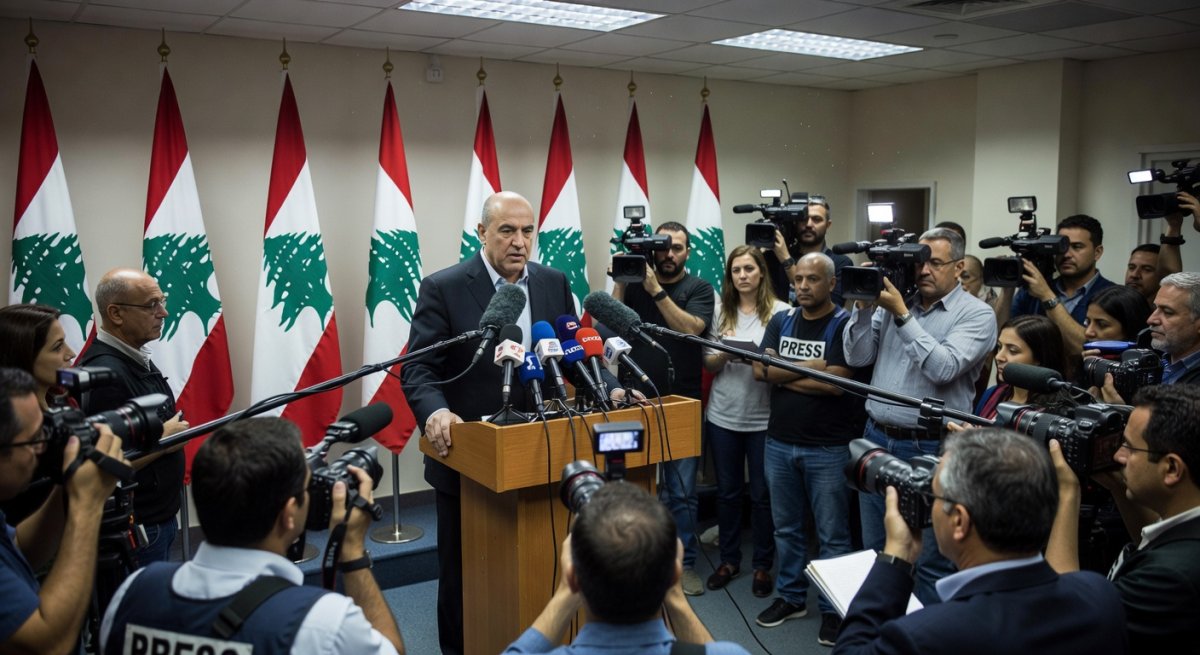
Hezbollah Secretary-General Naim Qassem speaking in Beirut. (Global 1 News)
Iran's Foreign Ministry spokesperson Nasser Kanaani declared that the security of Lebanon is a red line for Tehran. Kanaani reaffirmed Iran's support for Hezbollah in the face of external pressure. Iranian statements frame the developments as part of broader resistance against Israeli and American influence. This position aligns with Tehran's regional strategy of backing allied non-state actors.
Russia's Foreign Ministry spokesperson Maria Zakharova stated that any arrangement lacking Lebanese national consensus will only deepen instability. Zakharova called for inclusive dialogue that respects Lebanon's internal political processes. Russian officials have consistently advocated for solutions derived from local agreement rather than external imposition. This stance reflects Moscow's broader approach to Middle Eastern diplomacy.
The reactions connect to wider competition within the Iran-proxy axis and geopolitical maneuvering in Lebanon. Both Iran and Russia seek to counterbalance American diplomatic initiatives. Their positions influence the calculations of local actors and shape the parameters of acceptable agreements. Regional dynamics remain tightly intertwined with Lebanese security developments.
Russia maintains interest in serving as a counterweight to US unilateralism in the Middle East. Zakharova's comments position Moscow as a defender of Lebanese sovereignty against perceived external dictates. This approach allows Russia to cultivate influence among parties skeptical of American-led processes. Future Russian engagement may increase if diplomatic momentum stalls.
The Fragile November 2024 Ceasefire
The original ceasefire that ended the 2024 Israel-Hezbollah war was reached in November 2024 after intense international mediation. It halted large-scale exchanges that had displaced communities on both sides of the border. The agreement established basic parameters for de-escalation and monitoring. Its durability has been tested repeatedly since implementation.
UN Security Council Resolution 1701 provides the legal framework governing the current arrangements. The resolution requires Hezbollah to withdraw north of the Litani River and calls for strengthened Lebanese state authority in the south. It also mandates the disarmament of non-state actors in the border area. Full implementation has remained incomplete since 2006.
Renewal became necessary because sporadic incidents continued to test the limits of the existing truce. Cross-border fire and unauthorized movements threatened to unravel the November 2024 understanding. Diplomatic efforts therefore focused on reinforcing compliance mechanisms. The pilot zones emerged as one proposed method of strengthening the original framework.
A persistent gap exists between the text of Resolution 1701 and ground realities in southern Lebanon. Enforcement challenges have allowed Hezbollah to maintain a presence near the frontier. This discrepancy has fueled Israeli security concerns and complicated Lebanese government efforts. Bridging this gap remains central to any sustainable solution.
Analysis and Implications
Hezbollah's rejection raises concrete fears of renewed hostilities along the Blue Line. Without an accepted enforcement mechanism, the risk of miscalculation increases significantly. Both sides retain military capabilities that could be activated rapidly if tensions spike. Regional actors are preparing contingency plans in response to this uncertainty.
US diplomatic strategy faces strain due to limited leverage over non-state actors such as Hezbollah. American officials must navigate between Israeli security demands and Lebanese political constraints. The rejection highlights the challenges of achieving durable agreements when key parties remain outside formal negotiation structures. Future US initiatives may require adjusted approaches.
Russia's position as a potential alternative mediator gains relevance following the rejection. Moscow's emphasis on Lebanese national consensus offers a different diplomatic framing. Russian involvement could appeal to parties seeking to diversify away from exclusive US-led processes. This development aligns with broader Russian efforts to expand influence in the Middle East.
Likely scenarios include continued low-level diplomatic efforts alongside an elevated risk of escalation. Sustained quiet would require Hezbollah to accept revised terms or the emergence of new enforcement tools. Alternatively, repeated incidents could trigger Israeli responses that test the November 2024 ceasefire boundaries. External powers will continue monitoring developments closely in the weeks ahead.
By Irina Volkov, Staff Writer
This article was produced with AI-assisted research and editorial support. Reporting is based on sources cited in the article.
What's Your Reaction?
 Like
0
Like
0
 Dislike
0
Dislike
0
 Love
0
Love
0
 Funny
0
Funny
0
 Wow
0
Wow
0
 Sad
0
Sad
0
 Angry
0
Angry
0
Russia/Eastern Europe Correspondent at Global1.News. Covering Russian politics, energy, security, and the shifting dynamics of the post-Soviet space. Provides clear-eyed analysis on one of the world's most opaque regions.












Comments (0)