
Iran's Peace Deal Collapses as US Strikes and IRGC Retaliation Escalate Across the Gulf
US strikes voided Iran's June peace deal, killing 35+ and wounding 300+. IRGC retaliated across Bahrain, Kuwait and Jordan while threatening the Strait of Hormuz. Gulf states face direct fire, 57% of Americans oppose the war, and global energy routes hang in the balance.
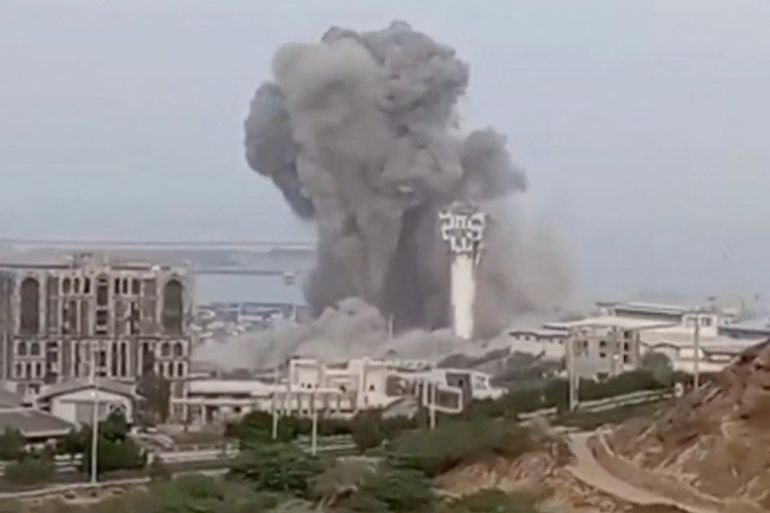
The US-Iran confrontation has entered a dangerous new phase following American strikes on Iranian territory that killed seven troops and prompted Tehran to declare the June 17 interim peace deal void. Iranian officials now speak of an existential conflict, while Washington signals further pressure on critical infrastructure. The Strait of Hormuz, through which roughly one-fifth of the world's daily oil supply transits, has become the central battleground in a widening confrontation that threatens to draw the entire Gulf region into sustained hostilities.
The Collapse of the Interim Peace Deal
Iran's top negotiator Mohammed Bagher Ghalibaf stated that the country's armed forces now enjoy complete freedom of action after the US attacks. He described the situation as an essential and existential war with America. Foreign Ministry spokesman Esmaeil Baghaei confirmed that Iran abandoned its commitments under the memorandum of understanding because the United States reneged on its terms, with no plans for renewed talks at present.
The interim agreement reached on June 17 had aimed to reduce tensions, yet US military action near the Strait of Hormuz and Greater Tunb island appears to have eliminated any immediate prospect of revival. Al Jazeera's correspondent Resul Serdar reported from Tehran that a return to negotiations is now viewed as extremely difficult, though he noted that Iran remains open to diplomatic engagement if Washington commits to the terms of the original memorandum.
Ghalibaf himself struck a notably dual-toned posture, declaring that while Iran has "never welcomed war," the country "must always be prepared for battle and stand firm to protect our national security and interests." He added, critically, that Iran "must also use the tools of diplomacy and negotiation to achieve and solidify our national interests," suggesting that Tehran has not entirely closed the door on talks despite the fiery rhetoric.
The Human Toll of Recent Strikes
Iran's health ministry reported at least 35 killed and more than 300 wounded from explosions across at least seven cities and strategic locations, including Bandar Abbas, Chabahar, Ahvaz, Sirik, Konarak, Rask and Qeshm Island. US CENTCOM described the targets as Iranian command centres, air defence sites, missile and drone capabilities, and coastal surveillance facilities aimed at degrading Iran's ability to threaten shipping in the Strait of Hormuz.
The humanitarian dimension has taken on outsized strategic significance. Iranian officials have repeatedly cited specific attacks on civilian infrastructure as justification for retaliation — including a US strike that forced the evacuation of 121 children with cancer from a hospital in Ahvaz, and a March attack that killed 168 children at a school in Minab. The IRGC has incorporated both incidents into its official justifications for strikes on Gulf state targets, framing its retaliation as a defence of civilian life.
At sea, at least 14 seafarers have died since February 28 amid incidents linked to the renewed blockade, including two Indian sailors killed this week. India's Directorate General of Shipping has advised shipowners against deploying Indian crew on routes through the Strait of Hormuz — a move that signals growing concern among major maritime nations about the safety of commercial shipping in the waterway.
Military Escalation from Both Sides
The US redirected two commercial vessels and disabled an oil tanker using a Hellfire missile as part of the renewed blockade on Iranian ports. Fresh US strikes overnight on July 15-16 hit Qeshm Island, Bandar Abbas and Chabahar, with CENTCOM declaring the operation complete after six hours. US forces have been striking Iranian command centres, air defence sites, missile and drone capabilities, and coastal surveillance facilities in what the Pentagon describes as a campaign to degrade Iran's ability to threaten shipping.
Iran has responded on multiple fronts through both its regular army and the Islamic Revolutionary Guard Corps, reflecting a dual command structure that allows Tehran to calibrate escalation levels. The IRGC targeted the US Fifth Fleet headquarters in Bahrain, a logistics hub in Mina Abdullah, Kuwait, and claimed a Khyber-Shakan ballistic missile strike on Jordan's Azraq airbase that destroyed a fighter jet storage ramp and a US command and control centre. The regular Iranian army separately claimed drone attacks on radar systems, Patriot defence installations, and fuel tanks at Kuwait's Ali Al Salem airbase and Bahrain's Sheikh Isa Air Base.
Kuwait's Ministry of Defence reported intercepting four cruise missiles and 21 drones throughout the day, while Jordan's military confirmed shooting down eight Iranian missiles on the morning of July 16. In Iraq, five drone attacks were reported in Erbil, with one shot down near the US consulate — triggering the mission's air defence system and starting a fire.
Iran's Brigadier General Ebrahim Zolfaghari delivered a stark warning: if the United States follows through on President Trump's threats to target Iranian infrastructure, Iran will respond by crushing "all the infrastructure in the region" so that "no trace of them will remain, as if they had never existed." Former foreign minister Ali Akbar Velayati, now an adviser to the Supreme Leader, asserted that "no power in the world can take the Strait of Hormuz from Iran's ownership," describing it as "a valuable achievement of the 40-day war" — a reference to the timeframe since hostilities resumed on February 28.
The IRGC has conditioned reopening of the waterway on an end to what it terms "America's evils in the region," declaring that "the battle continues."
Gulf States Caught in the Crossfire
GCC Secretary-General Jasem AlBudaiwi condemned the Iranian attacks on Bahrain, Kuwait and Jordan as "treacherous," saying they "reveal Iran's determination to drag the region into further chaos and instability." The IRGC has urged the populations of Kuwait and Jordan not to allow their governments to host US forces, warning that their territory is being used for "crimes against children" and calling for the expulsion of American troops from the region.
These developments place Sunni Gulf monarchies in a tightening strategic bind. Their security calculations must now weigh longstanding reliance on US protection against the direct threat of Iranian missile and drone strikes on their soil. Zeidon Alkinani, founding director of the Arab Perspectives Institute, warned that "the patience within the Gulf and the view of Iran may fall apart very soon" if the attacks continue — a scenario that would fundamentally reshape regional alignments.
The crisis has also emboldened other actors. Lebanon's Foreign Minister Youssef Raggi used the moment to call for a complete Israeli withdrawal from Lebanese territory as a precondition for extending state authority over the south, while Israel separately approved $2.3 billion for settlement infrastructure and 12,000 new housing units in the occupied West Bank — a parallel distraction that underscores how the Iran crisis is reshaping the broader Middle Eastern security landscape.
Implications for Global Energy and Shipping
The Strait of Hormuz remains the central chokepoint for global energy flows. Iranian statements tying its continued openness to an end of US regional presence introduce immediate uncertainty for oil markets and tanker traffic. OPEC+ diplomacy will face added strain as producers assess risks of wider disruption that could affect output from Saudi Arabia, the UAE, Kuwait, Iraq, and Iran itself.
Second-order effects are already materialising: higher insurance premiums for vessels transiting the Gulf, rerouting of tankers around the Arabian Peninsula, and growing pressure on China, India, Japan, and South Korea — all major importers dependent on Gulf crude. Great-power competition intensifies as Washington seeks to maintain freedom of navigation while Tehran leverages geography for strategic depth. Russia and China, both with interests in regional stability and energy security, are watching closely; neither has intervened directly but both have called for restraint.
Domestic US Political Dynamics
President Trump stated that attacks will intensify if Iran refuses to negotiate and threatened to "knock out" Iran's power plants and bridges, though he declined to set a firm deadline. "I don't like giving deadlines, but they pretty much know… they better behave," Trump said when asked about a timeline.
Vice President JD Vance, in an interview with podcaster Joe Rogan released on Wednesday, offered a notably different tone. "Those who reject negotiations with Iran offer no realistic solution beyond endless and ineffective bombing," Vance said — an apparent attempt to carve out diplomatic space within an administration that has otherwise projected maximum military pressure.
A YouGov/Economist poll published on July 16 found that 57 percent of Americans believe the decision to launch the war on Iran was wrong, while only 27 percent say it was the right call. Forty-six percent expect the conflict to last another year or more, and only 8 percent believe it will end within a month — down from 20 percent in March. These figures suggest limited public appetite for a prolonged engagement that the administration itself has struggled to define an exit strategy for.
Strategic Outlook: What Comes Next
Each side now faces a delicate calculus of restoring deterrence without triggering uncontrolled escalation. Iran aims to demonstrate resolve through strikes on US assets in the Gulf while keeping diplomatic channels theoretically open. The United States seeks to degrade Iranian military capabilities sufficiently to force a return to negotiations on favourable terms, but without drawing Gulf allies into a wider war or triggering a humanitarian catastrophe that would further erode domestic support.
Gulf states must navigate between these poles without becoming primary battlegrounds — a task made more difficult by Iran's willingness to strike their soil directly and Washington's apparent inability to prevent it. The coming weeks will test whether limited deconfliction channels survive or whether further strikes on infrastructure accelerate a broader confrontation that neither side can easily control.
Energy markets and alliance structures across the Middle East will register the effects long after any immediate ceasefire. For now, the region watches and waits as the guns continue to sound from the shores of the Gulf to the streets of Tehran.
By Malik Hassan, Staff Writer
This article was produced with AI-assisted research and editorial support. Reporting is based on sources cited in the article.
What's Your Reaction?
 Like
0
Like
0
 Dislike
0
Dislike
0
 Love
0
Love
0
 Funny
0
Funny
0
 Wow
0
Wow
0
 Sad
0
Sad
0
 Angry
0
Angry
0
Middle East Correspondent at Global1.News. Based in Beirut, covering politics, conflict, energy, and society across the Middle East. Brings context and depth to a region often reduced to headlines.












Comments (0)