
Iran Signals Trump-Pezeshkian Signing as US-Iran Deal Nears Formalization
**Keywords:** Iran US deal, Trump Pezeshkian signing, Strait of Hormuz, Masoud Pezeshkian, nuclear agreement, Geneva talks, Esmail Baghaei, Mohammad Bagher Ghalibaf, sanctions relief, Middle East diplomacy Iran Signals Trump-Pezeshkian Signing as US-Iran Deal Nears Formalization Iranian Foreign Ministry Signals Historic Signing Foreign Ministry spokesperson Esmail Baghaei state
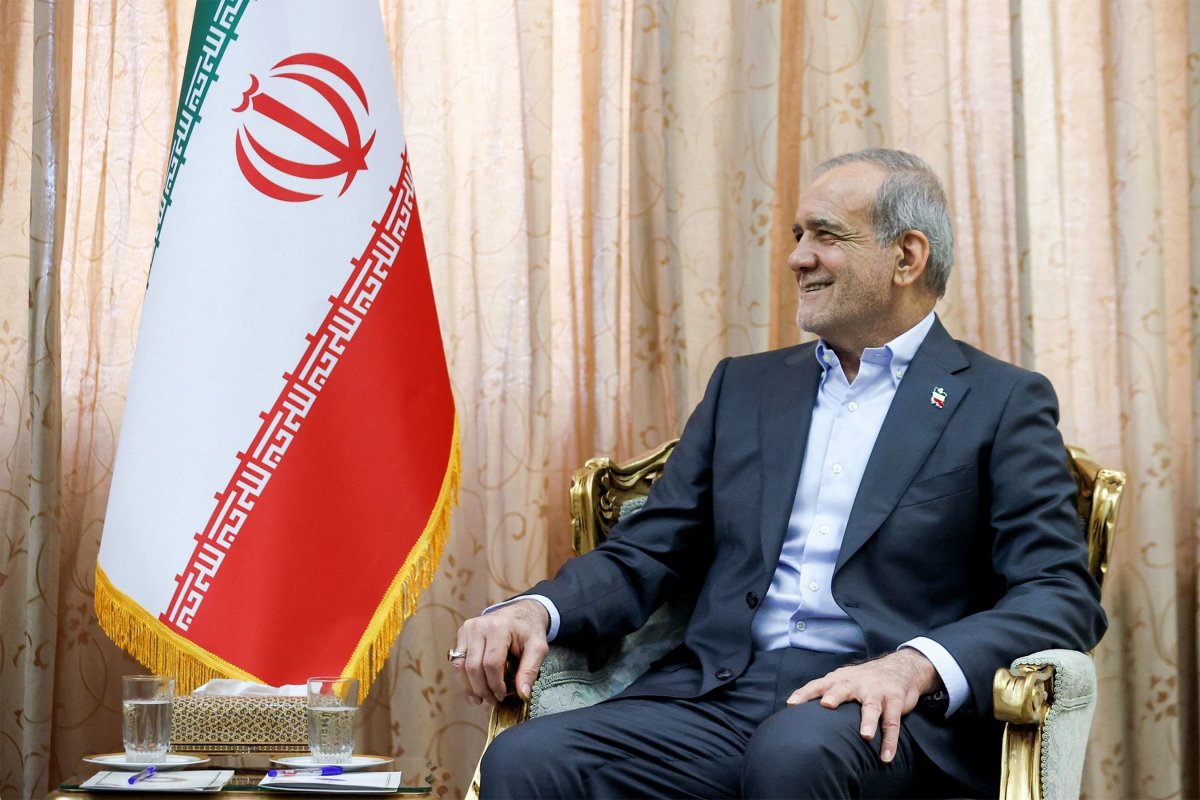
Iranian Foreign Ministry Signals Historic Signing
Foreign Ministry spokesperson Esmail Baghaei stated this week, according to Iranian state television, that any final agreement between Tehran and Washington could be formally signed by President Masoud Pezeshkian and U.S. President Donald Trump. The remark marks the clearest indication yet that negotiations may culminate in direct presidential-level engagement. Such a ceremony would constitute the first formal contact at this level since diplomatic relations collapsed following the 1979 U.S. Embassy hostage crisis.
Baghaei’s comments reflect measured optimism within certain Iranian circles that the current diplomatic track could produce tangible results. While he cautioned that implementation would not occur overnight, he left open the possibility of progress in the coming days. This language aligns with Iran’s traditional approach of managing expectations while testing whether Washington remains committed to a negotiated outcome.
The suggestion carries symbolic weight beyond protocol. It implies that Supreme Leader Ali Khamenei’s inner circle may be prepared to authorize a visible presidential role for Pezeshkian in the final stage, despite the president’s limited authority on core security matters. The statement also serves as a signal to domestic hardliners that any deal would carry the imprimatur of elected institutions rather than solely the security apparatus.
Planned Geneva Ceremony and Path to Formalization
According to multiple reports, a formal signing is expected in Geneva on June 19, 2026. The ceremony would build on a memorandum of understanding announced by President Trump at the G7 summit in Evian-les-Bains on June 15. That MOU was signed virtually by Trump, Vice President JD Vance, and Iranian Parliament Speaker Mohammad Bagher Ghalibaf, establishing the framework for ending hostilities and reopening the Strait of Hormuz.
The choice of Geneva reflects deliberate diplomatic choreography. The Swiss city has hosted sensitive Iran-related talks for decades, offering neutral ground acceptable to both sides. European powers are expected to attend as observers, lending additional legitimacy while avoiding direct U.S.-Iran bilateral optics that could inflame domestic constituencies in either country.
Trump has warned that any violation of the emerging terms would trigger renewed U.S. military action. This explicit deterrent language underscores Washington’s determination to treat the agreement as enforceable rather than aspirational. Iranian officials have responded by emphasizing reciprocal commitments, particularly regarding sanctions relief and access to previously frozen assets estimated in the hundreds of billions of dollars.
President Pezeshkian’s Constrained Domestic Position
Masoud Pezeshkian assumed office promising improved relations with the West, yet his influence has been curtailed since January 2026. Following the regime’s violent suppression of protests and Iran’s involvement in the recent war, hardline elements within the Guardian Council and IRGC have consolidated control over key policy levers. Pezeshkian’s role in any signing ceremony would therefore remain largely ceremonial on security issues.
Nevertheless, granting the president a visible place at the table serves important internal functions. It allows the leadership to present the agreement as the product of elected institutions rather than solely the security establishment. This framing may help manage public expectations and reduce the risk of domestic backlash from factions wary of renewed engagement with Washington.
Pezeshkian's marginalization also highlights the enduring power of unelected bodies. The Guardian Council and IRGC retain ultimate authority over ratification, meaning any deal must still navigate their approval processes. This reality limits how far Pezeshkian can personally steer implementation even if the Geneva ceremony proceeds.
Core Elements of the 14-Point Framework Agreement
The draft framework encompasses fourteen points covering nuclear restrictions, sanctions relief, and regional de-escalation. Iran commits to verifiable limits preventing weaponization of its nuclear program, while the United States agrees to lift sanctions, including those tied to UN Security Council resolutions. Release of approximately $300 billion in frozen Iranian assets forms a central component of the economic package.
Additional provisions address the reopening of the Strait of Hormuz to commercial traffic and confidence-building measures on missile activities. The framework stops short of a comprehensive JCPOA-style accord, focusing instead on immediate war termination and navigation rights. This narrower scope reflects the urgency of restoring energy flows through the Gulf waterway.
Verification mechanisms remain a point of contention. Iran has historically resisted intrusive inspections, while U.S. negotiators insist on robust monitoring to prevent clandestine weaponization pathways. The current text reportedly incorporates IAEA access provisions, though details on implementation timelines and enforcement triggers are still being finalized.
Strategic Stakes of Reopening the Strait of Hormuz
Reopening the Strait of Hormuz stands as the most immediate economic deliverable. Iran’s closure of the waterway during the 2025-2026 conflict disrupted roughly one-fifth of global oil trade, driving price spikes and forcing costly rerouting around Africa. Restoring free passage would ease pressure on energy markets and reduce insurance costs for tankers.
For Iran, Hormuz reopening offers a pathway to renewed oil exports and sanctions relief. For the United States and its Gulf partners, it removes a persistent flashpoint that has repeatedly threatened regional stability. Both sides therefore share short-term incentives to lock in navigational guarantees, even if deeper disagreements over missiles and proxies persist.
Second-order effects extend beyond energy. Successful reopening could reduce the risk of accidental naval confrontations and create space for limited confidence-building between U.S. and Iranian forces in the Gulf. However, any future closure threat would likely trigger swift U.S. military response, as Trump has already signaled.
Israeli and Gulf Arab Reactions to the Emerging Deal
Israel has voiced deep reservations about the nuclear provisions, fearing they fall short of permanently blocking Iran’s weaponization pathway. Prime Minister Benjamin Netanyahu’s government has signaled it may pursue independent measures if verification proves inadequate. Israeli concerns center on the absence of permanent restrictions on advanced centrifuges and missile delivery systems.
Saudi Arabia and the United Arab Emirates are monitoring developments closely. Both states worry that sanctions relief could bolster Iran’s regional proxy networks and missile programs without addressing core security threats. Riyadh and Abu Dhabi have urged Washington to maintain leverage on these issues even as the Hormuz and nuclear tracks advance.
At the same time, Gulf Arab states recognize the economic upside of stabilized energy markets. Lower oil-price volatility would support their own diversification agendas under Vision 2030 and similar programs. Their public posture therefore mixes caution with pragmatic acceptance of any deal that demonstrably reduces immediate conflict risks.
Nuclear Verification and Long-Term Compliance Risks
Effective verification remains the linchpin of any sustainable agreement. Past experience with the JCPOA demonstrated that technical monitoring can detect certain violations but struggles against determined concealment efforts. The new framework’s reliance on IAEA mechanisms will face immediate tests once implementation begins.
Trump’s explicit threat to resume bombing in case of violations introduces a strong enforcement signal. Yet this approach also risks rapid escalation if disputes arise over ambiguous evidence. Iranian officials have already begun framing potential disagreements as politically motivated, setting the stage for future friction.
Regional actors will judge the deal’s credibility by whether Iran’s nuclear infrastructure is verifiably constrained and whether sanctions relief produces measurable economic opening. Failure on either front could quickly unravel the fragile consensus achieved in Geneva.
Energy Market Realignment and Regional Outlook
Return of Iranian crude to global markets would require OPEC+ output adjustments, potentially pressuring prices downward in the short term. Saudi Arabia and other producers have already signaled willingness to coordinate, recognizing that uncontrolled supply surges could damage all exporters. Coordinated management may therefore emerge as an unexpected byproduct of the agreement.
Over the longer horizon, the deal’s durability will depend on whether it addresses underlying drivers of conflict. Missile programs, proxy activities, and Israeli security concerns remain unresolved. Without parallel diplomatic tracks on these issues, the Geneva accord risks becoming another temporary pause rather than a durable settlement.
Nevertheless, the mere prospect of presidential-level signing represents a notable shift in the diplomatic landscape. It suggests both Washington and Tehran see value in at least partial de-escalation after months of direct confrontation. Whether this tactical convergence can evolve into strategic accommodation will determine the agreement’s lasting regional impact.
By Malik Hassan, Staff WriterThis article was produced with AI-assisted research and editorial support. Reporting is based on sources cited in the article.
What's Your Reaction?
 Like
0
Like
0
 Dislike
0
Dislike
0
 Love
0
Love
0
 Funny
0
Funny
0
 Wow
0
Wow
0
 Sad
0
Sad
0
 Angry
0
Angry
0

Middle East Correspondent at Global1.News. Based in Beirut, covering politics, conflict, energy, and society across the Middle East. Brings context and depth to a region often reduced to headlines.












Comments (0)