
From horseback archery to kok boru, Nomad Games go global
In a year when the great‑power rivalry over Central Asia is once again under the spotlight, the Nomad Games in Kyrgyzstan have emerged as a cultural flashpoint that brings together athletes, diplomats and regional leaders.
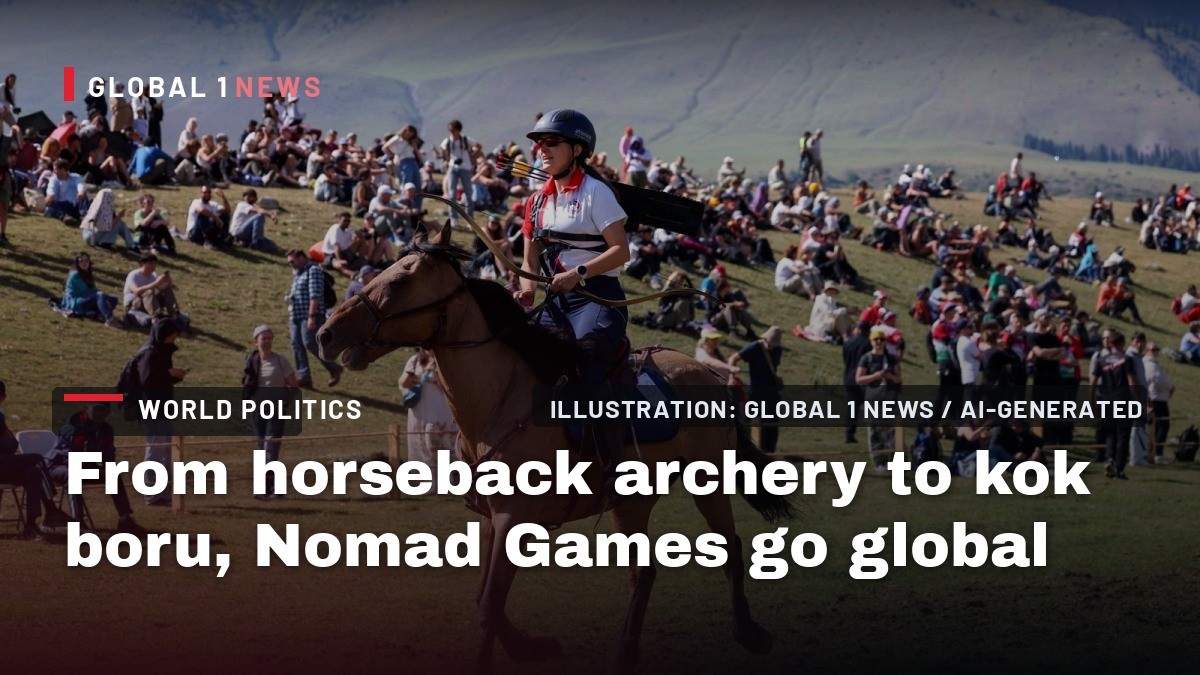
In a year when the great‑power rivalry over Central Asia is once again under the spotlight, the Nomad Games in Kyrgyzstan have emerged as a cultural flashpoint that brings together athletes, diplomats and regional leaders. While the Shanghai Cooperation Organisation (SCO) summit in Bishkek drew heads of state to discuss security and trade, the biannual celebration of nomadic sport offered a softer, yet equally potent, illustration of how traditional practices can bridge geopolitical divides. The event, now in its seventh edition since its 2014 launch, underscores the growing appeal of Central Asian heritage beyond its historic borders, and highlights the strategic soft‑power calculus of countries seeking influence in the region.
From a Remote Gorge to a Global Stage
Clutching a bow and arrow while perched on a horse in a remote gorge of northern Kyrgyzstan, London‑based executive coach Beatrice “Becca” Sweetman epitomises the unexpected pathways that lead Western participants to the Nomad Games. Sweetman recalled that a friend’s invitation to try horseback archery eight years ago sparked a lasting commitment, eventually earning her a place on the Great Britain team. Her story illustrates how the Games have evolved from a niche curiosity into a magnet for athletes seeking to test themselves in ancient disciplines that demand both physical skill and cultural immersion.
The growth of the Games is evident in the scale of participation. Organisers reported that more than 3,000 athletes from over 100 countries converged on Kyrgyzstan for the latest edition, a marked expansion from the inaugural event in 2014. This surge reflects a broader appetite for authentic, experience‑based tourism and sport, as well as the strategic outreach of Central Asian states eager to showcase their cultural assets on the world stage.
Traditional Sports as Diplomatic Currency
The opening ceremony in Bishkek was attended by a constellation of leaders: Turkish President Recep Tayyip Erdoğan, Russian President Vladimir Putin and Indian Prime Minister Narendra Modi, all present for the SCO summit. Their presence at a cultural festival, rather than a purely political forum, signals an acknowledgement that soft power—through sport and heritage—has become an integral component of regional diplomacy. By aligning the Games with the SCO agenda, Kyrgyzstan leverages its historical narrative to foster goodwill among its powerful neighbours.
Such diplomatic choreography is not accidental. The SCO, a security and economic bloc dominated by Russia, China, and several Central Asian republics, has increasingly incorporated cultural initiatives to deepen intra‑bloc cohesion. The Nomad Games, with their emphasis on nomadic traditions that predate modern nation‑states, provide a neutral ground where participants can engage beyond the rigid frameworks of security talks, reinforcing a shared sense of Eurasian identity.
Western Curiosity Meets Nomadic Heritage
Western athletes like Sweetman and Sam Pollard, a London‑based consultant who arrived as part of the British tug‑of‑war team, illustrate the cross‑cultural allure of the Games. Pollard’s fascination was sparked by videos of Kok Boru, a sport akin to polo but played with a sheep carcass instead of a ball. His description—“That looks awesome”—captures the visceral excitement that draws outsiders to the rugged, high‑stakes world of nomadic competition.
These participants often arrive with limited prior exposure to nomadic cultures, yet they quickly become immersed in the rituals and symbolism that accompany each discipline. For instance, Mumina Daminova, a horseback archer from Uzbekistan, competes in flowing white traditional robes, embodying the continuity of nomadic spirit across contemporary national borders. Their involvement not only diversifies the athlete pool but also amplifies the Games’ visibility in Western media, creating a feedback loop that fuels further interest.
Regional Participation and Cultural Resonance
While the Games attract athletes from nations without a nomadic past, they also draw heavily from countries where such traditions remain vibrant. Participants from Mongolia and the Central Asian republics—Kazakhstan, Kyrgyzstan, Tajikistan, Turkmenistan and Uzbekistan—bring deep-rooted expertise in sports like wrestling, falconry and horse archery. Their presence reinforces the Games’ authenticity and ensures that the event remains anchored in the lived heritage of the steppe.
The continued popularity of these sports within Kyrgyzstan itself, a mountainous nation of roughly seven million people, underscores the domestic resonance of the Games. Traditional sports retain a strong popular following, providing a cultural anchor for a society that balances modern development with pastoral legacy. By hosting the Games on home soil, Kyrgyzstan reaffirms its role as the custodian of nomadic culture while simultaneously projecting that identity outward.
Economic Implications and Tourism Potential
The influx of thousands of athletes and accompanying delegations translates into a tangible boost for Kyrgyzstan’s tourism sector. Visitors travel to remote gorges, high‑altitude pastures and historic towns, spending on accommodation, transport and local crafts. Though the source material does not quantify the economic impact, the scale of participation—over 3,000 athletes from more than 100 nations—suggests a significant, albeit seasonal, injection of foreign exchange.
Moreover, the Games serve as a showcase for Kyrgyzstan’s natural landscapes, positioning the country as a destination for adventure tourism. The visual spectacle of horseback archery against rugged backdrops, combined with the dramatic drama of Kok Boru, offers compelling content for international media and travel influencers, potentially amplifying future visitor numbers.
Soft Power Competition Among Regional Powers
The attendance of Erdoğan, Putin and Modi at the opening ceremony highlights how the Nomad Games intersect with broader great‑power competition in Central Asia. Turkey, under Erdoğan, has pursued a policy of cultural outreach to Turkic‑speaking peoples, framing itself as a protector of shared heritage. Participation in Kyrgyzstan’s flagship cultural event aligns with that narrative, reinforcing Turkey’s influence among Turkic nations.
Russia’s presence, embodied by President Putin, reflects Moscow’s longstanding interest in maintaining a foothold in the post‑Soviet space. By supporting high‑profile cultural gatherings, Russia signals its willingness to act as a patron of regional traditions, thereby cultivating goodwill that can translate into political leverage. India’s Prime Minister Modi, attending the SCO summit, also benefits from the soft‑power optics of engaging with Central Asian cultures, complementing New Delhi’s strategic outreach to the region’s energy markets and trade corridors.
Future Trajectories and Strategic Significance
Looking ahead, the Nomad Games are poised to become an even more integral component of Central Asian diplomacy and cultural branding. As the event continues to attract a diverse array of participants, its capacity to serve as a neutral platform for dialogue will likely expand. The convergence of sport, heritage and high‑level political attendance creates a unique arena where soft power can be exercised without the overt pressures of formal negotiations.
For observers of Middle Eastern and Eurasian affairs, the Games offer a microcosm of how traditional practices are being repurposed in the service of contemporary statecraft. They demonstrate that cultural festivals can function as diplomatic bridges, drawing together actors from the Gulf, the Eurasian heartland and beyond. In a region where great‑power rivalry, energy security and sectarian competition dominate headlines, the humble bow and arrow in a Kyrgyz gorge remind us that shared human experiences—rooted in history and sport—remain a potent, if understated, force in shaping geopolitical narratives.
This article was produced with AI-assisted research and editorial support. Reporting is based on the source material cited below. Sources: Daily Sabah Middle East; dailysabah.com; Global1.News (11 September 2026).
By Malik Hassan, Staff Writer
What's Your Reaction?
 Like
0
Like
0
 Dislike
0
Dislike
0
 Love
0
Love
0
 Funny
0
Funny
0
 Wow
0
Wow
0
 Sad
0
Sad
0
 Angry
0
Angry
0
Middle East Correspondent at Global1.News. Based in Beirut, covering politics, conflict, energy, and society across the Middle East. Brings context and depth to a region often reduced to headlines.










Comments (0)