
Rocket Report: Europe joins the commercial launch club; a Ravn X sighting?
Europe’s launch landscape just got a serious jolt. On Saturday, a German startup named Isar Aerospace lifted its two‑stage Spectrum rocket from a Norwegian Arctic spaceport and placed a payload into low‑Earth orbit.
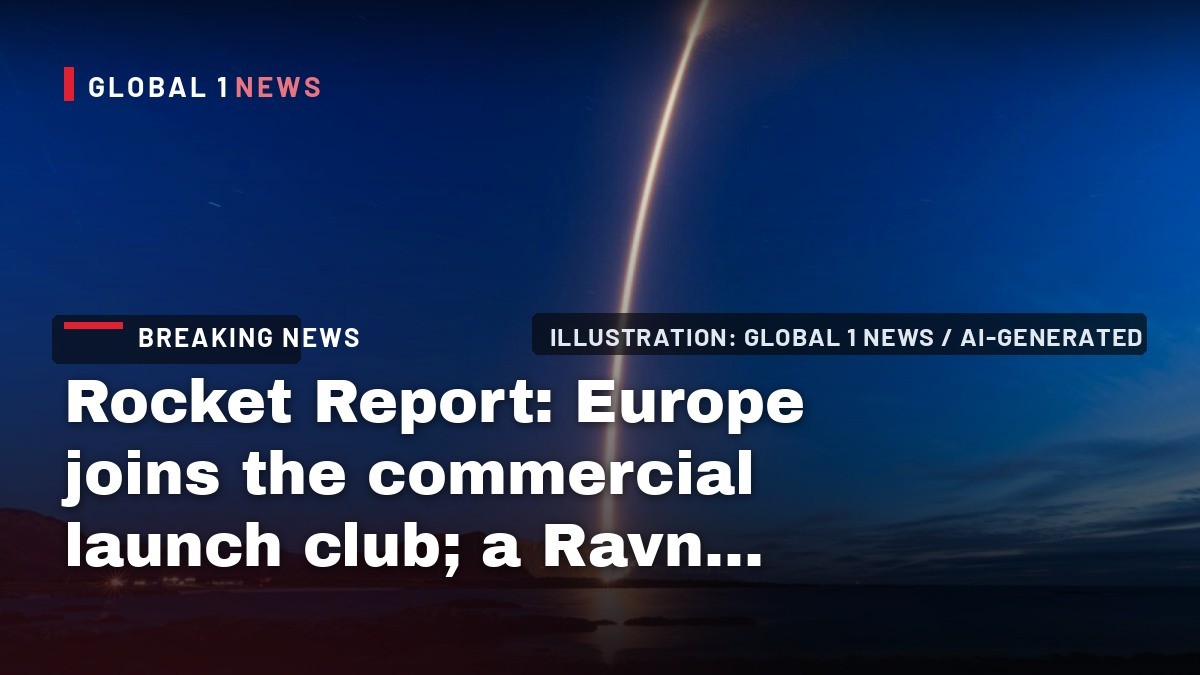
Europe’s launch landscape just got a serious jolt. On Saturday, a German startup named Isar Aerospace lifted its two‑stage Spectrum rocket from a Norwegian Arctic spaceport and placed a payload into low‑Earth orbit. That milestone makes Isar the first purely commercial European company to reach orbit, and it did so on only its second launch attempt. The achievement is reshaping the continent’s stagnant launch market, where government‑run programs have long dominated and private competition has been scarce.
Isar Aerospace’s breakthrough and its significance
Founded in 2018 by three university students, Isar Aerospace has spent eight years turning a classroom concept into a working launch vehicle. The company raised roughly $1 billion through multiple private financing rounds and now employs nearly 500 staff. Its Spectrum rocket, a two‑stage vehicle, lifted off from a Norwegian spaceport inside the Arctic Circle and delivered a payload to low‑Earth orbit, marking the first fully commercial European launch vehicle to achieve that feat.
Isar’s success positions it as the clear leader among a growing pack of European launch startups. The company’s rapid progression—reaching orbit on its second attempt—underscores how private capital can accelerate development timelines that traditionally stretched over decades under state‑run programs. European officials, accustomed to a procurement model that ties funding to geographic return, are now watching a privately funded player that aims to win both commercial and government contracts on merit.
The broader European launch market: stagnation meets competition
Europe’s launch sector has long been characterized by a reliance on government‑backed vehicles such as Ariane 6 and the Vega family, with limited private sector participation. The arrival of Isar Aerospace introduces a new competitive dynamic that could pressure legacy providers to improve cost, cadence, and flexibility. The article notes that “European space officials hope a jolt of competition will light a fire under the continent’s rocket industry,” reflecting a desire to break the status quo.
However, the market’s transformation will not be instantaneous. While Isar has demonstrated technical capability, scaling up launch frequency and securing a pipeline of customers remain open questions. The piece asks, “How quickly can they scale up operations?” and “How quickly will the second European launch firm reach this goal?” without providing definitive answers, highlighting the uncertainty that still surrounds Europe’s commercial launch ecosystem.
Government investment and the push for new spaceports
European governments are beginning to back private initiatives with significant funding. The United Kingdom, for example, unveiled a new national space strategy that earmarks £7.8 billion (approximately $10.5 billion) through 2030 to drive growth, strengthen security, and support everyday technologies. About 40 percent of that budget will target connectivity programs, including low‑Earth‑orbit communications and defense networks.
Part of the UK’s strategy includes a £30 million (roughly $40.5 million) investment in the SaxaVord Spaceport in Shetland. The spaceport’s primary tenant will be Rocket Factory Augsburg, a German launch company, with the goal of enabling Britain and its partners to launch satellites without relying on foreign sites. No orbital rocket has yet launched from the United Kingdom, so this investment represents a strategic effort to build domestic launch capability and create jobs in the region.
Other European launch initiatives gaining momentum
Beyond Isar, several other European players are moving forward. Avio, the Italian firm behind the Vega‑C rocket, announced plans to double its launch cadence to six missions per year, with a longer‑term target of nine per year. This ambition reflects growing demand for Vega‑C services, especially from institutional customers, but also highlights supply‑chain constraints. The Vega‑C uses solid rocket motors also employed on Ariane 6, creating bottlenecks that both industry and governments are working to resolve.
Swedish initiatives also show promise. Firefly Aerospace signed a multi‑launch agreement with SSC Space for two Alpha rocket launches from Sweden’s Esrange Space Center, slated for no earlier than 2028. These missions will serve Sweden’s national security customers and commercial rideshare clients, expanding the European launch footprint into Scandinavia and diversifying launch options for regional customers.
The mystery of Ravn X and Aevum’s stalled ambitions
While Isar’s triumph captures headlines, a lingering curiosity remains about Aevum’s Ravn X project. The autonomous aircraft and launch vehicle was first reported in December 2020, with an ambitious goal of an orbital mission in 2021. That target came and went, and the project faded from coverage until recent sightings at Long Beach Airport.
According to a report from TWZ, aviation photographers captured a sleek, large aircraft silhouette that appears to be a mockup of Ravn X. Aevum founder Jay Skylus later posted on X that the company conducted “Test 2 of Ravn X SN0,” achieving a 37‑minute autonomous taxi. While the test demonstrates progress in autonomous flight, the company has not indicated any imminent orbital flight plans, and skepticism remains about the feasibility of turning the spaceplane concept into an operational launch vehicle.
Funding trends and the future of European launch capabilities
Funding flows illustrate the shifting landscape. Isar’s $1 billion raised over eight years mirrors the capital intensity required for modern launch development. Meanwhile, Stoke Space, a Washington‑based company, announced a $1 billion round to push toward its debut launch next year, indicating that large capital injections are becoming a norm for ambitious launch firms.
European governments are also stepping up. The UK’s £30 million injection for SaxaVord and Avio’s push to increase Vega‑C cadence both signal a willingness to invest in infrastructure and capacity. The combined effect of private capital and public funding could accelerate Europe’s transition from a launch market dominated by state‑run vehicles to a more diversified ecosystem where commercial firms compete on cost, reliability, and launch frequency.
What lies ahead for Isar and the European launch sector
Isar Aerospace now faces the critical test of scaling. Having proven its technology with Spectrum, the company must convert that success into a sustainable launch cadence, secure a pipeline of paying customers, and navigate the competitive pressures from both legacy European providers and emerging newcomers. The next few months will reveal whether Isar can translate its early triumph into a lasting commercial presence.
For the broader European launch community, Isar’s orbit‑achieving flight is a catalyst. It demonstrates that privately funded, commercially driven launch vehicles can succeed in Europe’s harsh Arctic environment, potentially encouraging other startups to pursue similar paths. Coupled with government investments in new spaceports and efforts to alleviate supply‑chain bottlenecks, the continent may finally see a vibrant, competitive launch market that can rival its American and Asian counterparts.
This article was produced with AI-assisted research and editorial support. Reporting is based on the source material cited below. Sources: Ars Technica; arstechnica.com; Global1.News (11 September 2026).
By Jessica Ali, Staff Writer
What's Your Reaction?
 Like
0
Like
0
 Dislike
0
Dislike
0
 Love
0
Love
0
 Funny
0
Funny
0
 Wow
0
Wow
0
 Sad
0
Sad
0
 Angry
0
Angry
0

Editor-in-Chief at Global1.News. Atlanta-based journalist who cuts through the BS and tells it like it is. Lead anchor, host, and the voice you hear when the spin stops and the truth starts.














Comments (0)