
Clinton urges tougher US stance on Netanyahu ahead of elections
Former U.S. Secretary of State Hillary Clinton used a recent television interview to voice a stark warning about the future of Israeli politics and its impact on both Israel and the United States.
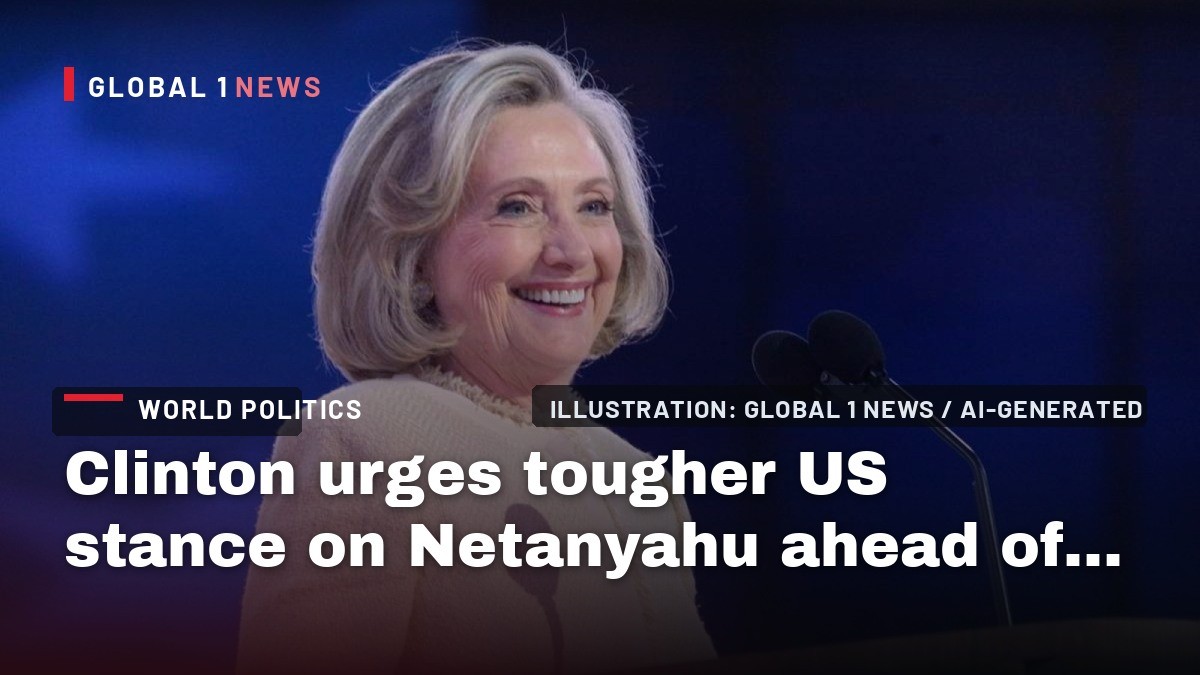
Former U.S. Secretary of State Hillary Clinton used a recent television interview to voice a stark warning about the future of Israeli politics and its impact on both Israel and the United States. Speaking on MS NOW’s “Morning Joe,” Clinton declared that she “love[s] Israel and hate[s] Netanyahu’s government and his policies,” while also criticizing the Trump administration. Her remarks, made in September 2026, come at a moment when Israel’s political landscape is increasingly fragmented and the prospect of a seventh Netanyahu term looms large. By calling for a “tougher” U.S. stance should Netanyahu return to power, Clinton places the upcoming Israeli elections at the centre of a broader discussion about human rights, regional stability and the responsibilities of international partners under international law.
Clinton’s public condemnation of Netanyahu’s policies
In the interview, Clinton emphasized a personal conflict between her affection for the Jewish state and her opposition to the current government’s direction. She framed her criticism as both a moral and strategic concern, stating that the policies of Netanyahu’s administration are “bad … for Israel” and “really bad for the United States.” By juxtaposing her love for Israel with a denunciation of its leadership, Clinton signals a willingness to separate the nation’s right to self‑determination from the conduct of its elected officials.
Clinton’s language mirrors a broader trend among some Western politicians who seek to hold governments accountable for actions that may contravene international human‑rights standards. While she did not cite specific violations, her call for a “tougher” U.S. position implies that she views the current policies as potentially harmful to the rights of Palestinians and to the rule of law in the occupied territories.
The political context of Israel’s upcoming elections
Israel’s political arena is currently characterised by a lack of clear parliamentary majority. Recent opinion polls, as noted in the source material, show opposition parties leading Netanyahu’s bloc, yet no side is close to securing the votes needed to form a stable government. This stalemate forces Netanyahu to rely increasingly on coalition partners, a dynamic that could amplify the influence of more hard‑line elements within the right‑wing spectrum.
Netanyahu’s ambition to secure a seventh term, despite signs of a weakening coalition, underscores the precarious nature of Israeli governance. The need to court additional allies may push the prime minister to adopt more extreme positions on security and settlement issues, potentially deepening the humanitarian impact on Palestinian civilians and further entrenching policies that draw international criticism.
Implications for U.S.–Israel relations
Clinton’s assertion that Washington could work “more effectively with a new Israeli government” suggests that she envisions a diplomatic recalibration should the election outcome shift away from Netanyahu. By advocating a tougher stance, she signals that U.S. support may become conditional on changes in Israeli policy, particularly those affecting human‑rights obligations under international law.
Such a stance would align with a tradition of U.S. lawmakers who have linked foreign aid and diplomatic backing to compliance with humanitarian standards. While the source material does not detail specific policy levers, Clinton’s remarks hint at the possibility of a more assertive U.S. role in encouraging reforms that protect civilian populations and uphold the principles of proportionality and distinction in conflict.
Human‑rights dimensions of Netanyahu’s governance
The human cost of policies associated with Netanyahu’s government remains a central concern for rights advocates. Although the source does not enumerate particular incidents, the broader context of ongoing settlement expansion, restrictions on movement, and periodic military operations in Gaza and the West Bank has been repeatedly documented by international organisations as contributing to civilian suffering.
Clinton’s condemnation can be read as an implicit acknowledgment of these impacts. By framing the policies as “bad” for Israel itself, she underscores the argument that security measures which undermine basic rights ultimately erode the moral legitimacy of the state and jeopardise its long‑term stability.
Domestic political calculations within Israel
The fragmented parliamentary landscape forces Netanyahu to negotiate with a range of smaller parties, many of which hold hard‑line views on security and settlement issues. This reliance on coalition partners can incentivise policy decisions that cater to the most uncompromising factions, potentially marginalising moderate voices and civil‑society actors who call for a negotiated peace.
Such dynamics also risk deepening political polarization, making it harder for any future government—whether led by Netanyahu or his rivals—to achieve a consensus on reforms that could improve the daily lives of Palestinians living under occupation.
International‑law considerations
Under international humanitarian law, any state action that disproportionately harms civilian populations or expands settlements in occupied territory may be deemed unlawful. While the source material does not specify legal judgments, Clinton’s call for a tougher U.S. stance implicitly references the need for compliance with these legal frameworks.
A shift in U.S. policy, as hinted by Clinton, could involve leveraging diplomatic channels to press Israel to align its actions with obligations under the Fourth Geneva Convention and relevant United Nations resolutions. Such pressure would be consistent with the principle that aid and strategic partnerships should not shield violations of international law.
Potential pathways forward
Clinton’s interview highlights a crossroads for both Israeli politics and U.S. foreign policy. If opposition parties succeed in forming a government that distances itself from Netanyahu’s hard‑line approach, the United States may find a more receptive partner for advancing human‑rights‑centred initiatives. Conversely, a continued Netanyahu tenure could entrench policies that exacerbate civilian hardship and draw further international censure.
For Palestinians, the stakes remain high. The prospect of a “tougher” U.S. stance offers a glimmer of hope that external pressure might compel policy changes that alleviate daily hardships, protect civilian infrastructure, and open space for genuine negotiations. As the election cycle progresses, the interplay between domestic Israeli politics, U.S. diplomatic calculations, and the lived realities of those caught in the conflict will shape the humanitarian outlook for the region.
This article was produced with AI-assisted research and editorial support. Reporting is based on the source material cited below. Sources: Middle East Monitor; middleeastmonitor.com; Global1.News (11 September 2026).
By Fatima Al-Rashid, Staff Writer
What's Your Reaction?
 Like
0
Like
0
 Dislike
0
Dislike
0
 Love
0
Love
0
 Funny
0
Funny
0
 Wow
0
Wow
0
 Sad
0
Sad
0
 Angry
0
Angry
0
Gulf/MENA Correspondent at Global1.News. Based in Doha, covering Gulf politics, energy markets, diplomacy, and development across the Middle East and North Africa. Tracks the economic transformation of the Gulf states.









Comments (0)