
Esiri Twins Bring Postcolonial Lagos to Cannes: 'Clarissa' Earns Critical Acclaim as a Bold African Reimagining of a Modernist Classic
Nigerian twin filmmakers Arie Esiri and Chuko Esiri have taken the 2026 Cannes Film Festival by storm with "Clarissa," a stunning modern reimagining of Virginia Woolf's "Mrs. Dalloway" set in contemporary Lagos. The film, which premiered in the prestigious Directors' Fortnight (Quinzaine des Réalisateurs) section, has drawn near-universal acclaim for its bold postcolonial visio
Nigerian twin filmmakers Arie Esiri and Chuko Esiri have taken the 2026 Cannes Film Festival by storm with "Clarissa," a stunning modern reimagining of Virginia Woolf's "Mrs. Dalloway" set in contemporary Lagos. The film, which premiered in the prestigious Directors' Fortnight (Quinzaine des Réalisateurs) section, has drawn near-universal acclaim for its bold postcolonial vision, stellar ensemble cast, and lyrical visual language.
Esiri Twins Bring Postcolonial Lagos to Cannes: "Clarissa" Earns Critical Acclaim as a Bold African Reimagining of a Modernist Classic
Dakar, Senegal — When Chuko Esiri first picked up Virginia Woolf's "Mrs. Dalloway" at age sixteen, he was too young to grasp its complexities. Two decades later, he and his twin brother Arie have transformed that early encounter into one of the most talked-about films at this year's Cannes Film Festival — a Lagos-set drama that uses Woolf's stream-of-consciousness novel as a springboard to explore privilege, postcolonial identity, and the hidden fractures beneath Nigeria's glittering elite society.
From Eyimofe to Cannes: The Esiri Brothers' Journey
The Esiri twins, both in their late 30s and early 40s, were born in Warri and raised in Lagos before attending private schools in England. They later studied film in New York and now live in Lagos, where they draw daily inspiration from the city's rhythms. Their acclaimed 2020 debut "Eyimofe" premiered at Berlin and focused on working-class Lagos, establishing their reputation for grounded storytelling.
Arie Esiri was expelled from his last UK secondary school, an experience that sharpened his perspective on class and belonging. That early disruption pushed him toward cinema as a way to examine fractured identities. Chuko Esiri first read Woolf's "Mrs. Dalloway" at age 16 and only fully understood its layers in his 30s.
The brothers made an intuitive decision to transpose "Mrs. Dalloway" to Nigeria after years of discussing how the novel's themes of time, memory, and social performance resonated with Lagos elite life. They formed Per Capita Productions and Invention Studios to bring the project to life with co-production support from Egypt and the United States.
The 125-minute film was shot on 35mm film under cinematographer Jonathan Bloom, whose work captured both the city's heat and its hidden silences. The twins cited Antonioni and Fellini as visual references while building the dual-timeline structure that moves between present-day Lagos and earlier flashbacks.
Chuko Esiri wrote the screenplay, weaving in observations about how fortunes rise and fall like the currency in Nigeria's volatile economy. The project marks their first major international premiere since "Eyimofe," arriving at Directors' Fortnight on May 16, 2026.
Their journey reflects a broader pattern among African filmmakers who train abroad yet return to tell stories rooted in home. The Esiri brothers' path from Warri and Lagos through England and New York back to Lagos has given them a layered view that now reaches global audiences.
"Clarissa": A Postcolonial Vision of Lagos High Society
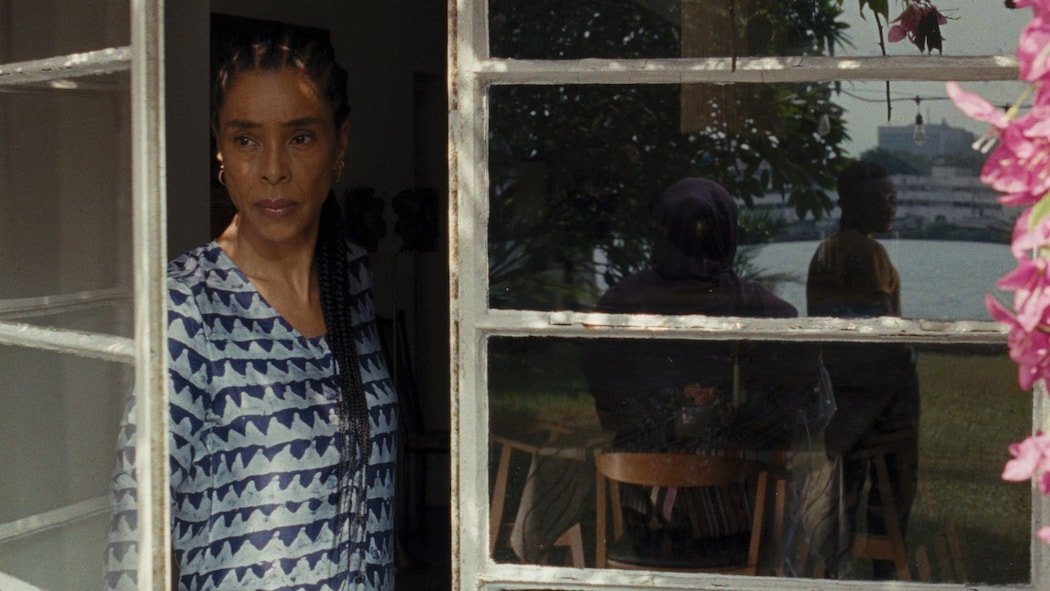
Sophie Okonedo plays the adult Clarissa Dalloway, a high-society hostess planning an elaborate party in Lagos. Her performance anchors the film as she navigates the expectations of Nigeria's upper class. Jude Akuwudike portrays her dull husband Richard, who works at Shell and embodies the quiet compromises of postcolonial success.
David Oyelowo appears as Peter, Clarissa's old flame who returns to manage his late father's estate. His arrival stirs memories and disrupts the careful surface of her present life. India Amarteifio from "Bridgerton" plays young Clarissa in the flashback scenes that reveal the origins of her choices.
Ayo Edebiri from "The Bear" plays Sally, the free spirit who challenges Clarissa's conventional path. Toheeb Jimoh portrays young Peter, bringing youthful intensity to the earlier timeline. The dual-timeline structure allows the film to contrast past hopes with present realities.
Fortune Nwafor plays Septimus, a traumatised soldier whose storyline draws from Nigeria's contemporary conflicts. Nikki Amuka-Bird appears as older Sally, offering a mature counterpoint to the younger characters. The cast is largely made up of Nigerian diaspora actors, lending authenticity to the performances.
The story unfolds across Lagos's elite circles, where parties and social rituals mask deeper tensions. Clarissa's preparations for her gathering become a lens for examining privilege and the lingering effects of colonial structures on personal relationships.
Production companies Per Capita Productions and Invention Studios supported the large ensemble, ensuring the film could capture both intimate conversations and sweeping city views. The result is a portrait of Lagos high society that feels both specific and universal.
Adapting Woolf for West Africa: Sound, Symbolism, and Cultural Transposition
The Muslim call to prayer replaces Big Ben's chimes, marking time across Lagos neighborhoods in a culturally resonant way. This substitution grounds the adaptation in West African daily life while preserving Woolf's interest in how time shapes consciousness. The Boko Haram conflict stands in for World War I, giving Septimus's trauma a distinctly Nigerian context.
Chuko Esiri called the wonky Nigeria-shaped mosaic "a perfect motif of the nation," using it as a recurring visual symbol of fractured unity. The mosaic appears in key scenes, reflecting the country's complex identity. Kelsey Lu composed the score, blending atmospheric sounds with traditional elements to heighten emotional undercurrents.
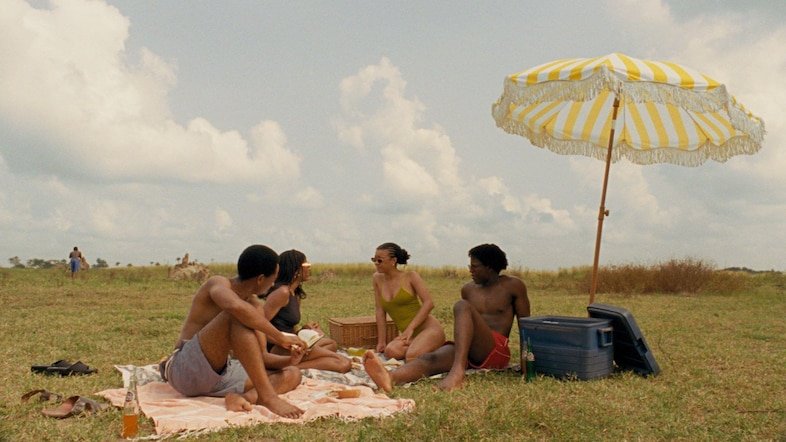
Jonathan Bloom's 35mm cinematography creates honeyed flashback scenes against a cooler present-day palette. The contrast underscores the gap between memory and reality. The brothers drew visual references from Antonioni and Fellini to shape the film's lyrical pacing and spatial compositions.
The cast drawn largely from the Nigerian diaspora brings lived experience to roles that explore postcolonial identity. Their performances highlight how mental occupation persists long after physical independence. The 125-minute runtime allows space for these layered explorations without rushing the stream-of-consciousness flow.
Chuko Esiri noted that the adaptation addresses how "not just a physical occupation of a space; there's also the mental aspect." This insight drives the film's examination of elite Lagos society. The production spanned the United States, Nigeria, and Egypt, reflecting the transnational nature of the story.
Sound design integrates ambient Lagos noises with the call to prayer, creating an immersive environment. These choices transform Woolf's modernist techniques into tools for African storytelling, making the narrative feel immediate and rooted.
Critical Reception: Near-Universal Acclaim at Cannes
"Clarissa" earned a 100% score on Rotten Tomatoes after its Cannes debut. Critics praised the film's bold adaptive choices and technical precision. Robert Daniels of Screen International called it "nearly impeccable," highlighting the sound design and the decision to set the story in contemporary Lagos.
Matt Neglia described the film as "exquisite," "lyrical," "gorgeously shot," and "emotionally cathartic." His review emphasized how the dual timelines create a powerful emotional arc. The Directors' Fortnight section, a prestigious parallel to the main competition, provided an ideal platform for this ambitious work.
The reception marks a major moment for Nigerian cinema on the global stage. africanews reported on the film on May 20, 2026, noting the enthusiastic audience response at the premiere. Industry observers see the acclaim as validation of the Esiri brothers' vision.
Viewers at Cannes responded strongly to the ensemble cast and the film's visual poetry. The 35mm cinematography received particular mention for its textured rendering of Lagos. The positive notices have positioned "Clarissa" as a standout title from the 2026 festival.
Distribution by Neon in the United States will bring the film to American audiences later this year. This deal underscores the commercial potential of African-led adaptations of literary classics. The critical consensus suggests the film will travel widely on the festival circuit.
The near-universal praise reflects growing appreciation for African filmmakers who reinterpret canonical texts. The Esiri twins' success at Directors' Fortnight signals that such projects can resonate far beyond their origins.
African Cinema's Rising Global Profile
"Clarissa" arrives amid African cinema's growing international recognition. Nollywood's continued global expansion has opened doors for more ambitious projects like this one. Recent successes from filmmakers across the continent have drawn attention from major festivals and distributors.
The film's production countries—United States, Nigeria, and Egypt—illustrate the collaborative networks now supporting African stories. Nigerian diaspora talent plays a central role in global filmmaking, bringing technical skill and cultural insight to international sets. This trend strengthens the continent's creative economy.
Other recent African films have similarly found acclaim at Cannes and beyond, building momentum for the next generation. The Esiri brothers' journey from their 2020 Berlin premiere with "Eyimofe" to this Cannes spotlight shows how persistence pays off. Their work contributes to a broader narrative of African cinema claiming space in world cinema.
Neon's distribution deal ensures "Clarissa" will reach American theaters, expanding its influence. This kind of platform helps shift perceptions of African filmmaking from niche to mainstream. The film's 125-minute length and 35mm presentation further signal its artistic ambitions.
The cast, largely Nigerian diaspora actors, demonstrates how talent flows between continents. Their performances bridge cultural contexts while remaining grounded in Lagos realities. This approach enriches global cinema with fresh perspectives.
African festivals such as FESPACO and the Dakar Biennale continue to nurture talent that later reaches Cannes. The Esiri twins' achievement adds to this pipeline, inspiring filmmakers across West Africa to pursue bold adaptations and international collaborations.
What "Clarissa" Means for African Filmmaking
Chuko Esiri said, "Cinema is the best way to travel. We invite you into our homes." This sentiment captures the film's generous spirit, opening Lagos society to global viewers. The adaptation demonstrates how African filmmakers can claim and transform Western literary canons.
The film's engagement with postcolonial themes shows that occupation extends beyond the physical to the mental realm. By transposing Woolf's novel, the Esiri brothers reveal how these dynamics still shape elite Nigerian life. Young African filmmakers can draw confidence from this example of cultural reimagining.
The power of adapting Western classics through African lenses lies in its ability to speak to both local and international audiences. "Clarissa" uses the wonky Nigeria-shaped mosaic as a perfect motif of the nation, reminding viewers of the country's complex unity. Such symbolism resonates deeply within African creative communities.
The growing confidence of African cinema to reinterpret global literary canons marks a shift in cultural power. Projects like this one, supported by Per Capita Productions and Invention Studios, prove that African stories can travel widely without losing their specificity. The result enriches the global film landscape.
For emerging directors in places like Accra, Nairobi, and Johannesburg, the Esiri brothers' success offers a model. Their path from Warri and Lagos through international study back to home-based production shows the value of rooted yet outward-looking work. The Cannes reception affirms that such approaches can achieve critical and commercial impact.
Ultimately, "Clarissa" strengthens Africa's position in the global creative economy. By blending Woolf's techniques with Nigerian realities, the film invites new conversations about identity, memory, and belonging that will echo through festivals and cinemas for years to come.
By Amara Diop, Staff Writer
This article was produced with AI-assisted research and editorial support. Reporting is based on sources cited in the article.
What's Your Reaction?
 Like
0
Like
0
 Dislike
0
Dislike
0
 Love
0
Love
0
 Funny
0
Funny
0
 Wow
0
Wow
0
 Sad
0
Sad
0
 Angry
0
Angry
0

West Africa/Sahel Correspondent at Global1.News. Dakar-based journalist covering politics, security, climate, and development across Francophone and Anglophone West Africa. Tells the stories of a region undergoing profound transformation.













Comments (0)