
David Hockney Dies Aged 88: British Art Legend Passes
David Hockney, one of the most influential British artists of the post-war era, has died peacefully at his home in Normandy, France, aged 88. The news, confirmed in the early hours of 12 June 2026, marks the end of a career that spanned seven decades and transformed the way Britain saw itself on the global art stage. From his working-class roots in Bradford to record-breaking s
David Hockney, one of the most influential British artists of the post-war era, has died peacefully at his home in Normandy, France, aged 88. The news, confirmed in the early hours of 12 June 2026, marks the end of a career that spanned seven decades and transformed the way Britain saw itself on the global art stage. From his working-class roots in Bradford to record-breaking sales and royal honours, Hockney remained a singular figure whose work bridged pop art, technology and the English landscape.
David Hockney Dies Aged 88: Tributes Pour In for Britain's Most Influential Artist
London, UK – 12 June 2026 — David Hockney, the painter, printmaker, photographer and stage designer whose vivid depictions of California swimming pools and the Yorkshire Wolds captured the public imagination for more than half a century, has died. He passed away peacefully at his home in Normandy on 11 June 2026, just weeks before his 89th birthday. Born on 9 July 1937 in Bradford, Yorkshire, Hockney rose from modest beginnings to become the most celebrated British artist of his generation.
Early Life and Formative Years in Bradford
Hockney was the fourth of five children born to Kenneth and Laura Hockney. His father, a conscientious objector during the Second World War, worked as a clerk and instilled in his son a strong sense of independence and moral conviction. Growing up in a modest terraced house in Bradford during the austerity of the 1940s and 1950s, young David showed early talent for drawing. He attended Bradford School of Art before winning a place at the Royal College of Art in London in 1959. There he mixed with a generation that would define British pop art, including R.B. Kitaj and Allen Jones. His early works already displayed the sharp observation and bold colour that would become his signature.
The California Period and Global Breakthrough
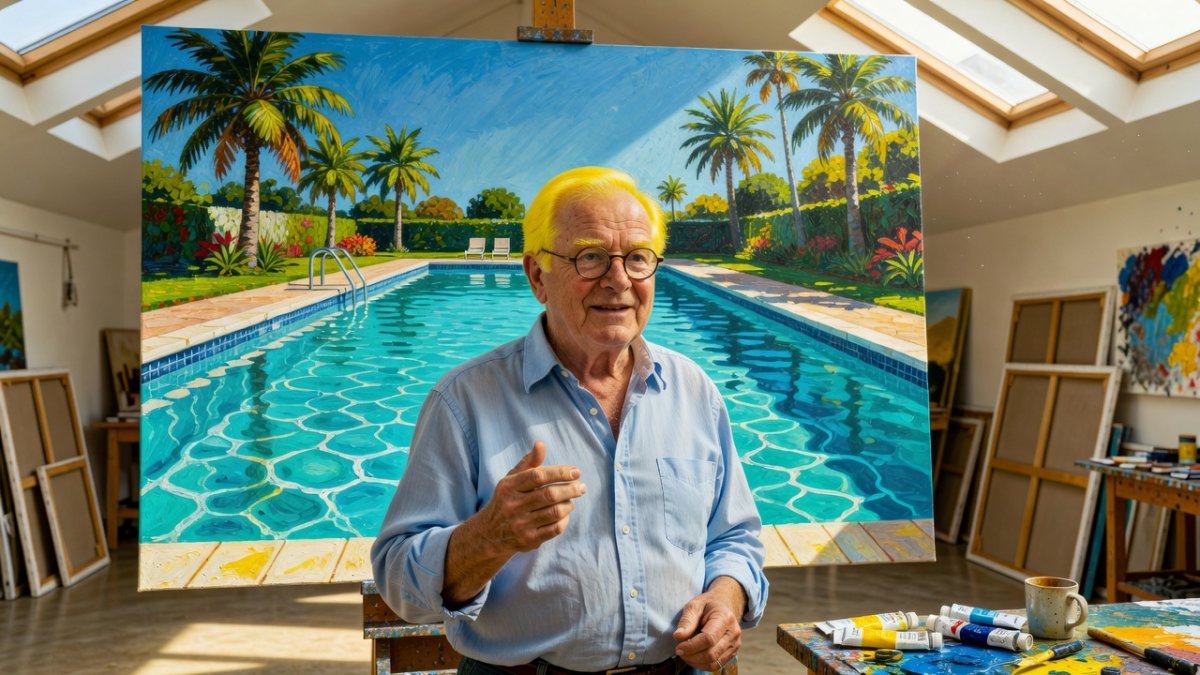
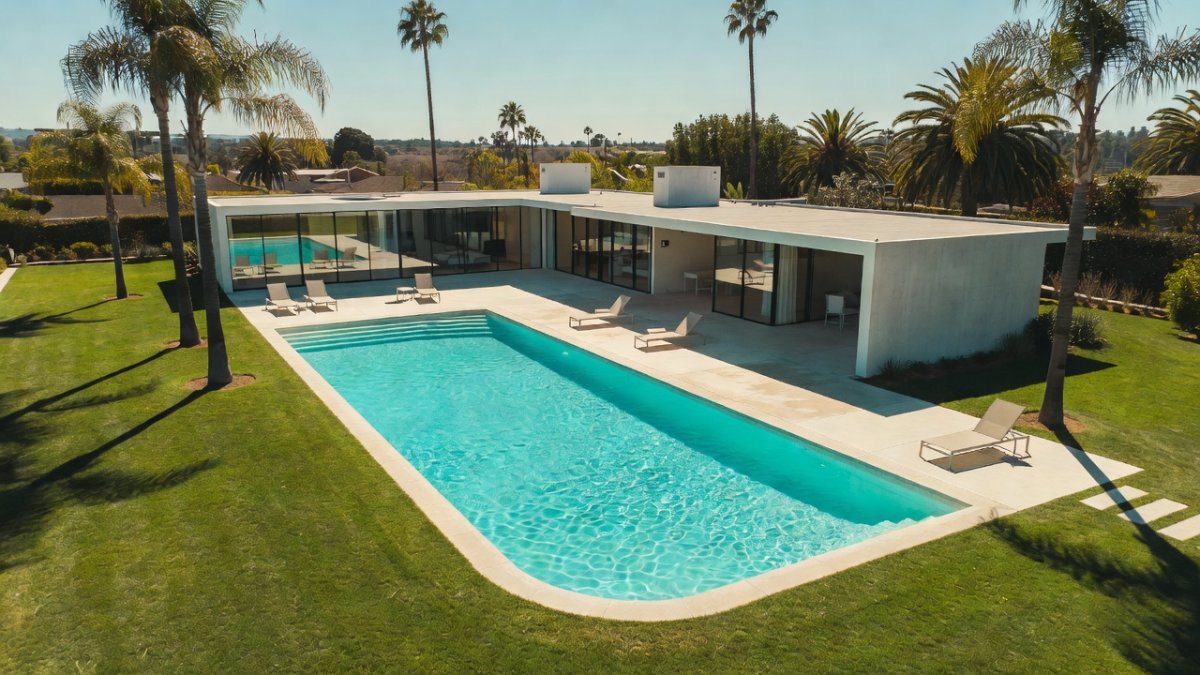
In 1964 Hockney moved to Los Angeles, a decision that proved transformative. The light, the pools and the sense of freedom he found in California produced some of his most enduring images. “A Bigger Splash” (1967) and “Portrait of an Artist (Pool with Two Figures)” (1972) remain among the most recognisable paintings of the twentieth century. The latter sold for $90.3 million at Christie’s New York in November 2018, setting a record for a living artist at auction. Hockney’s openness about his sexuality at a time when it remained illegal in Britain added a layer of personal courage to his public persona. He never hid his identity, and his work often carried a quiet, assured celebration of queer life.
Return to Yorkshire and the Wolds Paintings
After decades abroad, Hockney returned to the United Kingdom in 2005, settling first in Bridlington, East Yorkshire. The rolling landscape of the Wolds inspired a remarkable late flowering of work. Large-scale paintings of trees, roads and fields demonstrated that his eye remained as sharp as ever. In 2012 the Royal Academy mounted “A Bigger Picture”, an exhibition of these Yorkshire landscapes that became the most visited show in the institution’s history. A 2011 poll of 1,000 artists named him the most influential British artist of all time, a verdict few disputed.
Embracing Technology and Continued Innovation
Hockney was never content to rest on past achievements. He embraced new technologies with enthusiasm, producing thousands of iPad drawings that captured the arrival of spring in Woldgate with startling immediacy. One series sold for £6.2 million at auction. He also explored photography through inventive photocollages and designed sets for the Royal Opera House at Covent Garden and the Metropolitan Opera in New York. Even after suffering a stroke in 2012, he continued to work at a prodigious rate, proving that age and health setbacks could not dim his creative drive. The Victoria and Albert Museum holds his extensive archive, ensuring future generations can study his methods.
National Reaction and Royal Tributes
Tributes have come from across the political and cultural spectrum. King Charles and Queen Camilla described Hockney as “one of life’s true originals”, while Culture Secretary Lisa Nandy called him “a true titan of British art”. Tate Britain director Alex Farquharson expressed that the institution was “greatly saddened” by the loss. Hockney’s distinctive appearance—round glasses, canary-yellow hair and colourful clothing—made him a familiar figure on British streets and television screens. His appointment to the Order of Merit by Queen Elizabeth II in 2012 placed him among only twenty-four living members, an honour he cherished.
Cultural Legacy and Enduring Influence
Hockney’s death leaves a void in British cultural life that will be difficult to fill. His ability to move between high art and popular appeal, between traditional painting and digital experimentation, set him apart. He showed that an artist could remain both deeply rooted in place and endlessly curious about the wider world. From the backstreets of Bradford to the swimming pools of Los Angeles and the quiet lanes of East Yorkshire, he mapped a distinctly British experience with universal resonance. His work continues to hang in major collections worldwide, and his influence on younger artists remains profound.
By Erica Thornton, Staff Writer
This article was produced with AI-assisted research and editorial support. Reporting is based on sources cited in the article.
What's Your Reaction?
 Like
0
Like
0
 Dislike
0
Dislike
0
 Love
0
Love
0
 Funny
0
Funny
0
 Wow
0
Wow
0
 Sad
0
Sad
0
 Angry
0
Angry
0

US Politics and Policy Correspondent at Global1.News. Based in Washington DC, covering American politics, policy, elections, and the courts. Knows how the system works and tells you what it actually means.














Comments (0)