
CUET UG 2026: NTA To Hold Re-Exam For 3,765 Candidates Affected By Technical Glitch
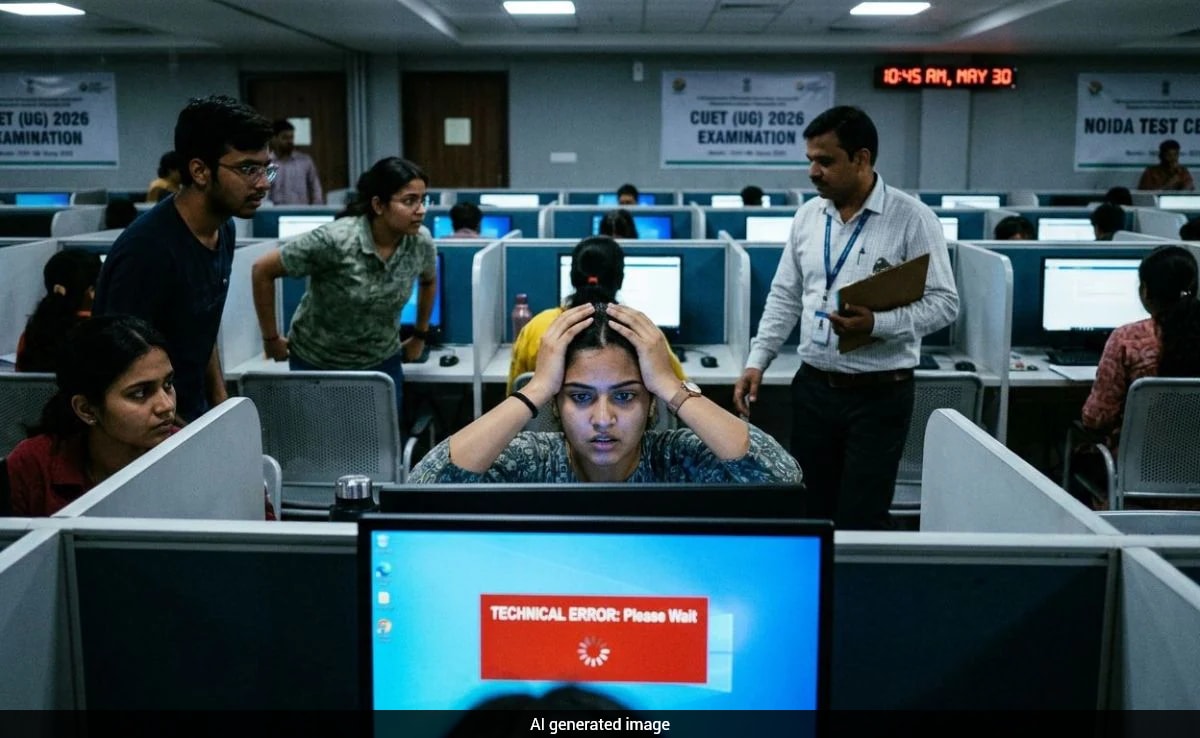
The National Testing Agency’s decision to offer a re-examination to 3,765 candidates affected by a technical issue during CUET UG 2026 underscores the challenges of delivering large-scale digital entrance tests and the importance of maintaining equity for every student who followed the required procedures. The assurance applies specifically to those who completed biometric registration and were present at their centres on May 30 in Shift-1 yet could not finish their paper because of the disruption. For students whose undergraduate admission prospects rest on a single high-stakes score, the prospect of a second opportunity directly addresses concerns about lost time and effort.
This development arrives at a critical point in the annual admission cycle, when universities across India prepare to finalise intake based on CUET results. Any perceived shortfall in exam delivery can ripple outward, affecting not only individual candidates but also institutional planning and the broader credibility of the testing process.
Precise Eligibility Criteria for the Re-Examination
The re-examination facility is limited to a clearly defined group. Only candidates who completed biometric registration and remained at their designated centres throughout the allotted Shift-1 window on May 30 qualify. Those who left early, did not complete registration, or sat for other shifts fall outside the scope of this measure. By anchoring eligibility to verifiable attendance records and biometric data, the National Testing Agency has established an objective boundary that reduces ambiguity for both students and examination centres. This targeted approach reflects an effort to balance compassion for those directly impacted with the need to preserve the integrity of the overall examination. Extending the opportunity beyond the documented parameters could introduce new variables into an already complex logistical operation.Operational Context of the May 30 Shift-1 Session
The disruption occurred during a single shift on a single day, yet its effects were concentrated enough to affect 3,765 individuals. Because the examination relies on computer-based delivery, even brief interruptions in connectivity or system functionality can prevent candidates from progressing through the full question set. The fact that biometric registration was completed indicates that candidates had cleared the initial identity-verification stage and were ready to begin or had already started their papers when the issue arose. Such incidents highlight the technical dependencies inherent in nationwide digital testing. Centres must maintain stable power, network connectivity, and functional hardware for thousands of simultaneous test-takers. When any of these elements falter, the agency must decide whether to pause, reschedule, or accept partial attempts—each option carrying distinct consequences for fairness and administrative workload.Broader Significance for Standardised Admissions Testing
CUET UG serves as a common entrance platform for undergraduate programmes at numerous central universities and participating institutions. A single technical shortfall therefore carries weight beyond the immediate cohort of 3,765 candidates. It prompts renewed scrutiny of contingency protocols, server capacity planning, and real-time monitoring systems that are meant to detect problems before they affect large numbers of test-takers. From an institutional perspective, the episode illustrates the tension between scaling examinations to accommodate growing applicant pools and maintaining the reliability expected of high-stakes assessments. Universities that rely on CUET scores for merit lists must now incorporate the re-examination results into their timelines, potentially adjusting counselling schedules or seat-allocation rounds.Forward Timeline and Candidate Preparation
The National Testing Agency has indicated that the re-examination will be organised for the eligible group. Candidates meeting the stated criteria should monitor official communications for the exact date, shift timing, and centre allocation. Because the original session occurred on May 30, any rescheduled sitting will need to be integrated into the remaining examination calendar without unduly delaying result processing for the wider candidate pool. Preparation for the re-examination will likely mirror standard protocols: familiarisation with the same syllabus and question format, adherence to biometric and security requirements, and timely arrival at the assigned centre. Students are advised to retain all prior admit-card and registration details, as these documents establish continuity between the original attempt and the rescheduled one. The coming weeks will reveal how effectively the agency coordinates the additional session while preserving the overall schedule for result declaration and subsequent admission processes. Clear, timely updates will be essential to minimise further uncertainty for the affected candidates and the institutions awaiting final merit data.By Dr. Raj Patel, Staff Writer
This article was produced with AI-assisted research and editorial support. Reporting is based on sources cited in the article.
What's Your Reaction?
 Like
0
Like
0
 Dislike
0
Dislike
0
 Love
0
Love
0
 Funny
0
Funny
0
 Wow
0
Wow
0
 Sad
0
Sad
0
 Angry
0
Angry
0

Dr. Raj Patel
India/South Asia Correspondent at Global1.News. Analytical voice with a background in science and health journalism. Based in New Delhi, covering Indian politics, education, healthcare, technology, and policy. Breaks down complex data into clear, actionable reporting.















Comments (0)