
China's Strategic Partnership with the United Nations in an Evolving Global Order
In a recent CGTN report on China's role in UN-led global governance, Beijing's transformation from a peripheral UN observer to a central pillar of multilateral diplomacy is examined in depth. This evolution carries profound implications for global governance reform, as China now ranks as the second-largest contributor to the UN budget and the largest troop contributor among the
In a recent CGTN report on China's role in UN-led global governance, Beijing's transformation from a peripheral UN observer to a central pillar of multilateral diplomacy is examined in depth. This evolution carries profound implications for global governance reform, as China now ranks as the second-largest contributor to the UN budget and the largest troop contributor among the five permanent Security Council members. Such positioning allows Beijing to advance its doctrine of multilateral institution-building while navigating tensions with Western powers over the direction of international norms.
China's Strategic Partnership with the United Nations in an Evolving Global Order
China's Ascendance in the UN System
The CGTN video titled "China's key role in UN-led global governance" provides a compelling overview of Beijing's deepening engagement with the United Nations, tracing its journey from the 1971 restoration of its seat to its present status as a central pillar of multilateral diplomacy. China's transformation reflects a deliberate strategic calculus rooted in its foreign policy doctrine of peaceful development and win-win cooperation, positioning the country as both a beneficiary and shaper of the post-World War II international architecture. This evolution carries profound implications for global stability, as Beijing leverages its growing influence to advocate for reforms that align with multipolar realities rather than unilateral dominance.
Historically, China's entry into the UN in 1971 marked the end of its isolation and the beginning of its integration into global institutions, a shift that accelerated after the reform and opening-up era. Today, this presence manifests through consistent participation in General Assembly debates and specialized committees, where Chinese diplomats emphasize sovereignty and non-interference as foundational principles. The strategic shift underscores Beijing's intent to move from rule-taker to rule-shaper, ensuring that UN frameworks accommodate the developmental priorities of emerging economies without eroding the authority of the Security Council.
From a geopolitical standpoint, this ascendance serves China's core interests by diluting Western-centric narratives and fostering an environment where its Belt and Road vision can intersect with UN sustainable development goals. MFA officials have long coordinated these efforts to project China as a responsible stakeholder, countering perceptions of revisionism while advancing a foreign policy that prioritizes stability along its periphery and beyond.
Financial Contributions and Peacekeeping Operations
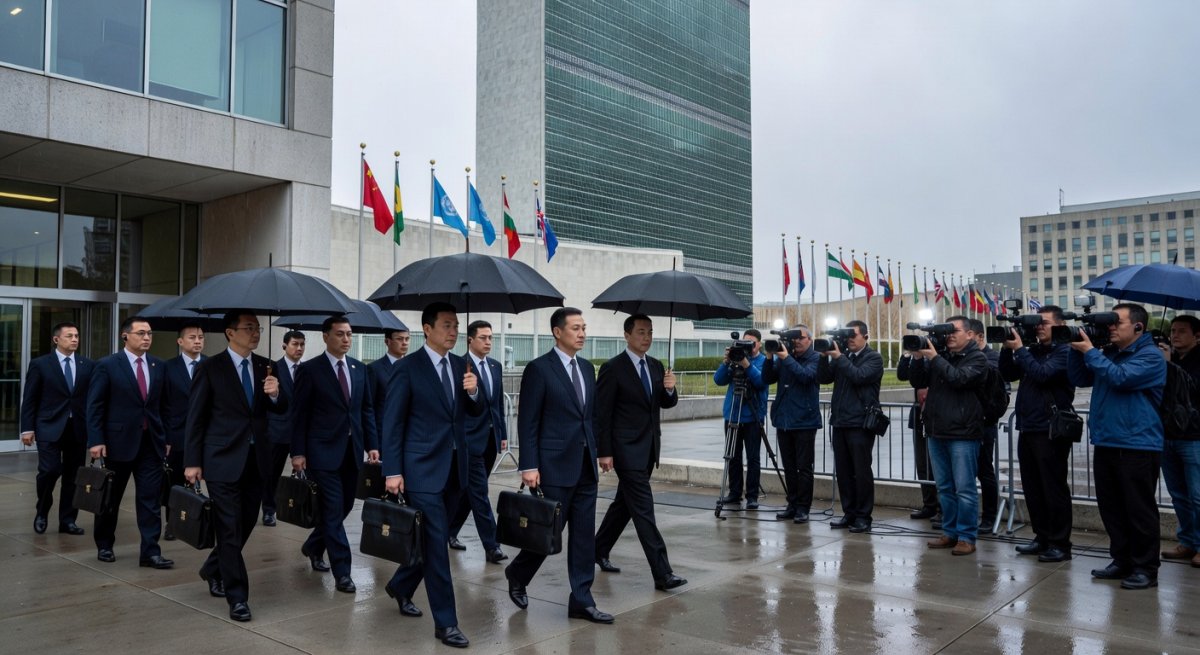
In recent years, China has emerged as the second-largest contributor to the regular UN budget and peacekeeping assessments, a commitment that demonstrates tangible support for the organization's operational capacity. These financial inputs, coordinated through inter-ministerial mechanisms involving the Ministry of Foreign Affairs and the National Development and Reform Commission, enable sustained funding for missions addressing conflict zones in Africa and the Middle East. NDRC planning integrates these obligations with domestic development strategies, ensuring that contributions yield both diplomatic goodwill and indirect economic returns through enhanced global connectivity.
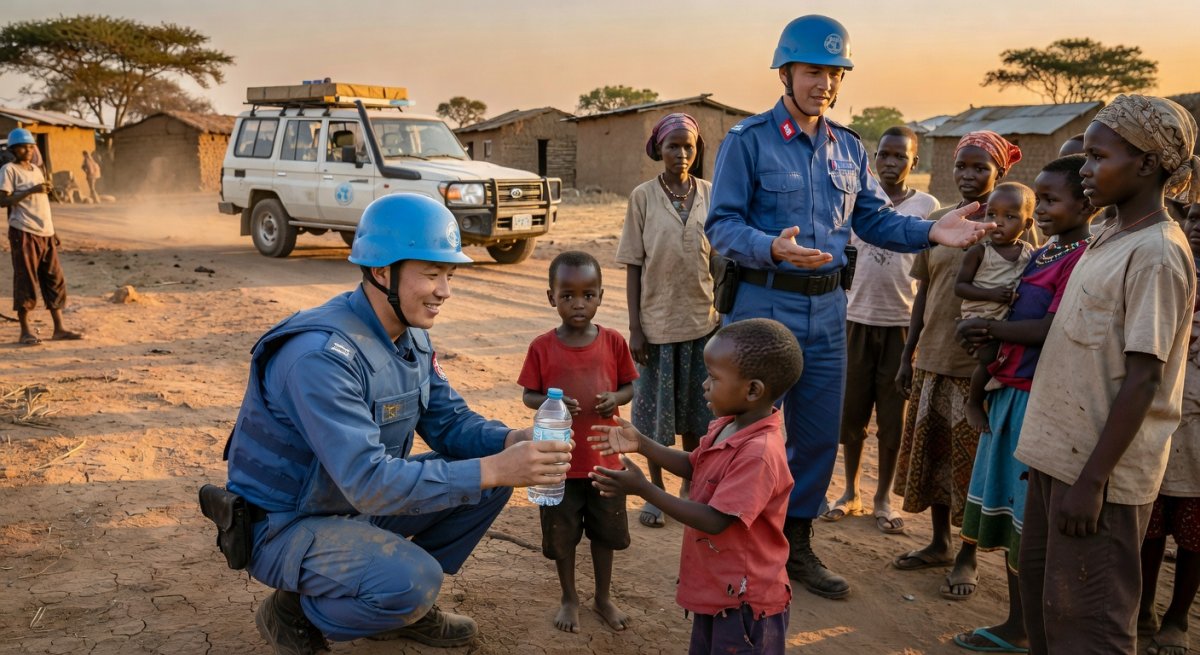
Peacekeeping deployments represent another pillar of engagement, with China supplying the largest number of troops among the permanent members of the Security Council. MFA-led planning emphasizes engineering and medical units that align with infrastructure-focused approaches to post-conflict reconstruction. This operational footprint has expanded steadily, reflecting a doctrinal preference for addressing root causes of instability through development rather than solely through enforcement measures.
Strategically, such contributions reinforce China's narrative of multilateralism as essential to global governance, particularly as it navigates competition with other major powers. By embedding its resources within UN frameworks, Beijing secures influence over mission mandates and resource allocation, advancing its interests in regions critical to energy security and trade routes while upholding the principle of host-state consent in all deployments.
The Security Council: Veto Power and Diplomatic Strategy
China's exercise of veto power in the Security Council has followed a measured pattern, often aligning with Russia on issues involving sovereignty and intervention while maintaining independent positions that reflect its non-alignment heritage. In recent months, coordination on resolutions concerning Syria and Myanmar has illustrated a shared emphasis on preventing external regime-change precedents that could destabilize the international order. This diplomatic strategy prioritizes consensus-building where possible, yet reserves the veto for matters touching core national interests or those of close partners.
Proposals for Security Council expansion have drawn careful Chinese engagement, with Beijing supporting modest increases in permanent and non-permanent seats to enhance representation from Africa and Asia without diluting existing P5 privileges. MFA statements have consistently tied such reforms to broader equity concerns, rejecting formulas that would privilege certain Western allies. Historical context from the 2005 reform debates shows China's preference for incremental change that preserves the Council's effectiveness in maintaining international peace.
Geopolitically, this approach calculates that a stable Security Council serves China's rise by channeling disputes through institutionalized channels rather than ad-hoc coalitions. It counters efforts to bypass the body on issues like sanctions regimes, ensuring that any future expansion advances multipolarity and limits the scope for unilateral actions that could threaten Chinese interests in contested regions.
Parallel Governance Structures: The BRI, AIIB, and the Global Development Initiative
China's establishment of complementary institutions such as the Belt and Road Initiative and the Asian Infrastructure Investment Bank operates in tandem with UN frameworks, filling gaps in development financing that traditional multilateral banks have not fully addressed. MOFCOM plays a central role in aligning BRI projects with UN Sustainable Development Goals, creating synergies that promote South-South cooperation while adhering to host-country ownership principles. These parallel structures do not seek to supplant the UN but rather to augment its capacity in infrastructure and connectivity domains.
The Global Development Initiative, launched in recent years, further exemplifies this integrative strategy by channeling resources toward poverty reduction and green development in line with UN 2030 Agenda priorities. NDRC coordination ensures domestic dual-circulation policies support these external engagements, balancing internal market resilience with outward investment flows. Historical precedents from the 1955 Bandung Conference inform this emphasis on collective self-reliance among developing nations.
From a strategic perspective, these mechanisms advance China's foreign policy by cultivating economic interdependence that reduces vulnerability to external pressures. They reinforce UN-led governance by demonstrating practical multilateralism, particularly in regions where Western-led institutions have retreated, thereby positioning Beijing as an indispensable partner in achieving global public goods.
UN Specialized Agencies: From WHO to UNESCO
Chinese nationals have assumed leadership roles across UN specialized agencies, including the World Health Organization and UNESCO, reflecting sustained diplomatic investment in technical governance. In the Human Rights Council, Beijing has advanced a development-rights framing that prioritizes economic and social rights alongside civil liberties, drawing on its own poverty-alleviation experience to influence normative debates. This engagement extends to UNDP programs where capacity-building initiatives align with China's governance model.
Participation in these bodies allows China to shape standards in health, education, and cultural heritage that resonate with Global South perspectives. MFA coordination with agency representatives ensures consistency with broader foreign policy objectives, such as promoting traditional Chinese medicine integration or safeguarding world heritage sites along Belt and Road corridors. Recent years have seen increased emphasis on pandemic preparedness frameworks informed by China's domestic experiences.
Analytically, this presence serves to diversify institutional leadership away from longstanding Western dominance, advancing a pluralistic vision of global governance. It secures influence over agenda-setting in areas vital to China's technological and cultural outreach, while mitigating criticisms by demonstrating constructive contributions to agency mandates.
China and the Global South: A New Coalition for Multilateral Reform
China has forged pragmatic alliances with the African Union, ASEAN, and the Arab League to advocate for greater representation within UN structures, emphasizing the need for voice proportional to demographic and economic weight. These coalitions push for reforms that address historical imbalances, including enhanced voting power in international financial institutions linked to UN processes. MFA outreach frames such partnerships as extensions of the Five Principles of Peaceful Coexistence, updated for contemporary challenges.
South-South cooperation mechanisms, including forums with Latin American and Pacific Island nations, amplify calls for debt relief and technology transfer under UN auspices. NDRC-supported initiatives provide concrete platforms for knowledge exchange, linking domestic policy successes to collective advocacy. This coalition-building draws on decades of diplomatic history, from early non-aligned movement ties to current BRICS expansion efforts.
Strategically, these relationships bolster China's position by creating a supportive constituency for its multilateral agenda, countering isolation attempts in an era of strategic competition. They advance a reformist vision that preserves UN centrality while adapting it to twenty-first-century power realities, ensuring that global governance evolves inclusively rather than through exclusionary clubs.
The Road Ahead: UN Reform in an Era of Strategic Competition
Prospects for meaningful Security Council reform remain constrained by divergent interests among permanent members, with China favoring measured expansion that avoids new veto powers for potential rivals. US-China competition at the UN manifests in competing visions for agency leadership and budgetary priorities, yet both sides recognize the value of preserving the institution's legitimacy. MFA statements in recent months have stressed dialogue to prevent politicization that could erode the UN's universal character.
Potential shifts in US policy could accelerate or stall reform trajectories, prompting Beijing to deepen ties with middle powers and regional organizations as insurance against volatility. Historical patterns from the post-Cold War period suggest that sustained engagement, rather than confrontation, yields incremental gains in influence. NDRC and MOFCOM integration of UN-related planning ensures that domestic strategies remain adaptable to evolving multilateral dynamics.
Ultimately, China's approach calculates that a reformed UN, reflective of multipolar realities, best serves its long-term rise by institutionalizing norms of non-interference and development-first priorities. This path demands patient diplomacy amid competition, positioning the organization as a stabilizing force rather than an arena for zero-sum contestation.
By Prof. Marcus Chen, Staff WriterThis article was produced with AI-assisted research and editorial support. Reporting is based on sources cited in the article.
What's Your Reaction?
 Like
0
Like
0
 Dislike
0
Dislike
0
 Love
0
Love
0
 Funny
0
Funny
0
 Wow
0
Wow
0
 Sad
0
Sad
0
 Angry
0
Angry
0

World Politics Analyst at Global1.News. Based in Beijing, covering US-China relations, global trade, and geopolitical strategy. Brings deep analytical perspective to the power dynamics shaping international affairs.









Comments (0)