
China’s Rise and the Challenge to US Maritime Security
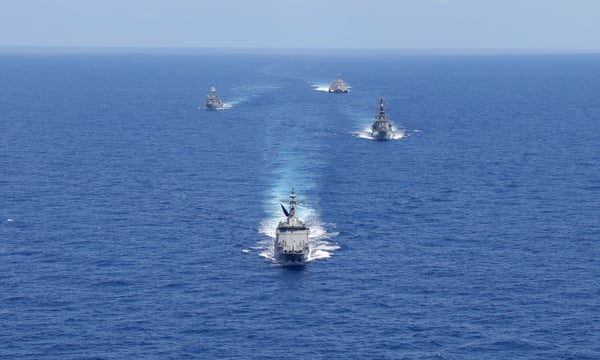
China’s Rise and the Challenge to US Maritime Security: Insights from James R. Holmes
The Indo-Pacific Naval Balance in 2024
China’s People’s Liberation Army Navy now operates more than 370 hulls, surpassing the United States Navy’s 290 ships in raw numbers, according to the Pentagon’s 2023 China Military Power Report. This numerical edge masks deeper qualitative shifts that naval strategist James R. Holmes has tracked for two decades. Holmes, the J.C. Wylie Chair of Maritime Strategy at the U.S. Naval War College, argues that Beijing is not merely expanding tonnage but constructing a coherent anti-access and area-denial architecture designed to push American carrier strike groups beyond the first island chain.
Holmes’ Mahanian Framework Applied to the South China Sea
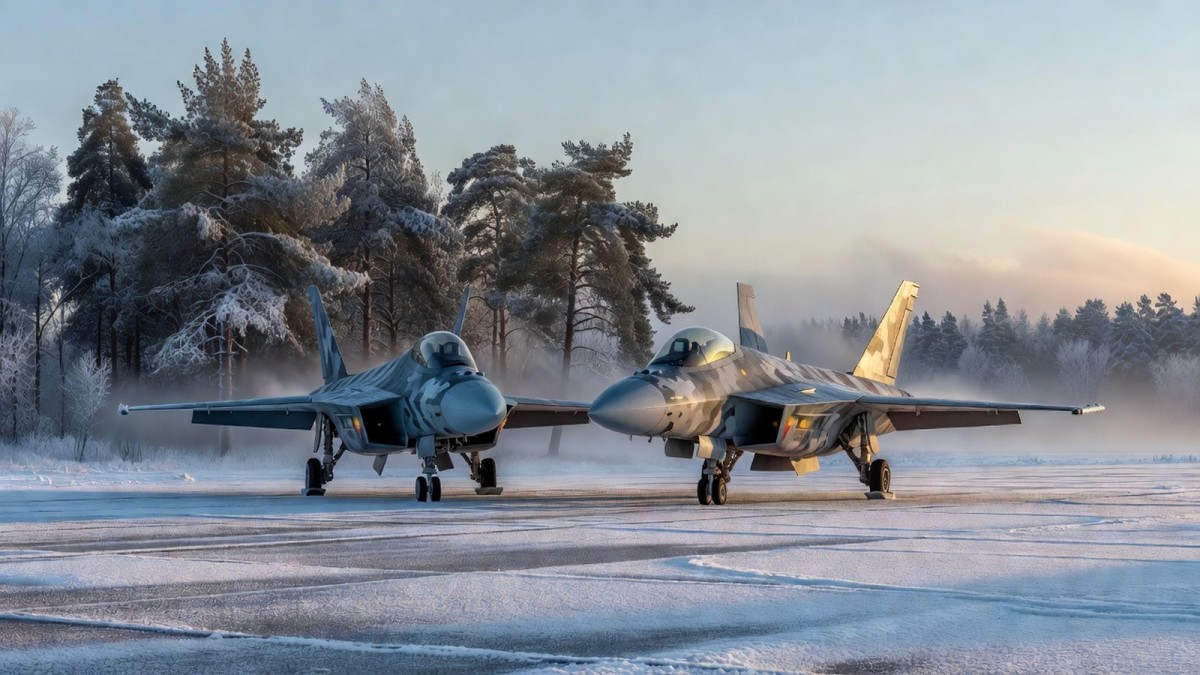
Holmes consistently returns to Alfred Thayer Mahan’s dictum that command of the sea rests on concentrated battle fleets and forward bases. In recent lectures, he notes that China’s artificial islands at Subi, Mischief, and Fiery Cross Reefs now host runways longer than 3,000 meters and integrated air-defense radars. These features allow People’s Liberation Army Air Force J-20 stealth fighters to cover the Spratly Islands without aerial refueling. Holmes warns that such infrastructure converts the South China Sea into a “great wall at sea,” raising the operational cost for any U.S. intervention on behalf of treaty allies such as the Philippines.
Quantitative Data Behind the Qualitative Shift
Between 2014 and 2023, Chinese shipyards launched an average of 12 major surface combatants and submarines annually. The Type 055 Renhai-class cruiser displaces 13,000 tons and carries 112 vertical-launch cells, exceeding the U.S. Arleigh Burke-class destroyer in missile capacity. Holmes points out that these vessels are optimized for saturation attacks against carrier air wings rather than blue-water power projection. Meanwhile, U.S. shipyards delivered only seven Arleigh Burke destroyers in the same period, constrained by industrial-base bottlenecks and a congressional requirement to maintain two nuclear-powered carriers under construction at any time.
Taiwan and the First-Island-Chain Dilemma
Holmes has long argued that Taiwan represents the central node in the first island chain. A successful Chinese blockade would require roughly 200 surface ships and submarines to cordon off approaches from the east, a force the PLA Navy can now assemble within 72 hours. U.S. analysts estimate that restoring sea control around the island after such a closure would demand three to four U.S. carrier strike groups plus Japanese and Australian support—an operation Holmes describes as “logistically brittle and politically fraught.” Seoul’s own calculations factor in the risk that any Taiwan contingency would immediately disrupt semiconductor supply chains passing through the Taiwan Strait, threatening Korean exports valued at $32 billion annually.
Diplomatic Repercussions for Middle Powers
From Seoul, the maritime contest appears less as a binary U.S.-China struggle and more as a test of alliance management. Holmes notes that Washington’s Indo-Pacific strategy relies on “places, not bases”—rotational access to facilities in Palau, Darwin, and potentially Subic Bay. South Korea’s cautious approach to expanded trilateral naval exercises with the United States and Japan reflects domestic political constraints, yet Holmes believes incremental cooperation on undersea surveillance and mine countermeasures could raise deterrence without triggering Chinese economic retaliation. He cites the 2023 Camp David summit as evidence that shared threat perceptions are slowly aligning.
Technological Asymmetries and Future Fleet Design
Holmes emphasizes that numbers alone do not determine outcomes. The U.S. Navy retains advantages in nuclear propulsion, integrated air-and-missile defense, and long-range strike via the F-35C and forthcoming MQ-25 Stingray tanker. China’s hypersonic anti-ship missiles, however, compress decision timelines to minutes. Holmes advocates for distributed maritime operations that disperse sensors and shooters across smaller, cheaper platforms—unmanned surface vessels and extra-large unmanned undersea vehicles—rather than concentrating value in a handful of exquisite capital ships. He cautions that procurement timelines for the U.S. Columbia-class submarine and DDG(X) destroyer must accelerate if parity is to be maintained past 2035.
Implications for Regional Stability and Arms Control
The absence of maritime confidence-building measures between Washington and Beijing amplifies miscalculation risks. Holmes has proposed limited notification regimes for major exercises and submarine rescue protocols, drawing parallels to Cold War U.S.-Soviet agreements. South Korean diplomats, observing both the 2022 Pelosi visit fallout and the 2023 balloon incident, recognize that any escalation ladder in the Taiwan Strait would immediately implicate Korean airspace and sea lanes. Holmes therefore urges middle powers to press for crisis hotlines modeled on the existing U.S.-China military-to-military mechanism, albeit with higher-level political oversight.
Holmes’ scholarship underscores that maritime security is ultimately a contest of political will as much as hardware. China’s shipbuilding capacity, estimated at 23 million tons of steel annually versus America’s 100,000 tons, cannot be matched symmetrically. Instead, Holmes calls for asymmetric responses: tighter integration with allies, accelerated unmanned systems development, and sustained diplomatic engagement that keeps open channels even during periods of tension. For Seoul, this means calibrating its own naval modernization—centered on the KDX-III batch II destroyers and the forthcoming CVX light carrier—while preserving strategic autonomy within the U.S. alliance framework.
The coming decade will test whether the United States can reconstitute credible forward presence without triggering an arms race that destabilizes the entire region. Holmes’ analytical lens, grounded in classical strategic theory yet attentive to contemporary technology, offers a sober reminder that sea power remains the decisive variable in Indo-Pacific security.
This is Prof. David Park for Global1 News, reporting from Seoul. 🇰🇷
This article was produced with AI-assisted research and editorial support. Reporting is based on sources cited in the article.
What's Your Reaction?
 Like
0
Like
0
 Dislike
0
Dislike
0
 Love
0
Love
0
 Funny
0
Funny
0
 Wow
0
Wow
0
 Sad
0
Sad
0
 Angry
0
Angry
0

East Asia/Technology Correspondent at Global1.News. Seoul-based voice covering Korean politics, technology, business, and culture. Analyzes how technology and geopolitics intersect across East Asia.












Comments (0)