
China's Travel Ban on New Zealand MPs Marks New Phase in Cross-Strait Diplomacy
China's Travel Ban on New Zealand MPs Marks New Phase in Cross-Strait Diplomacy The Details of the Travel Restrictions In a development that has drawn attention from diplomatic observers, China has imposed one-year entry bans on four New Zealand Members of Parliament following their May visit to Taiwan. The affected lawmakers—Maureen Pugh, David Wilson and Laura McClure from th
The Details of the Travel Restrictions
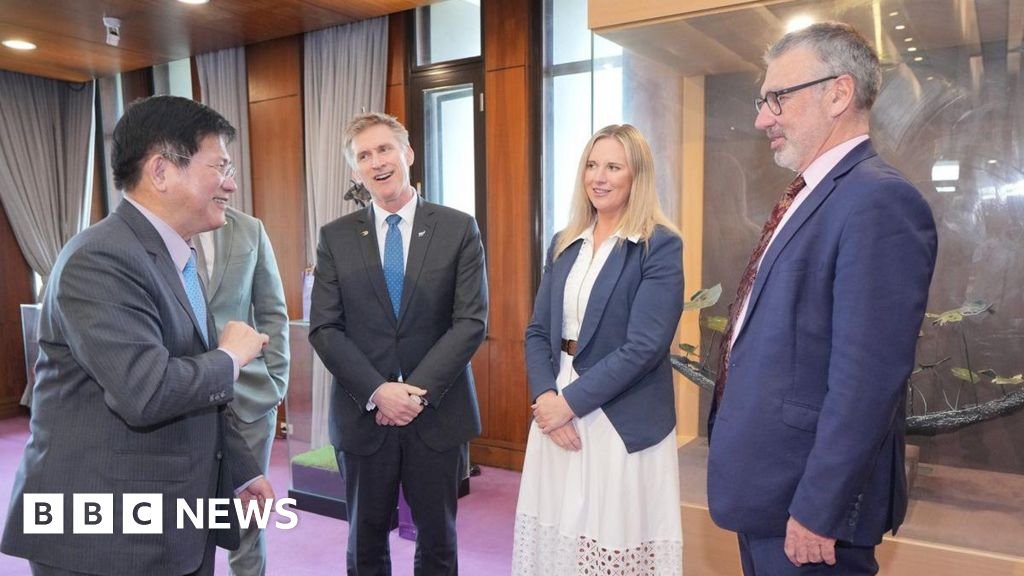
In a development that has drawn attention from diplomatic observers, China has imposed one-year entry bans on four New Zealand Members of Parliament following their May visit to Taiwan. The affected lawmakers—Maureen Pugh, David Wilson and Laura McClure from the ruling coalition, along with opposition Labour Party member Duncan Webb—learned of the measures upon their return. The Chinese Embassy in Wellington indicated that the restrictions could be reduced or waived if the MPs issued an apology for disregarding China's stated concerns.
New Zealand's foreign ministry described the action as surprising, noting that parliamentary visits to Taiwan have occurred for decades without prior punitive responses. Officials emphasised that such engagements remain consistent with Wellington's longstanding One China policy, under which formal diplomatic relations exist solely with Beijing since 1972.
Statements from the Chinese Embassy and New Zealand Officials
The Chinese Embassy framed the bans as a direct response to the MPs' decision to travel in their parliamentary capacity, which it said sent incorrect signals to Taiwan's Democratic Progressive Party administration and independence-leaning groups. The embassy described the trip as interference in China's internal affairs, consistent with Beijing's position that Taiwan forms an inalienable part of its territory.
Foreign Minister Winston Peters directed ministry staff in both Beijing and Wellington to seek further clarification from Chinese counterparts. This step aims to understand the shift from previous practice, where similar exchanges drew criticism but not personal travel prohibitions. Laura McClure of the ACT party rejected any notion of apology, characterising the ban as foreign interference and asserting the right of elected representatives to travel freely in a democratic system.
Continuity and Change in New Zealand's Approach to Taiwan
New Zealand has balanced its One China commitment with unofficial economic and cultural links to Taiwan for many years. Last year's meeting between a group of New Zealand MPs and Taiwanese President Lai Ching-te prompted embassy criticism that labelled participants as aligned with separatist elements. A further incident in October involved lawmakers attending a reception organised by Taiwan's representative office in Wellington, which also drew formal condemnation from Beijing.
These episodes illustrate a pattern of rhetorical pushback rather than concrete sanctions against New Zealand citizens. The current travel bans therefore represent an escalation in enforcement tools applied to a longstanding partner that has otherwise maintained stable bilateral ties with China.
Strategic Calculus Behind Beijing's Decision
From China's perspective, the measure serves to reinforce deterrence against incremental diplomatic normalisation between Taiwan and countries that formally recognise the People's Republic. By targeting parliamentarians rather than private citizens, Beijing signals that official or quasi-official engagements carry distinct costs. This approach aligns with broader efforts to limit Taipei's international space without disrupting trade volumes that remain central to both economies.
New Zealand, for its part, seeks to preserve access to the Chinese market while upholding parliamentary autonomy and freedom of movement for its elected officials. The foreign ministry's request for dialogue indicates a preference for quiet management over public confrontation, reflecting Wellington's pragmatic tradition in managing relations with major powers.
Regional and Global Ripple Effects
The precedent may influence calculations in other capitals that maintain unofficial Taiwan contacts while recognising Beijing. ASEAN members with significant economic exposure to China could interpret the move as a warning against elevating parliamentary exchanges. At the same time, the action underscores limits to leverage: New Zealand's overall trade relationship with China has continued without disruption, suggesting Beijing calibrates penalties to avoid broad economic fallout.
Comparisons with earlier sanctions imposed on United States legislators, including former House Speaker Nancy Pelosi in 2022 and Representative Michael McCaul in 2023, highlight a graduated response pattern. Application of similar tools to a smaller partner like New Zealand tests whether such measures can shape behaviour without triggering alliance-style pushback from partners in the wider Indo-Pacific.
Diplomatic Pathways and Longer-Term Implications
Discussions now underway between New Zealand and Chinese officials will determine whether the bans remain fixed or become subject to negotiation. Historical precedent shows that Beijing has occasionally adjusted entry restrictions following expressions of regret, yet the current cohort of MPs has shown little inclination to apologise. This stance may prolong the restrictions and shape future parliamentary travel planning.
Over time, the episode contributes to a more explicit boundary around acceptable Taiwan engagement for countries adhering to One China frameworks. It also reinforces China's emphasis on internal affairs sovereignty as a core foreign-policy doctrine, with implications for how middle powers navigate between economic interdependence and political autonomy.
By Prof. Marcus Chen, Staff WriterThis article was produced with AI-assisted research and editorial support. Reporting is based on sources cited in the article.
What's Your Reaction?
 Like
0
Like
0
 Dislike
0
Dislike
0
 Love
0
Love
0
 Funny
0
Funny
0
 Wow
0
Wow
0
 Sad
0
Sad
0
 Angry
0
Angry
0

World Politics Analyst at Global1.News. Based in Beijing, covering US-China relations, global trade, and geopolitical strategy. Brings deep analytical perspective to the power dynamics shaping international affairs.














Comments (0)