
China's Atemoya Import Pledges Highlight Evolving Cross-Strait Agricultural Pressures
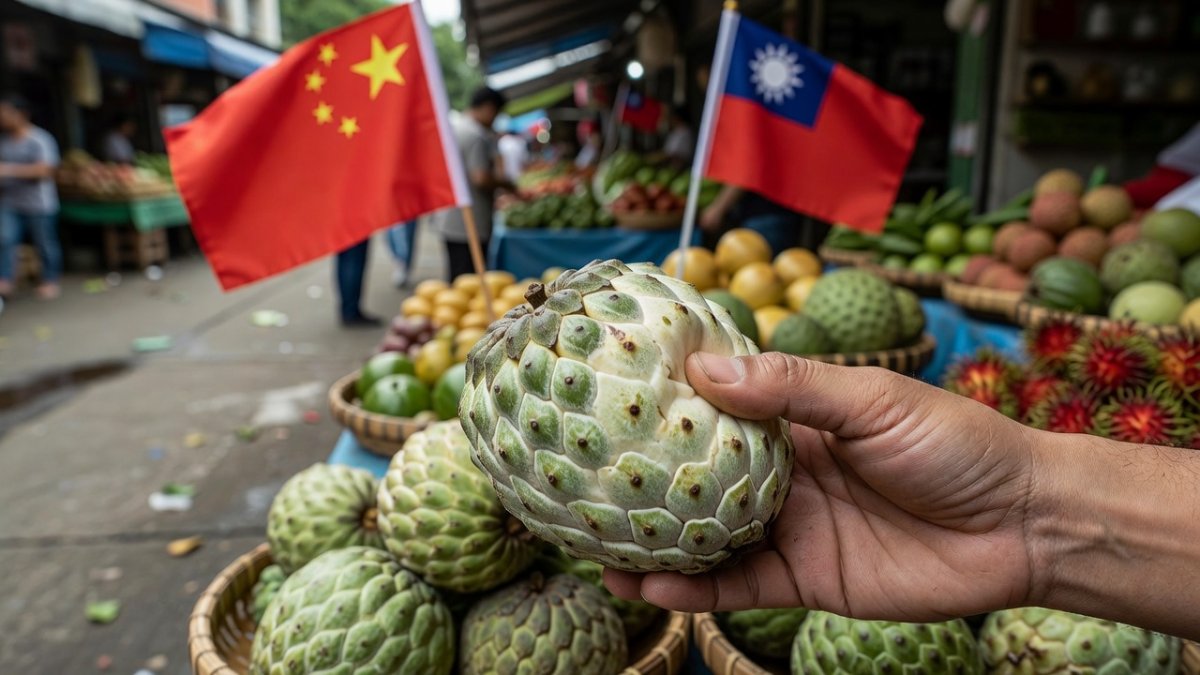
The Recent Xiamen Forum Commitments Chinese companies recently pledged to increase purchases of Taiwanese atemoyas during a forum held in Xiamen, a coastal city on the Taiwan Strait. This commitment formed part of a wider initiative to expand acquisitions of Taiwanese exports, encompassing fish and tea products. Business leaders and opposition politicians from Taiwan participat
The Recent Xiamen Forum Commitments
Chinese companies recently pledged to increase purchases of Taiwanese atemoyas during a forum held in Xiamen, a coastal city on the Taiwan Strait. This commitment formed part of a wider initiative to expand acquisitions of Taiwanese exports, encompassing fish and tea products. Business leaders and opposition politicians from Taiwan participated in the event, even though Taiwan's central government maintains an official ban on such involvement. The pledges have drawn immediate scrutiny from Taipei, with Taiwan's Mainland Affairs Council indicating that officials who attended could face investigation.
Taiwan's Agriculture Ministry Assessment
Taiwan's agriculture ministry issued a press release describing the import pledges as a classic example of China's raise, trap, kill process. According to the statement, Beijing first creates reliance through large purchases that encourage farmers to expand atemoya cultivation, then imposes unilateral export restrictions without prior warning. The ministry highlighted specific past actions, including the suspension of atemoya imports in 2021 on pest-related grounds, a partial resumption in 2023, and the introduction of taxes on the fruit in 2024. These steps, the ministry argued, generate substantial instability for the industry and expose farmers to significant risks. The statement also noted China's ongoing expansion of its own atemoya cultivation as an additional challenge to Taiwan's local producers.
(Global 1 News)
Historical Patterns With Taiwanese Agricultural Exports
The current situation with atemoyas echoes earlier developments involving Taiwanese pineapples. In 2021, China implemented a ban on pineapple imports from Taiwan, which disrupted farmers' livelihoods and prompted a domestic consumption campaign within Taiwan. Observers viewed that measure as part of broader non-military tactics applied amid heightened military drills near Taiwan, including simulations of blockades. The atemoya case follows a comparable sequence of initial market access followed by restrictions, reinforcing Taiwan's concerns about economic dependence on the mainland market.
Domestic Political Reactions Within Taiwan
Lawmakers from Taiwan's opposition Kuomintang party have criticized the agriculture ministry's warnings, characterizing them as an effort to politicize the atemoya sector in ways that could ultimately harm local farmers. Taipei Mayor Chiang Wan-an has accused the Mainland Affairs Council of using the issue to bully and oppress Taiwanese farmers. He described the atemoya as the TSMC of the fruit world, emphasizing its unique qualities and asserting that no other country produces a fruit of comparable quality. These statements reflect internal divisions over how best to manage trade relations with the mainland while protecting agricultural interests.
Strategic Calculus and Leverage Considerations
From a strategic perspective, the pledges and subsequent warnings illustrate differing objectives on each side of the Taiwan Strait. Beijing seeks to expand economic ties through targeted purchases that align with broader goals of technological self-sufficiency and regional influence. Taiwan, meanwhile, prioritizes sustainable agricultural development and stable farmer incomes, directing efforts toward diversified processing options such as frozen fruit products, puree, and wines. The leverage available to each party stems from market access on one side and regulatory oversight plus domestic political consensus on the other. Second-order effects could extend to ASEAN economies that also export similar tropical fruits, potentially influencing supply chain adjustments across the region.
Implications for Multilateral and Regional Dynamics
The atemoya episode connects to China's wider foreign policy approach of using economic instruments alongside diplomatic engagement. By focusing on specific agricultural products, such measures test Taiwan's resilience without immediate resort to military options. For the Global South, these developments offer lessons in managing trade dependencies while pursuing diversification strategies. The forum in Xiamen underscores ongoing people-to-people and business-level contacts despite official restrictions, highlighting the complexity of maintaining stable cross-strait channels amid competing political claims. Taiwan's emphasis on guiding the industry toward value-added products represents a practical response aimed at reducing vulnerability to external market shifts.
By Prof. Marcus Chen, Staff WriterThis article was produced with AI-assisted research and editorial support. Reporting is based on sources cited in the article.
What's Your Reaction?
 Like
0
Like
0
 Dislike
0
Dislike
0
 Love
0
Love
0
 Funny
0
Funny
0
 Wow
0
Wow
0
 Sad
0
Sad
0
 Angry
0
Angry
0

World Politics Analyst at Global1.News. Based in Beijing, covering US-China relations, global trade, and geopolitical strategy. Brings deep analytical perspective to the power dynamics shaping international affairs.













Comments (0)