
Ballaké Sissoko: Mali's Kora Master Bridges Tradition and Innovation Across Continents
Ballaké Sissoko, the virtuoso Malian kora player descended from generations of griot musicians, has spent decades weaving the ancient sounds of West Africa's 21-string harp-lute into a global musical language. From his Bamako debut in 2021 to acclaimed 2025 collaborative albums and a 2026 European festival circuit, his journey embodies the resilience of Mali's cultural heritage
Ballaké Sissoko, the virtuoso Malian kora player descended from generations of griot musicians, has spent decades weaving the ancient sounds of West Africa's 21-string harp-lute into a global musical language. From his Bamako debut in 2021 to acclaimed 2025 collaborative albums and a 2026 European festival circuit, his journey embodies the resilience of Mali's cultural heritage amid political turbulence.
Ballaké Sissoko: Mali's Kora Master Bridges Tradition and Innovation Across Continents
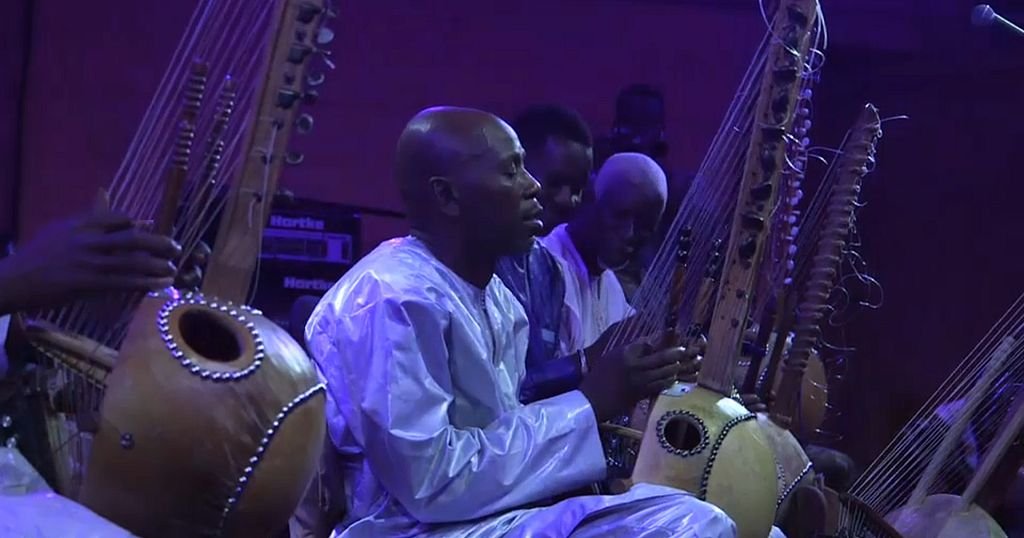
Bamako, Mali — When Ballaké Sissoko took the stage in Bamako in June 2021 to debut his album "Djourou" — the word means "string" in Bamanakan — he was doing more than launching a record. He was returning home after six years abroad, bringing the sound of the kora back to the Malian audience who inspired it. Surrounded by 11 fellow kora players, he offered an invitation: to stay together around his music, even as his country faced political crisis and a devastating pandemic.
The Griot's Inheritance: A Lineage of Strings
Ballaké Sissoko was born in 1968 in Bamako, Mali, into a family of performers whose musical roots stretch back several generations. From an early age, he absorbed the rhythms and stories that filled the family compound, where music served as both livelihood and living memory.
He began playing the kora as a child, guided by elders who saw in him the quiet focus required to master the instrument. Daily practice sessions turned the 21-string West African harp-lute into an extension of his own voice, one that would later carry Mandingue griot traditions far beyond Mali's borders.
The kora itself remains integral to Mandingue griot traditions, its resonant strings used for centuries to chronicle history, praise leaders, and mediate disputes. In Sissoko's hands, the instrument retains this ancient purpose while opening new pathways for dialogue across cultures.
His family's musical legacy includes multiple generations of kora players who performed at royal courts and village gatherings alike. This unbroken chain of transmission gave young Ballaké both technical skill and a deep sense of responsibility to the stories embedded in each melody.
Connection to the broader Malian griot tradition runs through every note he plays. Griots have long acted as historians, diplomats, and entertainers; Sissoko carries this role into the present, using his platform to affirm cultural continuity even when daily life grows uncertain.
This heritage shaped his artistic identity in profound ways. Rather than treating tradition as a fixed relic, he views it as a living conversation that welcomes innovation while honoring the ancestors who first tuned the kora's strings.
Djourou: A Homecoming Concert for the Ages
The June 2021 Bamako concert marked Sissoko's first performance in Mali in six years. After years of international touring, the return felt both intimate and momentous, a chance to reconnect with the audience that had first nurtured his sound.
The last Mali show had taken place in 2015 alongside cellist Vincent Ségal. That earlier collaboration had already hinted at the kora's potential to travel, yet the 2021 concert carried added weight because it unfolded on home soil after a long absence.
Eleven kora musicians joined him on stage, creating a shimmering wall of strings that filled the venue with layered harmonies. The sight of so many instruments together underscored the communal spirit at the heart of the evening.
The album "Djourou" had been released in France in April 2021. Though widely praised abroad, its true significance emerged only when brought back to Bamako, where many listeners lack reliable access to streaming platforms or online concerts.
His wife, singer Fatima, accompanied him on the trip. Her presence added vocal warmth to several pieces and reminded everyone that music-making in griot families remains a shared endeavor across generations and genders.
"The spirit of this album is an invitation to stay together around my kora," Sissoko explained. Those words captured the concert's deeper purpose: to gather people physically and emotionally at a moment when division threatened to pull the country apart.
Kora as Peacemaker: Music in a Time of Crisis
Mali's political crisis reached a critical point in May 2021 with the arrest and forced resignation of the president and prime minister. The coup d'état drew swift international condemnation and left ordinary citizens navigating uncertainty about the nation's future.
Sissoko responded through music rather than direct political statements. He understood that the kora had historically served as a voice for calm reflection, and he chose to let its tones speak where words might inflame tensions.
"The current situation in Mali is stressing us. We have to calm down," he observed. This measured call for composure reflected the griot tradition of using song to ease conflict rather than escalate it.
"The spirit of this album is an invitation to stay together around my kora" became a refrain that evening. By repeating the phrase, Sissoko transformed a recording into a living message of solidarity for those gathered in Bamako.
Music serves as a unifying force in divided societies because it bypasses the barriers of language and ideology. In Mali, where ethnic and regional differences sometimes flare, the kora's inclusive resonance offers a rare common ground.
Other Malian musicians have similarly turned to art for peace, drawing on centuries-old practices of praise-singing and mediation. Sissoko's approach continues this lineage, proving that the griot's role remains vital even in the twenty-first century.
Navigating a Pandemic: COVID's Toll on African Musicians
COVID-19 delivered a devastating blow to artists across the continent who depend on live performance for their income. Unlike salaried workers, many musicians receive payment only when they take the stage, leaving them especially vulnerable during lockdowns.
"The Covid 19 is a real catastrophe for the artists that are not paid per month but per performance," Sissoko noted. His words highlighted a structural reality that international aid programs often overlooked in their focus on larger economies.
"Because if there is no concert there is no money," the economic fallout extended beyond individual households to entire communities that rely on touring musicians for cultural events and informal support networks.
Despite restrictions, Sissoko insisted on performing in Bamako. The decision reflected both artistic necessity and a belief that live music could offer psychological relief during prolonged isolation.
Virtual concerts were not always a viable alternative in Mali, where internet access remains limited outside major cities. This digital divide meant that many listeners could only experience the music in person, reinforcing the importance of the 2021 gathering.
The broader African music economy suffered similar disruptions, with festivals cancelled and recording projects delayed. Yet the crisis also prompted new forms of local collaboration that strengthened community ties among musicians who stayed close to home.
A Prolific Chapter: 2025 Albums and Global Collaborations
2025 brought a remarkable creative output that showcased Sissoko's ability to move between worlds. Each project built on long-standing partnerships while exploring fresh sonic territories.
"Our Calling," recorded with British singer-songwriter Piers Faccini on the Nø Førmat! label, explores migration, spirituality, and the shared melodic language between European folk and Malian traditions. The album reveals unexpected resonances between seemingly distant musical cultures.
"Sou Kora," a collaboration with cellist Vincent Ségal, soprano saxophonist Émile Parisien, and accordionist Vincent Peirani, creates a chamber-jazz and world-music hybrid. The quartet's interplay highlights the kora's capacity to converse with Western classical and improvisational voices.
"Radicants," made with electronic composer Lorenzo Bianchi Hoesch, fuses kora with electronics and real-time improvisation. The project demonstrates how ancient instruments can inhabit contemporary electronic landscapes without losing their essential character.
These albums grew naturally from earlier partnerships, allowing Sissoko to deepen existing relationships rather than starting from scratch. The resulting music feels both rooted and exploratory.
Extensive European and US touring followed the releases, bringing the new material to audiences eager to hear how the kora continues to evolve in dialogue with global sounds.
Looking Ahead: The Kora's Future in a Changing World
A planned home concert in Bamako was postponed to 2026 due to insecurity and the siege around the city. The delay underscored the ongoing challenges facing artists who wish to perform in their homeland.
At the Tempora 2026 Festival in Narbonne, France, Sissoko will present a performance billed as an ode to migration. The program blends kora with Touareg blues, tracing historical movements of people and music across the Sahel.
A January 2026 collaboration with South African guitarist Derek Gripper promises further cross-continental conversation. Their joint work continues Sissoko's long-standing interest in connecting the kora with string traditions from other parts of Africa.
The ongoing relevance of the kora in contemporary music lies in its remarkable adaptability. Whether paired with jazz ensembles, electronic textures, or classical chamber groups, the instrument retains its distinctive voice.
The intersection of ancient griot tradition with jazz, electronic, classical, and global folk forms shows no sign of slowing. Each new partnership expands the instrument's reach while deepening its expressive range.
Preserving Mali's musical heritage for future generations while pushing boundaries remains Sissoko's central task. Through careful stewardship and bold experimentation, he ensures that the kora's stories continue to resonate for years to come.
Ballaké Sissoko's journey from the courtyards of Bamako to the world's most prestigious stages is a testament to the enduring power of the kora — and of the culture it represents. In every string of Djourou, in every cross-border collaboration, he reminds us that Mali's musical soul cannot be silenced by politics or pandemics. It travels, adapts, and invites us all to stay together around its sound.
By Amara Diop, Staff Writer
This article was produced with AI-assisted research and editorial support. Reporting is based on sources cited in the article.
What's Your Reaction?
 Like
0
Like
0
 Dislike
0
Dislike
0
 Love
0
Love
0
 Funny
0
Funny
0
 Wow
0
Wow
0
 Sad
0
Sad
0
 Angry
0
Angry
0

West Africa/Sahel Correspondent at Global1.News. Dakar-based journalist covering politics, security, climate, and development across Francophone and Anglophone West Africa. Tells the stories of a region undergoing profound transformation.














Comments (0)