
Daily-Wage Labourer's Dream Collapses Outside NEET Examination Centre
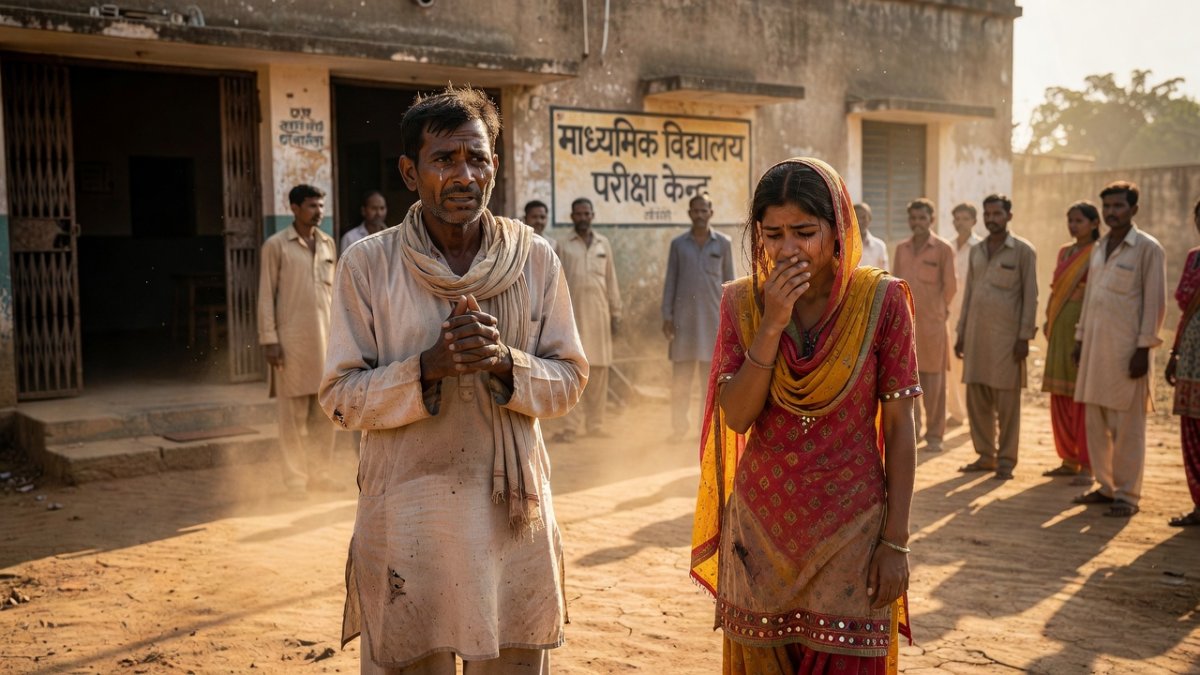
The Dream That Died at the Gate NDTV and India Today reported that on June 21, 2026, a daily-wage labourer in Vidisha, Madhya Pradesh, arrived with his daughter at one of the four Re-NEET examination centres just two minutes past the entry deadline. Despite his emotional pleas, the girl was denied entry. India Today noted that three female candidates were turned away at the sam
The Dream That Died at the Gate
NDTV and India Today reported that on June 21, 2026, a daily-wage labourer in Vidisha, Madhya Pradesh, arrived with his daughter at one of the four Re-NEET examination centres just two minutes past the entry deadline. Despite his emotional pleas, the girl was denied entry. India Today noted that three female candidates were turned away at the same centre. News18 described the moment as “years of hard work lost in two minutes,” while The Siasat Daily captured the “tearful father begging as daughter denied entry.” BBC reported similar scenes of students crying and parents pleading with authorities across India during the re-examination triggered by the earlier paper leak scandal. These incidents, occurring under unprecedented security protocols, highlight the human cost of efforts to restore credibility to NEET (UG), India’s single largest medical entrance examination conducted by the National Testing Agency (NTA).
The Re-NEET in Context: From Paper Leak to Biometric Security
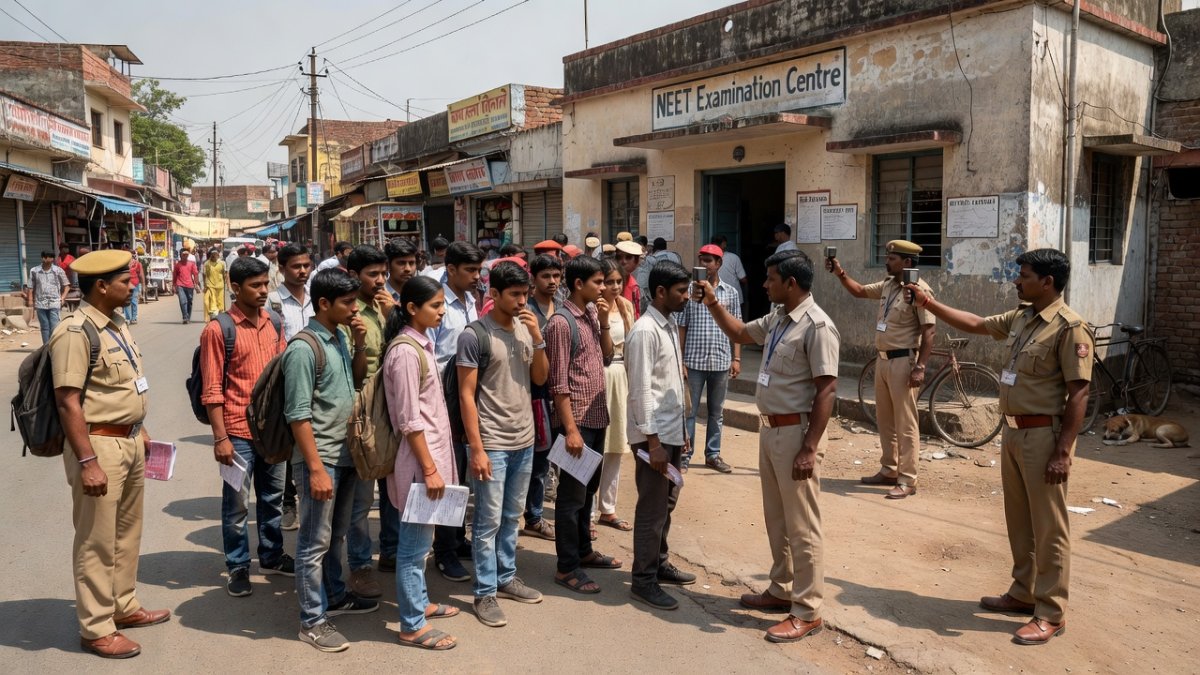
According to BBC and NDTV reports, the original NEET UG 2026 was held on May 3, 2026. The examination was cancelled on May 12, 2026, following serious allegations of a paper leak, after which the Central Bureau of Investigation (CBI) was ordered to investigate. The re-examination, commonly referred to as Re-NEET, took place on June 21, 2026 — a Sunday — exactly 49 days after the cancellation. NDTV reported that the test comprised 180 questions from Physics, Chemistry, and Biology and lasted 3 hours 15 minutes. To prevent any further malpractice, authorities implemented stringent measures including metal detectors, biometric verification, and physical frisking at all centres. Punjab, Bihar, and Haryana governments announced free travel facilities for students appearing for the Re-NEET, as covered by India Today, reflecting state-level attempts to ease logistical burdens on candidates.
When Security Becomes Exclusion
While the enhanced security protocols were necessary to restore public faith after the May paper leak, they created new barriers for many aspirants. India Today reported on the Vidisha incident and the ensuing national debate over strict entry rules versus compassion. Multiple outlets, including News18, documented cases where candidates who had travelled long distances were turned away for arriving seconds late. These rigid cut-off times disproportionately affected students from rural and semi-urban areas who relied on limited public transport. In the Indian education system, where NEET serves as the sole gateway to undergraduate medical seats, such exclusions carry permanent consequences. Families and students, already traumatised by the original exam’s cancellation, faced fresh despair on June 21, 2026, raising questions about whether zero-tolerance policies adequately balance integrity with equity.
The Economics of Medical Aspiration
The financial and logistical strain of NEET preparation and examination is particularly severe for daily-wage families. NDTV and BBC reports highlighted that the labourer in Vidisha belonged to precisely such a background, where even a single day’s lost wages and travel costs can push a household into distress. Coaching fees, study materials, multiple attempts, and now repeated examination logistics impose a heavy burden. India Today noted that state governments like Punjab, Bihar, and Haryana stepped in with free travel schemes, yet such measures remain patchy. For millions of Indian students and their families, the aspiration to become a doctor represents both social mobility and economic security. When a candidate loses the opportunity due to a two-minute delay after months — and in many cases years — of preparation, the economic setback extends beyond the individual to the entire family unit dependent on that future income.
What This Means for India's Healthcare Future
Every candidate denied entry represents a potential gap in India’s already stretched healthcare workforce. With persistent doctor shortages in rural health centres and the ambitious targets of schemes such as Ayushman Bharat, the loss of even a few thousand meritorious students carries systemic implications. NDTV reported that the Re-NEET was an attempt to salvage the integrity of the medical admission process after the May 2026 paper leak eroded trust. However, the human stories emerging from June 21 — students crying outside examination halls — underscore how procedural rigidity can inadvertently reduce the pool of future doctors trained within India’s education system. For Indian citizens, particularly in underserved regions, this translates into continued pressure on primary healthcare delivery. The incident therefore connects directly to broader policy questions around access, equity, and the quality of medical professionals the country will produce in the coming decade.
The Bottom Line
The Re-NEET of June 21, 2026, successfully reinforced examination integrity under biometric and physical scrutiny, yet at a visible human cost documented by NDTV, BBC, India Today, and News18. While the CBI probe into the original leak was essential, the rigid enforcement of deadlines without any grace period exposed deep fault lines in how India conducts high-stakes national tests. Systemic reform is required — including reasonable grace periods for entry, increased number of rural examination centres, and better coordination between the NTA and state governments — to ensure that security does not become synonymous with exclusion. For Indian students, families, and the healthcare sector, the dream of becoming a doctor must not be allowed to die at the examination gate.
— By Dr. Raj Patel, Staff Writer
This article was produced with AI-assisted research and editorial support. Reporting is based on sources cited in the article.
What's Your Reaction?
 Like
0
Like
0
 Dislike
0
Dislike
0
 Love
0
Love
0
 Funny
0
Funny
0
 Wow
0
Wow
0
 Sad
0
Sad
0
 Angry
0
Angry
0

India/South Asia Correspondent at Global1.News. Analytical voice with a background in science and health journalism. Based in New Delhi, covering Indian politics, education, healthcare, technology, and policy. Breaks down complex data into clear, actionable reporting.












Comments (0)