
What the Latest China-Russia Summit Means for Ukraine

What the Latest China-Russia Summit Means for Ukraine
The May 2024 joint statement issued by Presidents Vladimir Putin and Xi Jinping in Beijing transcends routine diplomatic communiqués. It articulates a coherent ideological framework for reshaping the international order amid active conflict in Ukraine, positioning the partnership as an explicit counterweight to Western-led institutions. For observers in Seoul, where security calculations intersect with both Eurasian and Indo-Pacific dynamics, the document demands careful parsing rather than reflexive dismissal as mere rhetoric.
The Architecture of the Statement
Unlike earlier declarations that emphasized economic complementarity and cultural exchanges, the latest text devotes substantial space to condemning NATO expansion, endorsing multipolar governance, and rejecting unilateral sanctions. Paragraphs 12 through 17 specifically reference the “root causes” of the Ukraine crisis in language that mirrors Russian positions on security guarantees and denazification. This framing elevates the conflict from a bilateral European dispute to a systemic challenge against U.S. hegemony.
Trade data released alongside the summit illustrates the material underpinnings. Bilateral commerce reached $240 billion in 2023, with Russian energy exports to China rising 25 percent year-on-year despite Western price caps. Joint statements on yuan-ruble settlements now cover 92 percent of transactions, reducing exposure to dollar-clearing mechanisms. These figures are not ancillary; they demonstrate the infrastructure required to sustain prolonged confrontation.
Diplomatic and Military Implications for Kyiv
The manifesto character becomes clearest when examining what the document omits and what it implies. Absent is any call for Ukrainian territorial integrity within 1991 borders. Instead, language on “legitimate security concerns” effectively endorses Russian demands for neutrality and limits on Ukrainian armed forces. This rhetorical alignment complicates Kyiv’s efforts to secure additional long-range strike capabilities from NATO partners wary of escalation ladders.
Expert analysis from the Sejong Institute in Seoul highlights how dual-use technology transfers could accelerate. Dr. Han Ji-hoon notes that “Chinese components in Russian Lancet drones and Shahed derivatives have already increased by an estimated 40 percent since late 2023, according to open-source intelligence tracking.” While Beijing maintains export-control pledges, the joint statement’s emphasis on “sovereign technological cooperation” provides political cover for gray-zone deliveries that sustain Russian battlefield momentum without crossing overt red lines.
Regional Ramifications Viewed from Northeast Asia
Korean policymakers cannot isolate the Ukraine theater from peninsular security. North Korea’s reported shipments of artillery shells and ballistic missiles to Russia create a triangular axis that the Beijing statement implicitly legitimizes through its critique of “bloc confrontation.” Seoul’s intelligence assessments indicate that up to 1.2 million 152-millimeter shells may have transited since September 2023, easing Russian ammunition shortages while generating hard currency and technical data for Pyongyang’s programs.
Diplomacy therefore acquires added urgency. The summit’s call for “peaceful resolution through dialogue” arrives precisely when South Korean and Japanese coordination with NATO has intensified. Any perception that Beijing and Moscow are codifying spheres of influence risks emboldening revisionist actors across multiple theaters simultaneously.
Economic Statecraft and Sanctions Durability
Western sanctions regimes face a stress test. The joint statement’s explicit rejection of “illegitimate” secondary sanctions coincides with China’s continued role as Russia’s largest trading partner. European Central Bank data shows euro-denominated payments for Russian commodities routed through Chinese intermediaries have risen sharply, illustrating adaptation rather than capitulation. For Ukraine’s reconstruction prospects, this resilience suggests that financial isolation alone will not compel negotiated concessions.
Yet limits persist. Chinese banks remain cautious about full circumvention, maintaining some correspondent relationships with Western institutions. The manifesto therefore functions more as political signaling than an immediate rupture of global financial architecture.
Long-Term Ideological Content
The document’s deeper significance lies in its normative assertions. By framing the Ukraine conflict as a symptom of “hegemonic decline,” the statement supplies an intellectual scaffold for Global South audiences skeptical of liberal interventionism. This narrative competes directly with Ukrainian President Zelensky’s peace formula centered on territorial restoration and accountability mechanisms.
Academic observers at Seoul National University’s Graduate School of International Studies caution against overinterpreting monolithic unity. Professor Lee Soo-jin emphasizes that “tactical divergences remain on energy pricing and technology transfer depth, yet the political convergence on opposing U.S. alliance structures is genuine and durable.” Such nuance prevents both alarmism and complacency in alliance planning.
Outlook for Negotiations
Future diplomatic openings will confront this consolidated position. Any Ukrainian or Western proposal ignoring the manifesto’s core tenets on multipolarity and NATO limits is likely to encounter coordinated resistance in Beijing and Moscow. Conversely, proposals that acknowledge Russian security concerns while preserving Ukrainian sovereignty may find limited traction only if accompanied by credible enforcement guarantees from multiple powers, including China.
The summit thus marks not an endpoint but a consolidation phase. The war-era manifesto codifies expectations for a protracted contest in which economic, technological, and narrative instruments matter as much as battlefield outcomes. For capitals from Kyiv to Seoul, the task is to develop strategies that address this integrated challenge rather than treating it as episodic bilateral posturing.
This is Prof. David Park for Global1 News, reporting from Seoul. 🇰🇷
This article was produced with AI-assisted research and editorial support. Reporting is based on sources cited in the article.
What's Your Reaction?
 Like
0
Like
0
 Dislike
0
Dislike
0
 Love
0
Love
0
 Funny
0
Funny
0
 Wow
0
Wow
0
 Sad
0
Sad
0
 Angry
0
Angry
0
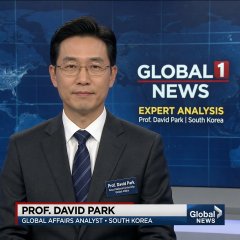
East Asia/Technology Correspondent at Global1.News. Seoul-based voice covering Korean politics, technology, business, and culture. Analyzes how technology and geopolitics intersect across East Asia.










Comments (0)