
The Oslo Accords 'Trap': How a 'Peace Process' Cemented Israeli Occupation
In a recent Middle East Eye video examining the Oslo Accords "trap", the 1993 agreements were presented to the world as a historic breakthrough toward Palestinian self-determination. The footage revisits the White House lawn ceremony and traces how those same frameworks locked in territorial control, movement restrictions, and institutional dependence that persist three decades
In a recent Middle East Eye video examining the Oslo Accords "trap", the 1993 agreements were presented to the world as a historic breakthrough toward Palestinian self-determination. The footage revisits the White House lawn ceremony and traces how those same frameworks locked in territorial control, movement restrictions, and institutional dependence that persist three decades later. Viewers are shown maps and timelines that illustrate the gap between the language of interim arrangements and the reality of permanent fragmentation on the ground.
Three decades after the signing, the accords continue to shape daily life for families across the West Bank and Gaza. What was described as a transitional process instead produced a durable administrative structure that left Israel in charge of borders, resources, and security while assigning the Palestinian Authority limited civil functions. This analysis follows that thirty-year arc, drawing on documentation from United Nations agencies and reporting from Middle East Eye and Al Jazeera to examine how the mechanisms created in 1993 and 1995 still govern land use, economic activity, and political possibilities today.
Human stories underscore these structural failures. In the village of Bil'in near Ramallah, farmer Mohammed Khatib has spent years documenting how Oslo-era zoning prevents his family from accessing ancestral olive groves now classified under Area C. "We plant in the same soil our grandfathers did, yet every harvest requires permits that arrive too late or not at all," Khatib told Al Jazeera in 2024. UN data from the Office for the Coordination of Humanitarian Affairs shows that such restrictions affect over 200 Palestinian communities, contributing to a 60 percent drop in agricultural output in affected zones since 2000. These lived realities reveal how the accords transformed temporary measures into enduring barriers.
The Oslo Framework and the PA's Contradiction
The Declaration of Principles was signed on 13 September 1993 on the White House lawn in a ceremony that included Yasser Arafat, Yitzhak Rabin, and Bill Clinton. The agreement established the Palestinian Authority with authority over certain civil matters in designated zones yet withheld any recognition of sovereignty or control over borders, airspace, or external relations. Israel retained ultimate authority over the territory, a division that placed the new authority in the position of managing population services without the powers normally associated with statehood.
The Palestine Liberation Organization recognized Israel's right to exist as part of the accords, yet the text contained no reciprocal commitment to Palestinian statehood or defined borders. This asymmetry left the Palestinian Authority responsible for delivering services and maintaining order in limited areas while Israel continued to determine land allocation, water distribution, and movement between regions. Documentation from United Nations agencies has repeatedly noted that these structural limits prevented the emergence of a viable independent entity.
Over time the Palestinian Authority became embedded in the very system it was meant to transcend. Its budget and administrative reach depended on arrangements negotiated under Oslo, creating institutional incentives to operate within those constraints rather than challenge them. Reporting from Middle East Eye has described this outcome as the conversion of an interim body into a permanent feature of the occupation landscape.
Critics highlight how this contradiction manifests in governance failures. A 2023 report by the Palestinian Center for Policy and Survey Research found that 78 percent of West Bank residents view the PA as complicit in maintaining the status quo rather than advancing liberation. Former PA minister Hanan Ashrawi remarked in a 2022 interview with Middle East Eye that "Oslo turned the PLO from a liberation movement into a subcontractor for occupation logistics." Such dynamics have entrenched dependency, with the PA's civil service payroll now exceeding 170,000 employees reliant on Israeli-cleared revenues.
The Geography of Fragmentation: Areas A, B, C
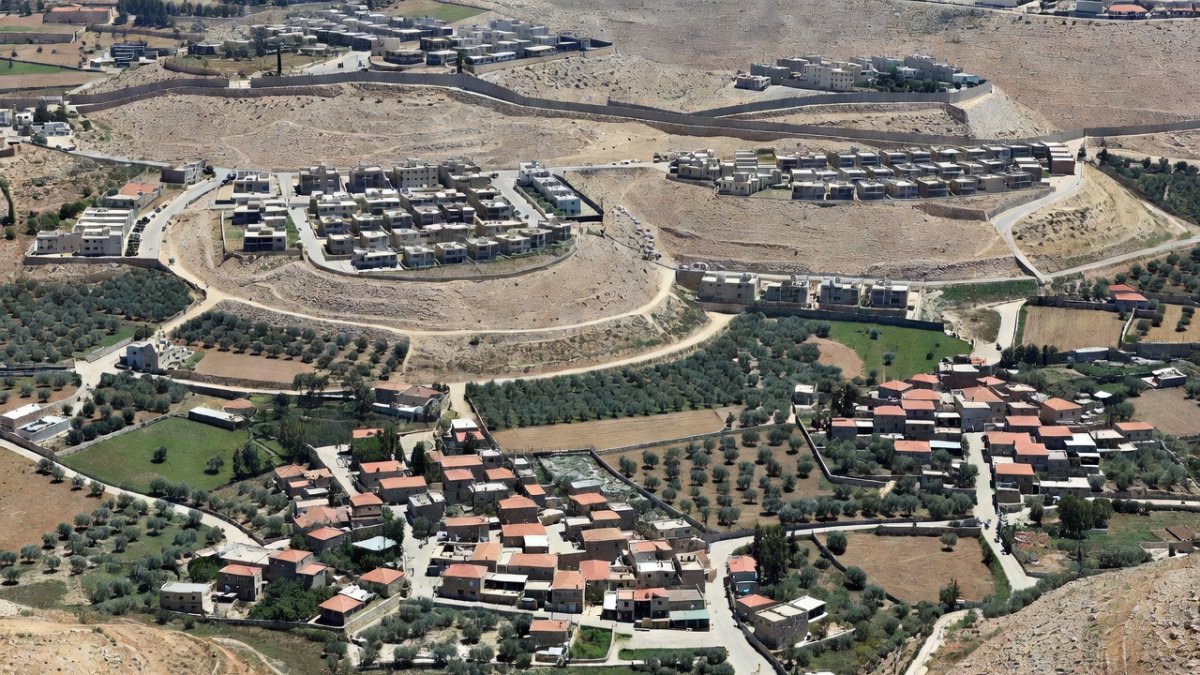
The 1995 Interim Agreement, known as Oslo II, divided the West Bank into Areas A, B, and C. Area A covered roughly 18 percent of the territory with full Palestinian Authority civil and security control, Area B encompassed about 22 percent with joint arrangements, and Area C, comprising approximately 60 percent, remained under full Israeli control. Area C contains the bulk of settlement blocs, major water aquifers, and undeveloped land reserves essential for any future contiguous Palestinian presence.
Settlement numbers have grown from around 250,000 in 1993 to more than 700,000 today, according to figures cited in United Nations reports. The same period saw the construction of bypass roads, checkpoints, and separation barriers that connect settlements to Israel while dividing Palestinian communities. These physical changes were facilitated by the zoning established under Oslo II, which left the majority of land outside Palestinian Authority jurisdiction.
The resulting map makes a contiguous Palestinian state difficult to envision without major territorial adjustments. Families in villages surrounded by Area C often face lengthy detours or permit requirements to reach fields, schools, or medical facilities. Al Jazeera reporting has documented how these restrictions, rooted in the Oslo division, continue to shape agricultural patterns and family mobility across the West Bank.
Concrete examples illustrate the human cost. In the Jordan Valley hamlet of Al-Auja, resident Fatima al-Kurd described in a 2025 UN interview how her family's herding routes were severed by settlement expansion in Area C, forcing reliance on expensive trucked water. B'Tselem data indicates that Palestinian access to Area C farmland has declined by 85 percent since 1995, exacerbating food insecurity for 300,000 residents. These divisions, codified in Oslo maps, have created a patchwork of enclaves that undermine any prospect of viable sovereignty.
Security Coordination: Policing Palestinians for Israel
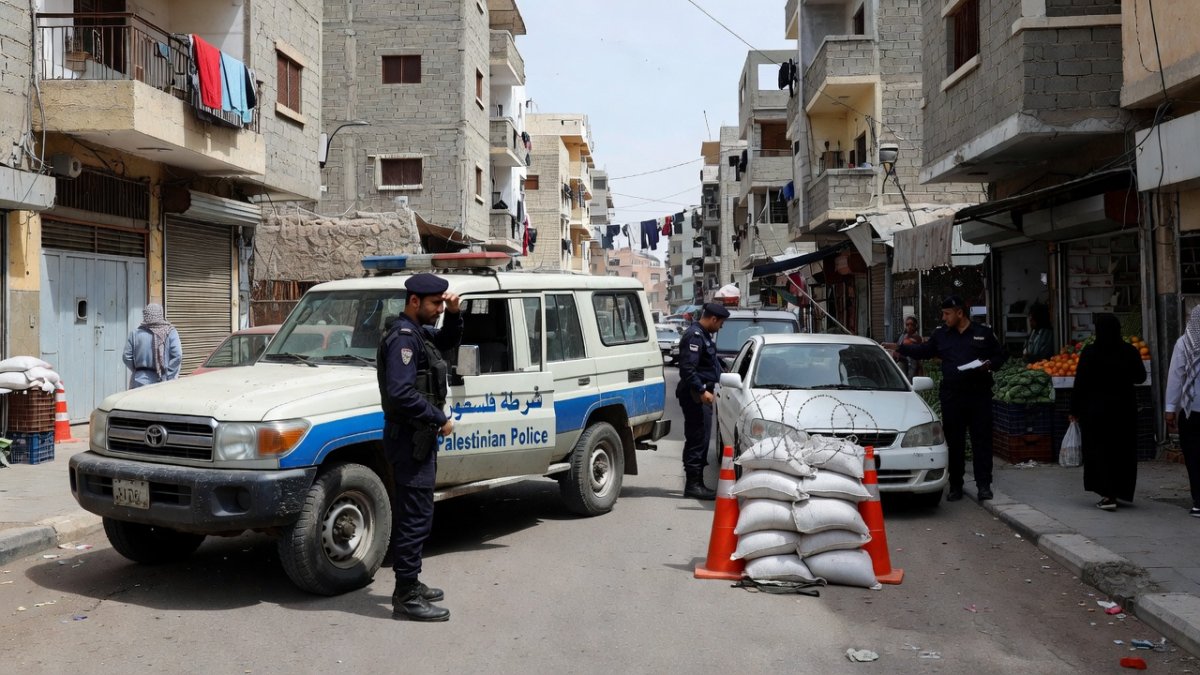
Security coordination between Palestinian Authority forces and Israeli military and intelligence services forms a central operational element of the Oslo framework. Palestinian police units have been tasked with preventing attacks on Israeli targets and detaining individuals identified as security threats by Israeli authorities. This arrangement places Palestinian officers in the position of acting against local resistance networks and political opponents within their own communities.
Surveys conducted by Palestinian research centers have consistently shown that more than 80 percent of respondents oppose the continuation of this coordination. Middle East Eye coverage of the topic has quoted former security officials describing the practice as having evolved from a contractual requirement into routine institutional behavior. Palestinian Authority leaders have announced intentions to suspend coordination on more than sixty occasions, yet the mechanisms have remained in place.
The coordination system affects daily interactions between residents and both Palestinian and Israeli security personnel. In cities such as Hebron and Nablus, operations involving joint information sharing influence arrest patterns and movement permissions. United Nations human rights documentation has noted the resulting tensions within Palestinian society and the erosion of trust in local institutions.
Personal accounts reveal deeper fractures. Nablus resident Ahmed Qassem recounted to Middle East Eye in 2024 how PA forces detained his nephew following an Israeli tip-off, fracturing family ties and community solidarity. A 2024 poll by the Palestinian Center for Policy and Survey Research showed 84 percent opposition, with many citing incidents of alleged collaboration. This system, born from Oslo protocols, has thus perpetuated cycles of internal division and external control.
Economic Captivity: The Paris Protocol
The 1994 Paris Protocol linked the Palestinian economy to Israeli trade and monetary systems. It established that Israel would collect customs revenues on goods destined for Palestinian areas and that the Israeli shekel would serve as the primary currency. These provisions removed independent monetary policy tools and created dependence on Israeli clearance of tax transfers for Palestinian Authority salaries and services.
UNCTAD and World Bank assessments have documented how the protocol's trade restrictions and clearance procedures limit Palestinian industrial development and export capacity. Gaza's manufacturing base has contracted sharply under these constraints combined with blockade measures, while West Bank per capita output has shown little sustained growth. Families reliant on public sector wages experience periodic delays when revenue transfers are withheld, directly affecting household stability in cities and villages alike.
Expanded analysis shows persistent stagnation. World Bank figures from 2025 report Palestinian GDP per capita at just $3,500, compared to Israel's $52,000, with trade imbalances favoring Israeli exports by a 10-to-1 ratio. In Gaza, UNCTAD notes a 40 percent contraction in manufacturing since 2007 due to permit denials rooted in protocol rules. A Ramallah textile worker interviewed by Al Jazeera described waiting months for raw materials cleared through Israeli ports, illustrating how economic captivity stifles generational mobility.
Scandal and Scrutiny: Norway, Epstein, and the Oslo Architects
Terje Rød-Larsen, the Norwegian diplomat central to the secret Oslo channel, has faced renewed examination following an Al Jazeera investigation published in February 2026. The reporting connected him to networks associated with Jeffrey Epstein and raised questions about visa arrangements during the negotiation period. These disclosures have prompted discussion in diplomatic circles about the personal and financial entanglements surrounding the original talks.
Norway's role as facilitator has come under review in light of the new material. Palestinian analysts cited in Middle East Eye coverage have asked whether external actors prioritized rapid agreement over durable safeguards for Palestinian rights. The questions do not alter the text of the accords but add context to the environment in which they were drafted and promoted.
The Quiet Death of Oslo in 2026
Israeli land registration initiatives in the West Bank announced in early 2026 have proceeded outside the joint committees established by Oslo. Al Jazeera reporting from February 2026 described these measures as effectively bypassing remaining coordination structures. Palestinian civil society organizations have responded with renewed calls to dissolve the Authority and abandon the Oslo framework entirely.
Public confidence in the Palestinian Authority has reached historic lows, according to recent polling. Hamas has maintained consistent opposition to the accords since their signing. The 2023-2025 Gaza war and the International Court of Justice proceedings have further exposed the limits of arrangements that left core issues of sovereignty and resources unresolved.
International Legal Reckoning and Emerging Alternatives
Beyond domestic impacts, the Oslo framework faces growing scrutiny in global forums. The International Court of Justice's 2024 advisory opinion on occupation legality cited Oslo's failure to delimit borders as enabling prolonged control, referencing Article 2 of the UN Charter. Palestinian legal advocates, including those from the Palestinian Center for Human Rights, argue this opens pathways for reparations claims tied to three decades of resource extraction. Meanwhile, civil society initiatives in Ramallah promote decentralized cooperatives that bypass PA structures, fostering resilience amid institutional decay.
Conclusion
Ordinary Palestinians continue to navigate the practical consequences of these arrangements. A farming family in Hebron may be unable to reach olive groves located in Area C without permits that are rarely granted. University graduates in Ramallah face limited job prospects because the economy remains tethered to external clearance procedures. Families divided between Gaza and the West Bank encounter movement barriers that predate recent conflicts yet remain in place.
Alternatives discussed in Palestinian civil society include strengthening local governance structures outside the Oslo framework and pursuing accountability through international legal channels. Whether these approaches can address the territorial and economic realities shaped over thirty years remains an open question that will be determined by actions on the ground rather than by documents signed in 1993.
By Fatima Al-Rashid, Staff WriterThis article was produced with AI-assisted research and editorial support. Reporting is based on sources cited in the article.
What's Your Reaction?
 Like
0
Like
0
 Dislike
0
Dislike
0
 Love
0
Love
0
 Funny
0
Funny
0
 Wow
0
Wow
0
 Sad
0
Sad
0
 Angry
0
Angry
0

Gulf/MENA Correspondent at Global1.News. Based in Doha, covering Gulf politics, energy markets, diplomacy, and development across the Middle East and North Africa. Tracks the economic transformation of the Gulf states.












Comments (0)