
How Americans Feel About Their Nation at 250
In a recent BBC News report presented by Clive Myrie, BBC North America Editor Sarah Smith examined how Americans are feeling about their nation as it marks 250 years since independence. How Americans Feel About Their Nation at 250 Washington DC – 6 July 2026 — The milestone anniversary has revealed a nation deeply divided over its past, present, and future, even as millions ga
In a recent BBC News report presented by Clive Myrie, BBC North America Editor Sarah Smith examined how Americans are feeling about their nation as it marks 250 years since independence.
How Americans Feel About Their Nation at 250
Washington DC – 6 July 2026 — The milestone anniversary has revealed a nation deeply divided over its past, present, and future, even as millions gathered to celebrate the Fourth of July with fireworks, parades, and presidential pageantry on the National Mall.
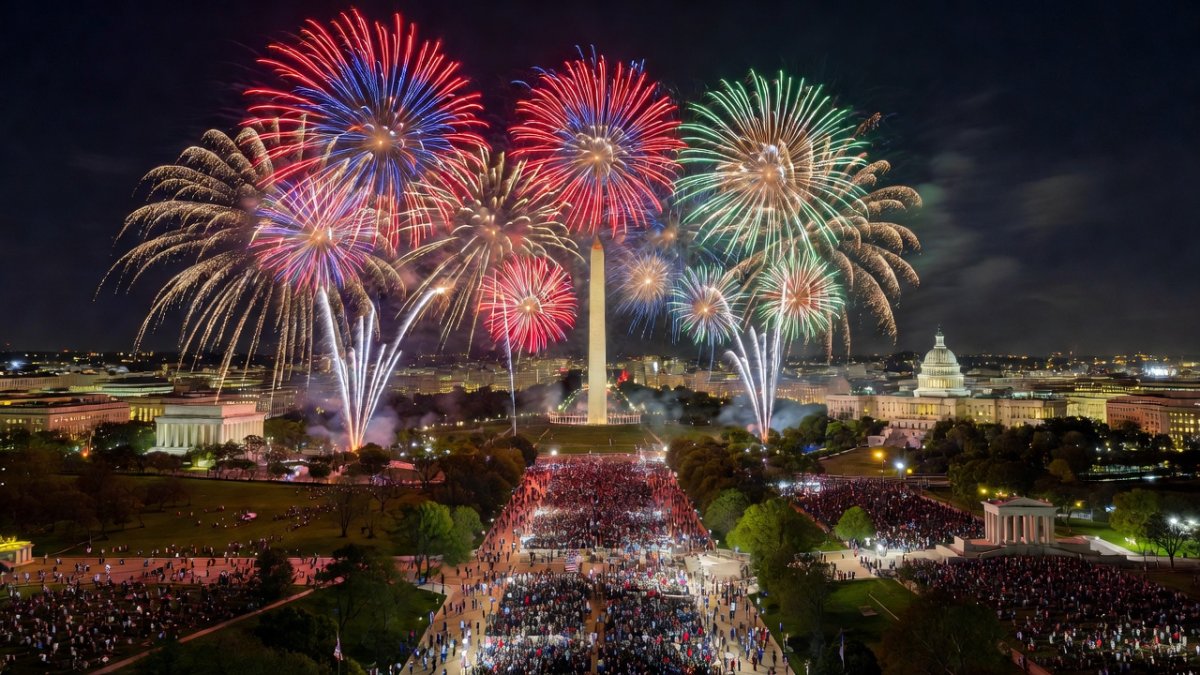
Fireworks and Festivities — A Nation Celebrates
The 250th anniversary of American independence — the Semiquincentennial — was commemorated with extraordinary pageantry in Washington DC this week. Millions gathered on the National Mall for what officials described as the largest fireworks display in US history, alongside a spectacular military flyover. President Donald Trump addressed the assembled crowd, declaring that "the American dream is back" as he surveyed the sea of red, white, and blue. The Great American State Fair transformed the National Mall into a celebration of Americana, with Ferris wheels, food stalls, and exhibitions from all 50 states. For many, the day was a genuine expression of national pride — a chance to celebrate the nation's endurance and its founding ideals.
Trump branded the events as "Freedom 250," drawing large crowds that cheered the military flyover and the massive fireworks that lit up the sky over the National Mall. Organizers highlighted the Semiquincentennial as marking the signing of the Declaration of Independence on July 4, 1776. Families from across the country traveled to Washington DC to participate in the Great American State Fair, which featured state-specific exhibits and traditional Fourth of July foods. Republicans in attendance described the day as a unifying moment that reaffirmed core American values of liberty and opportunity.
Democrats present offered more measured reactions, noting that while the pageantry was impressive, underlying political tensions remained visible even amid the celebrations. Sarah Smith reported from the National Mall that the scale of the event reflected official efforts to mark the milestone with grandeur. The fireworks and flyover proceeded without incident, providing visual spectacle that many viewers watched on television or online streams. Across other cities, similar parades and gatherings took place, though turnout varied by region and political leaning.
The Numbers Behind the Pride — What the Polls Reveal
According to a survey from the Associated Press-NORC Center for Public Affairs Research published in late June, approximately 4 in 10 American adults say "proud" describes their feelings about the 250th anniversary, while roughly 3 in 10 say "excited." These numbers, however, mask a stark partisan divide. Seven in 10 Republicans told pollsters that pride describes their emotions about the milestone — compared with just 2 in 10 Democrats and 3 in 10 independents. A separate survey from Marquette Law School found that only 26% of Americans reported having read or heard a lot about the Semiquincentennial in advance, suggesting that for a significant portion of the population, the milestone arrived with limited anticipation.
The AP-NORC poll conducted on June 24 further showed that excitement levels followed similar partisan patterns, with Republicans expressing higher enthusiasm than Democrats or independents. Marquette Law School data indicated that 57% of respondents had heard some information about the anniversary, while 17% had heard nothing at all. These awareness figures help explain why some communities organized extensive local events while others treated the date as a standard holiday. Gallup polling from May 2026 reinforced the broader context by tracking long-term shifts in national sentiment.
Analysts note that the partisan gaps in the AP-NORC results align with earlier trends in how different groups view national symbols and milestones. Republicans interviewed after the National Mall events cited the fireworks and presidential address as reasons for renewed optimism. Democrats, by contrast, pointed to the same polls as evidence that celebrations did not bridge existing divides. The Marquette findings on limited prior awareness suggest that media coverage played a key role in shaping public engagement this week.
A Troubled Relationship with the Nation's Ideals
Perhaps the most striking data point comes from Gallup, which found that 77% of Americans now believe the signers of the Declaration of Independence would be disappointed with how the United States has turned out. Only 19% said the founders would be pleased. This represents a dramatic shift over a quarter-century — in 2001, 54% of Americans thought the founders would be pleased, and just 42% believed they would be disappointed. By 2013, those numbers had reversed: 71% disappointed versus 27% pleased. The 2026 Gallup survey, conducted in May, shows that the trend toward national pessimism has only deepened. On the positive side, 69% of Americans told Gallup they believe the country has succeeded "at least a fair amount" in achieving the founding ideals of liberty, democracy, and opportunity.
Gallup's historical tracking reveals steady growth in the percentage expecting disappointment, rising from 42% in 2001 to 71% in 2013 and 77% in 2026. Despite this, the 69% who see at least fair success in meeting founding ideals provide a counterbalance that both parties have cited in public statements. Republicans have emphasized the 69% figure as proof that core principles endure, while Democrats have focused on the 77% disappointment number to argue for renewed commitment to equality and justice. The Gallup data was collected before the July 4 events, offering a pre-celebration snapshot of attitudes.
Observers on both sides agree that the gap between perceived success and founder expectations reflects ongoing debates about the nation's direction. The trend line from 2001 onward demonstrates how views have evolved across multiple administrations. This week's fireworks on the National Mall occurred against this backdrop of measured public assessment rather than uniform celebration.
Divided We Stand — Partisanship and Patriotism
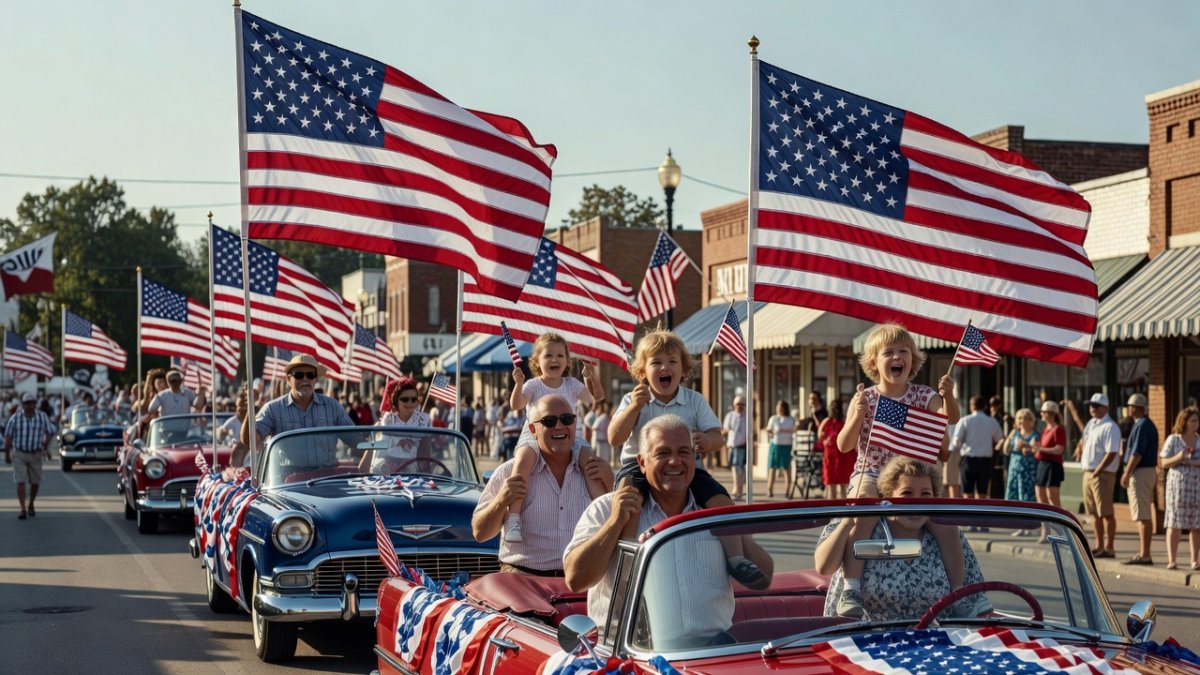
The partisan nature of American patriotism has rarely been more visible than during this anniversary weekend. A Fox News poll found that only 27% of Democrats plan to display the American flag on July 4, a figure that stands in stark contrast to widespread flag displays in Republican-leaning communities. The Independent reported that "millions say they won't celebrate July 4 as poll reveals deep national divisions." USA Today, in its coverage, noted that "political division may be dampening America's 250th anniversary," with many Americans struggling to separate the pageantry from the politics. President Trump's branding of the celebrations as "Freedom 250" further politicised what is traditionally a non-partisan national holiday.
Republican leaders defended the "Freedom 250" framing as an appropriate emphasis on liberty and achievement. Democratic officials countered that such branding risked turning a shared national holiday into a partisan event. The Fox News poll results on flag display underscore how even simple symbols of patriotism now carry different meanings depending on political affiliation. Coverage in The Independent highlighted that millions of Americans chose not to participate in formal observances this year.
USA Today's reporting documented examples of communities where celebrations proceeded with traditional enthusiasm alongside others where participation remained subdued. Both parties have used the polling to support their narratives about the state of national unity. The events on the National Mall drew crowds that reflected this mix of enthusiasm and reservation.
How the World Sees a Divided America
For international observers, the spectacle of a deeply divided superpower celebrating its 250th birthday presents a paradox. On one hand, the United States remains the world's largest economy and its most formidable military power. On the other, the data suggests a country wrestling with internal fractures that have only widened over the past decade. From Moscow to Beijing, from Brussels to Tehran, foreign capitals are watching closely. The 250th anniversary arrives at a moment when American global leadership is being questioned on multiple fronts — from the recent war with Iran to the shifting dynamics of the NATO alliance and the intensifying competition with China over technology and influence.
European allies expressed cautious support for the anniversary while noting the domestic divisions visible in the polls. Asian capitals tracked the events for signs of continuity in U.S. foreign policy. The BBC report by Sarah Smith placed these international reactions alongside domestic polling, illustrating how the Semiquincentennial is viewed abroad as both a historic marker and a test of national cohesion. Analysts in multiple countries cited the Gallup and AP-NORC data as indicators of potential constraints on future U.S. actions.
Despite the internal debates, the military flyover and fireworks on the National Mall projected strength to overseas audiences. The contrast between public displays and private sentiments captured in surveys has become a recurring theme in foreign commentary this week.
Analysis — What the 250th Anniversary Means for America's Future
The contrast between the celebratory imagery on the National Mall and the polling data paints a complex picture of the American mood. The 250th anniversary has laid bare not just partisan divisions, but a deeper uncertainty about national identity and purpose. Analysts suggest this discontent reflects structural factors: economic inequality, political polarisation, and a fragmented media landscape in which Americans inhabit entirely different information ecosystems. The question now is whether the anniversary serves as a reset moment — an opportunity for national reflection — or merely a pause before the next cycle of political confrontation.
Republicans argue that the large turnout for "Freedom 250" events demonstrates resilience and a desire to move forward under shared symbols. Democrats maintain that the AP-NORC and Gallup findings show the need for substantive policy changes to address the 77% who expect founder disappointment. Both perspectives draw directly from the verified polling released in May and June 2026. The Marquette Law School awareness data adds another layer, indicating that future anniversaries may require broader outreach to achieve wider engagement.
International coverage, including the BBC News report, has framed the Semiquincentennial as a revealing snapshot rather than a turning point. The combination of pageantry and measured public sentiment suggests that America's next 250 years will depend on how these divides are navigated in the coming years. Events across the country this week provided visible evidence of both unity and fracture.
By Irina Volkov, Staff Writer
This article was produced with AI-assisted research and editorial support. Reporting is based on sources cited in the article.
What's Your Reaction?
 Like
0
Like
0
 Dislike
0
Dislike
0
 Love
0
Love
0
 Funny
0
Funny
0
 Wow
0
Wow
0
 Sad
0
Sad
0
 Angry
0
Angry
0

Russia/Eastern Europe Correspondent at Global1.News. Covering Russian politics, energy, security, and the shifting dynamics of the post-Soviet space. Provides clear-eyed analysis on one of the world's most opaque regions.












Comments (0)