
Inside Israel's Arab Crime Wave: Why the Killings Keep...
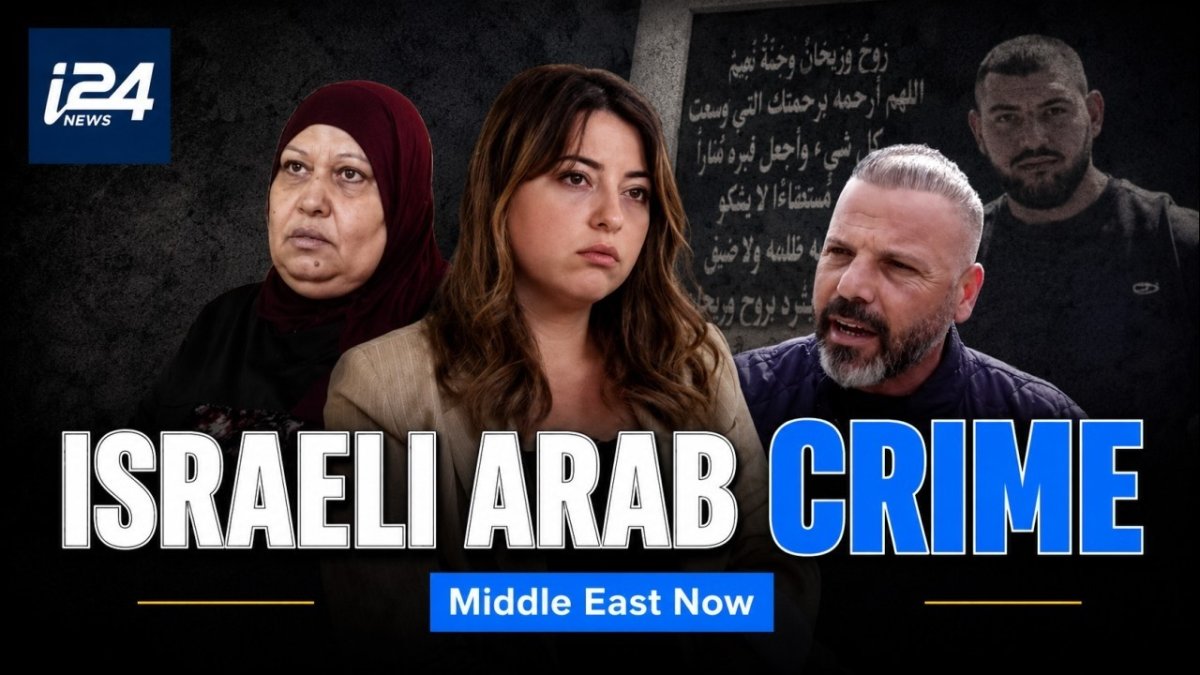
In a recent i24NEWS English report, correspondent Natasha Kirtchuk examined the violence on the ground in Israel's Arab communities, documenting scenes from Jaffa to the Negev where residents described daily fear amid rising homicides. The footage captured the aftermath of shootings and stabbings that have claimed over 140 Arab citizens since January 2026, according to Abraham
In a recent i24NEWS English report, correspondent Natasha Kirtchuk examined the violence on the ground in Israel's Arab communities, documenting scenes from Jaffa to the Negev where residents described daily fear amid rising homicides. The footage captured the aftermath of shootings and stabbings that have claimed over 140 Arab citizens since January 2026, according to Abraham Initiatives data. This wave of killings has intensified security concerns for the Israel Police and Shin Bet, as unchecked crime in mixed cities like Lod and Ramle threatens broader stability across the country.
Inside Israel's Arab Crime Wave: Why the Killings Keep Rising
Jisr al-Zarqa, Israel — This report delves into the factors driving the relentless surge in homicides across Arab communities in Israel, examining the scale of the violence, the institutional failures enabling impunity, and the human toll on families and children. From the coastal town of Jisr al-Zarqa to the Bedouin villages of the Negev, the crisis has become a defining challenge for Israeli society.
The Scale of the Violence
Arab communities recorded 252 homicides in 2025, surpassing the previous record of 230 killings in 2024. Since January 2026 the toll has climbed past 140 victims, marking a 12 percent increase over the same period last year. These figures from Abraham Initiatives highlight concentrated violence in towns such as Jisr al-Zarqa, Jaffa, and Bedouin villages in the Negev, where gun attacks and stabbings occur with growing frequency.
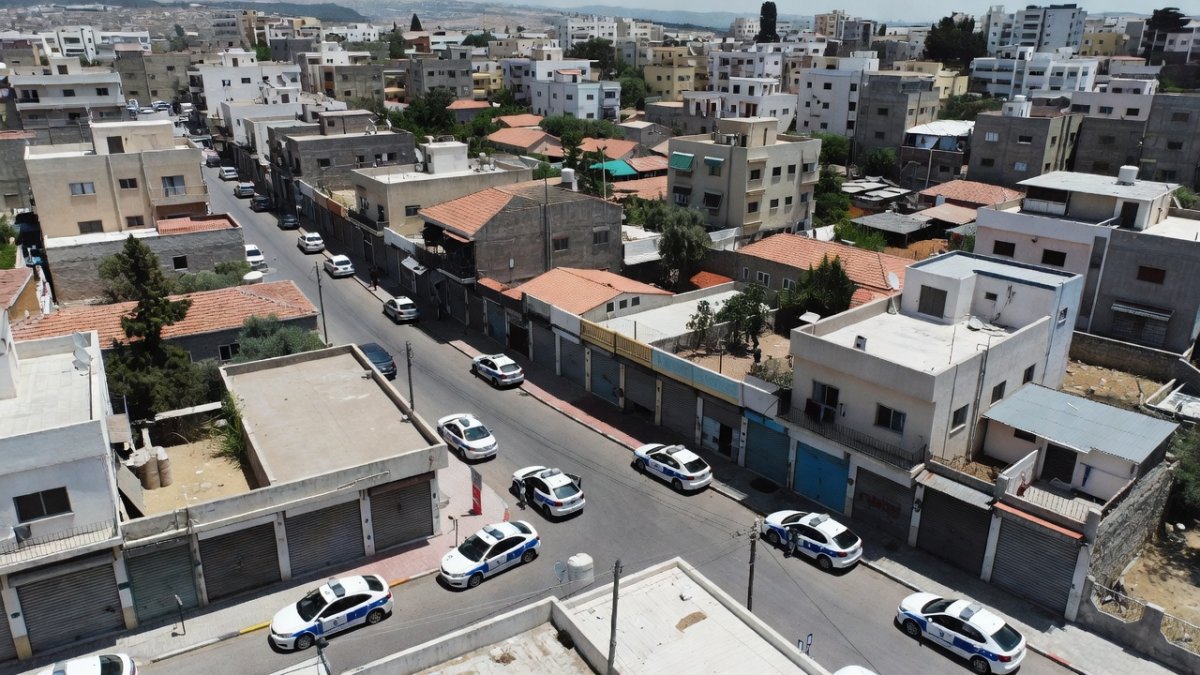
One Sunday in recent weeks saw five Arab-Israelis killed in coordinated car bombings and drive-by shootings across central Israel. The incidents took place in areas including Jaffa and Lod, locations that sit within commuting distance of Tel Aviv and Jerusalem. Israeli officials at the Prime Minister's Office noted that such attacks disrupt daily routines for thousands of residents who rely on these routes for work and family visits.
The pattern extends to smaller incidents that accumulate into larger statistics. In Jaffa, 17-year-old Ahmed Jabari was shot dead outside a supermarket, an event that prompted immediate statements from local Arab MKs calling for intervention by the Foreign Ministry and Interior Ministry. These killings occur against the backdrop of longstanding tensions between Arab municipalities and central government agencies responsible for resource allocation.
Security analysts at the Israel Police emphasize that 75 percent of the murders tie directly to organized crime networks involved in extortion, weapons trafficking, and drug distribution. This linkage raises alarms at the Knesset, where committees on internal security have linked the crime surge to potential spillover effects on Jewish communities in nearby cities such as Bat Yam and Holon.
(Global 1 News)
Low Clearance Rates and Impunity
Police solve only 12 percent of homicides in Arab communities, compared with a 65 percent clearance rate in Jewish communities. Between January and June 2026, authorities filed just 16 indictments, representing 12.3 percent of open cases. These numbers, released by the Israel Police, underscore persistent gaps in investigative capacity within Arab towns and villages.
Critics in the Knesset argue that low indictment rates allow perpetrators to operate with minimal fear of prosecution. Arab MKs have pointed to specific failures in places like Kafr Qasim, where witnesses report intimidation that prevents cooperation with investigators from the national police headquarters in Jerusalem. The disparity in outcomes fuels distrust toward institutions including the Shin Bet, which focuses more on terrorism than street-level crime.
Public Safety Minister Itamar Ben-Gvir has attributed the clearance gap to 40 years of neglect by previous governments and the Attorney General's office. In contrast, opposition figures and Arab representatives counter that violence has accelerated under the current administration's policies. Protests outside the Prime Minister's Office in Jerusalem have demanded Ben-Gvir's removal, with demonstrators citing the unsolved cases as evidence of systemic inaction.
Lod Mayor Yair Revivo has repeatedly urged the government to deploy additional resources, noting that the city's mixed population experiences spillover effects from unresolved Arab-sector cases. Without higher clearance rates, residents in both Arab and Jewish neighborhoods face prolonged uncertainty that affects property values and community cohesion.
Human Cost: Children Bearing the Burden
In Jisr al-Zarqa, a father was stabbed near his home, leaving his 10-year-old daughter Shireen with lasting trauma that local social workers continue to address. Such incidents form part of a wider pattern in which 232 children in Arab society lost a parent to crime during 2025 alone. These losses concentrate in the Negev and central Israel towns where families lack immediate access to specialized counseling services.
Hadar Kess of the Sunflowers organization reports that children who lose parents to violence face four times the likelihood of arrest and 13 times the likelihood of dropping out of school. Her data draws from programs operating in Lod and Kafr Qasim, where staff track long-term outcomes for affected youth. These statistics carry direct implications for future workforce participation and social integration across Israeli society.
Ahmed Jabari's death in Jaffa left peers and family members navigating grief without adequate institutional support from the Ministry of Education. Similar stories emerge from Negev communities where 13-year-olds have been drawn into criminal activity following the loss of older relatives. The cumulative effect strains local clinics and schools already operating under budget constraints set by the Knesset Finance Committee.
Israeli psychologists working with Arab families note that unaddressed trauma in children can translate into broader security challenges, including recruitment risks by organized groups. This dynamic affects daily life in mixed cities where Arab and Jewish students attend separate or shared educational frameworks under the same national curriculum guidelines.
(i24NEWS English)
The Political Blame Game
President Isaac Herzog described the homicide surge as a national emergency requiring coordinated action across ministries. His statement followed meetings with Arab local leaders who presented data on unsolved cases from 2025 and 2026. The remarks came amid growing pressure on the Prime Minister's Office to allocate emergency funding for policing in Arab localities.
Ben-Gvir has placed responsibility on the Attorney General and decades of prior neglect, while opponents argue that enforcement priorities under his tenure have worsened outcomes. Arab MKs have organized multiple demonstrations outside the Prime Minister's Office, demanding Ben-Gvir's dismissal and the transfer of authority to a cross-party security committee. These protests highlight fractures within the governing coalition on internal security matters.
Lod Mayor Yair Revivo has issued public appeals for immediate government intervention, citing specific neighborhoods where extortion rackets operate openly. His calls coincide with similar demands from mayors in other mixed cities who report that crime networks exploit jurisdictional gaps between municipal and national police units.
The debate extends to the Knesset plenum, where Arab representatives have tied the violence to broader issues of resource distribution and representation. Foreign Ministry officials have monitored international coverage of the crisis, concerned about its potential impact on Israel's diplomatic standing in Europe and with the United States.
Organized Crime Networks and Regional Security
Seventy-five percent of Arab-sector murders stem from organized crime activities including extortion, weapons smuggling, and drug trafficking. On one recent Sunday, five Arab-Israelis died in car bomb and gun attacks that police linked to rival factions operating across the Green Line. These networks maintain supply routes that intersect with areas monitored by the IDF near the West Bank.
In the Negev, community leader Najeb Abu Bnaeh has documented cases of youths as young as 13 being recruited into criminal enterprises. The involvement of minors complicates efforts by the Israel Police to dismantle leadership structures that span from southern Bedouin villages to northern towns like Kafr Qasim. Shin Bet assessments have flagged the risk that weapons caches could be diverted toward other threats.
The violence affects cross-border dynamics as well, with some networks maintaining ties to elements in the Palestinian Authority and Gaza. Israeli security officials note that unresolved homicides in Arab communities can erode cooperation on counter-terrorism intelligence shared between the IDF and local Arab leaders. This erosion carries consequences for operations along the Gaza border and in Jerusalem's Old City.
Daily life in Tel Aviv and surrounding areas feels the secondary effects when residents avoid certain roads or businesses due to spillover incidents. The Foreign Ministry has briefed diplomats on the internal security situation, emphasizing that sustained high homicide rates could influence foreign investment decisions in high-tech sectors centered in central Israel.
Community Responses and Path Forward
The AJEEC organization operates youth intervention programs in Lod and Kafr Qasim aimed at steering teenagers away from criminal involvement. These initiatives receive partial funding from the Ministry of Social Affairs and focus on vocational training and mentorship. Participants include families affected by the 232 parental losses recorded in 2025.
Israel Police have established specialized task forces and increased community meetings in Arab towns, though clearance rates remain at 12 percent. Officers report improved information flow in some villages following these outreach efforts, yet Arab MKs continue to press for structural reforms including greater Arab representation within investigative units.
Lod Mayor Yair Revivo has coordinated with neighboring Jewish municipalities to share best practices on joint policing. His administration has requested additional funding from the Prime Minister's Office to expand surveillance and rapid-response capabilities in high-risk zones. Similar proposals have circulated among mayors in the Negev and Wadi Ara region.
Long-term solutions discussed in Knesset committees include expanded roles for organizations like Sunflowers and AJEEC alongside increased prosecutions. President Herzog's call for national emergency measures has prompted inter-ministerial working groups that include representatives from the Israel Police, Ministry of Education, and Arab local councils. These efforts aim to reduce the 12 percent rise observed since January 2026 while addressing root causes tied to organized crime.
By Hannah Berg, Staff WriterThis article was produced with AI-assisted research and editorial support. Reporting is based on sources cited in the article.
What's Your Reaction?
 Like
0
Like
0
 Dislike
0
Dislike
0
 Love
0
Love
0
 Funny
0
Funny
0
 Wow
0
Wow
0
 Sad
0
Sad
0
 Angry
0
Angry
0
Israel Correspondent at Global1.News. Based in Tel Aviv, covering Israeli politics, security, technology, and society. Provides balanced, deeply-sourced reporting on one of the most closely-watched regions in the world.













Comments (0)