
Wimbledon Bad Blood: Medical Timeout Controversy Erupts After Five-Set Epic
The Scene on Centre Court The Centre Court crowd at Wimbledon witnessed a gripping encounter that stretched across four hours and twenty-six minutes, culminating in a hard-fought victory for third seed Felix Auger-Aliassime over Alejandro Davidovich Fokina. The scoreline of 6-7(4), 7-6(6), 6-3, 6-7(2), 6-1 told only part of the story, as the match descended into acrimony over a
The Scene on Centre Court
The Centre Court crowd at Wimbledon witnessed a gripping encounter that stretched across four hours and twenty-six minutes, culminating in a hard-fought victory for third seed Felix Auger-Aliassime over Alejandro Davidovich Fokina. The scoreline of 6-7(4), 7-6(6), 6-3, 6-7(2), 6-1 told only part of the story, as the match descended into acrimony over a medical timeout taken at a critical juncture. Spectators who had gathered under the famous roof were left divided, with the drama extending well beyond the final ace that sealed the contest.
This clash carried significant weight in the context of the tournament's later stages, where every point can shift momentum dramatically. Auger-Aliassime demonstrated resilience in the deciding set, overpowering his opponent 6-1 after the earlier sets had tested both players' endurance and tactical acumen. The atmosphere on court shifted from intense competition to visible frustration, reflecting broader questions about conduct and the spirit of the game that resonate deeply within British sporting culture.
Local tennis enthusiasts, accustomed to Wimbledon's emphasis on tradition and decorum, found themselves debating the boundaries of acceptable strategy. The encounter underscored how individual matches can capture national attention, particularly when they involve high-ranking players navigating the unique pressures of grass-court tennis. Auger-Aliassime's progression now sets up a quarter-final against Novak Djokovic, adding further intrigue to an already charged narrative.
How the Match Unfolded Over Four Hours and Twenty-Six Minutes
The contest began with Davidovich Fokina claiming the opening set in a tie-break, setting a tone of parity that persisted through the early exchanges. Auger-Aliassime responded by levelling the match in the second set, also via a tie-break, before breaking through to take the third set 6-3. Both competitors displayed exceptional baseline play and serving prowess, adapting to the fast conditions on Centre Court with precision and power that kept the spectators engaged throughout the prolonged battle.
By the fourth set, fatigue had begun to influence decision-making, yet the quality remained high as another tie-break proved decisive. Davidovich Fokina capitalised on a late opportunity to force a fifth set, extending the physical demands on both athletes. The fifth set then saw Auger-Aliassime assert dominance, closing out the match with an ace after a commanding 6-1 display that highlighted his superior recovery and focus under pressure.
Throughout the four hours and twenty-six minutes, the match exemplified the endurance required at this level of professional tennis. The ebb and flow of sets reflected not only technical skill but also mental fortitude, elements that have long defined Wimbledon's appeal to British audiences who value perseverance alongside flair. This narrative arc provided ample material for analysis of how players manage the unique challenges of a best-of-five format on grass.
The Medical Timeout and Its Immediate Impact
The pivotal moment arrived during Auger-Aliassime's service game at 15-40, with two break points looming against him. Davidovich Fokina requested and received a medical timeout, halting play at a moment when momentum appeared to favour the Canadian. Immediately following the interruption, Auger-Aliassime committed a double fault, allowing his opponent to seize the initiative and ultimately claim the fourth set in the ensuing tie-break.
Under current tennis regulations, medical timeouts are permitted for genuine injuries, yet their timing has long invited scrutiny regarding potential tactical use. In this instance, the pause occurred at a juncture that directly influenced the outcome of the set, prompting Auger-Aliassime to voice strong objections. The rule's application on Centre Court highlighted how such interventions can alter the rhythm of a contest in ways that other sports rarely permit.
Observers noted that the controversy stemmed less from the existence of medical provisions than from their deployment during critical service games. Auger-Aliassime later described the situation as a disgrace of a rule, observing that no other sport allows comparable interruptions at such decisive moments. This episode has reignited discussions among players and officials about refining protocols to preserve competitive integrity without compromising player welfare.
Post-Match Reactions and Lingering Tension
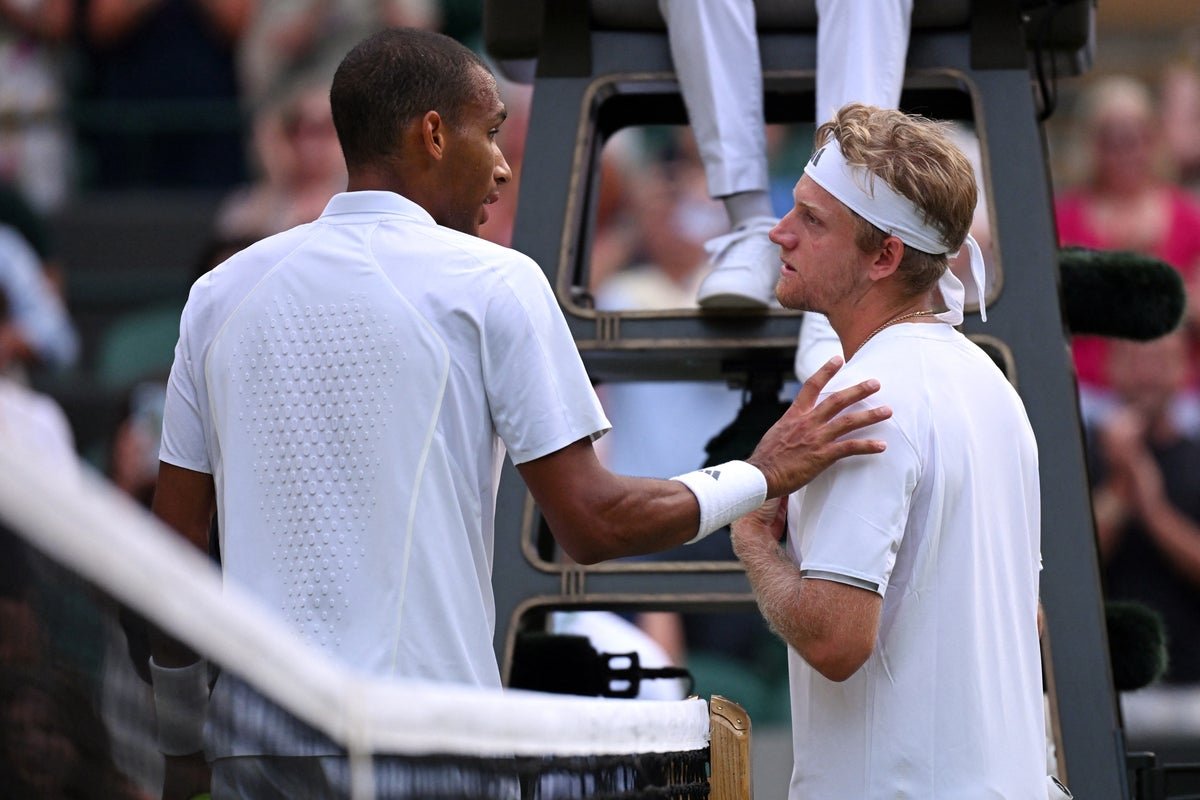
Following the final ace, the customary handshake between the two competitors turned heated, accompanied by a chest bump and an exchange that continued as Davidovich Fokina departed the court. Auger-Aliassime's visible displeasure reflected the frustration accumulated over the medical timeout's consequences, transforming a standard post-match ritual into a public display of discord. The Centre Court audience witnessed this unscripted moment, adding an emotional layer to an already exhaustive encounter.
The Canadian player's comments after the match crystallised the sense of grievance, focusing on the perceived inequity of the rule rather than personal animosity. Davidovich Fokina, for his part, offered no immediate public elaboration, leaving the focus on Auger-Aliassime's pointed critique. Such exchanges, though rare at Wimbledon, underscore the high stakes involved when matches extend into decisive fifth sets.
The argument's continuation off court suggested that the incident had left a lasting impression on both participants. In the measured environment of British tennis coverage, analysts emphasised the need for clarity in future applications of medical provisions to prevent similar escalations. The episode served as a reminder that even in a sport celebrated for its gentlemanly traditions, competitive pressures can surface in raw form.
Wimbledon Traditions and the Sportsmanship Debate
Wimbledon has long prided itself on upholding standards of conduct that distinguish it within global tennis, with British spectators particularly attuned to displays of fair play and respect. The medical timeout controversy has prompted renewed examination of how these values intersect with the practical demands of modern professional sport. UK-based commentators have highlighted the tension between allowing necessary medical attention and safeguarding the flow of matches that captivate audiences across the nation.
Debates around rule reform have gained traction in recent years, with calls for tighter guidelines on when timeouts may be taken during service games. This incident on Centre Court has contributed to that conversation, illustrating how individual decisions can influence perceptions of sportsmanship. British tennis authorities, mindful of the tournament's heritage, face pressure to balance player support with the expectations of a public that values uninterrupted competition.
The episode also connects to wider discussions within UK sport about gamesmanship and its boundaries. While medical provisions exist to protect athletes, their strategic deployment risks undermining the honour associated with the All England Club. Observers suggest that clearer protocols could help maintain the tournament's reputation while addressing legitimate health concerns, ensuring that future encounters prioritise both welfare and competitive equity.
Quarter-Final Prospects and Tournament Implications
Auger-Aliassime now prepares to face Novak Djokovic in the quarter-finals, a matchup that carries substantial implications for the remainder of the tournament. The Canadian's ability to recover from the physical and emotional demands of this five-set victory will be tested against an opponent renowned for exploiting any signs of fatigue. Djokovic's experience on Centre Court positions him as a formidable challenge, regardless of the preceding drama.
The broader implications extend beyond this single contest, as the medical timeout episode may influence how players approach similar situations in subsequent rounds. Tournament organisers will likely monitor the fallout, considering whether adjustments to protocols could prevent comparable disputes. For British fans, the focus remains on the quality of tennis while acknowledging that such controversies shape perceptions of the event's fairness.
Ultimately, this encounter has added a layer of intrigue to the championship's later stages, reminding participants and spectators alike that mental resilience often proves as decisive as technical skill. Auger-Aliassime's progression offers an opportunity to demonstrate composure under renewed scrutiny, while the ongoing debate about medical timeouts continues to resonate within the sport's evolving landscape.
By Erica Thornton, Staff WriterThis article was produced with AI-assisted research and editorial support. Reporting is based on sources cited in the article.
What's Your Reaction?
 Like
0
Like
0
 Dislike
0
Dislike
0
 Love
0
Love
0
 Funny
0
Funny
0
 Wow
0
Wow
0
 Sad
0
Sad
0
 Angry
0
Angry
0

US Politics and Policy Correspondent at Global1.News. Based in Washington DC, covering American politics, policy, elections, and the courts. Knows how the system works and tells you what it actually means.















Comments (0)