
USA Reach World Cup 2026 Knockouts: South African Football Lessons
The United States men's national team wrote another chapter in their footballing resurgence on Friday when they defeated Australia 2-0 at Lumen Field in Seattle to clinch top spot in Group D of the co-hosted FIFA World Cup. An Australian own goal broke the deadlock before Orlando Pride defender Alex Freeman rose highest to head home the second, sending the crowd into a frenzy.
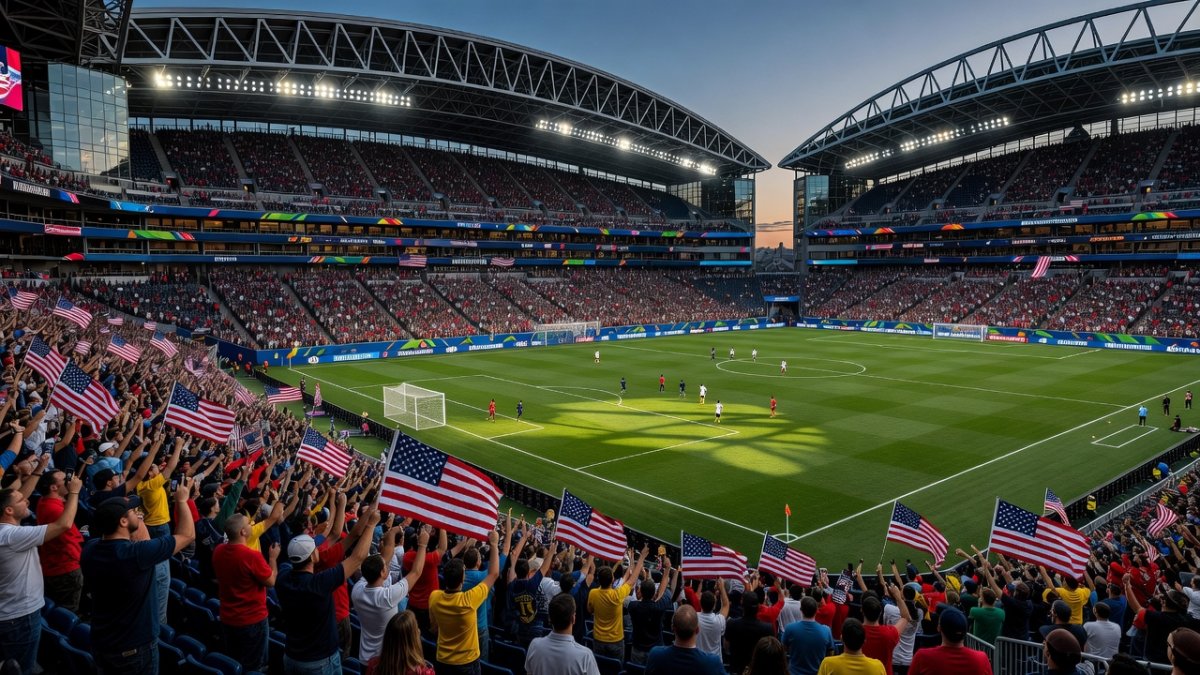
Match Report: USA 2-0 Australia at Lumen Field
The build-up to this Group D clash crackled with anticipation at Lumen Field, where a sold-out crowd of over 67,000 created an electric atmosphere that mirrored the intensity of a Soweto derby at FNB Stadium. The United States entered the match knowing victory would secure top spot and a favorable knockout draw, while Australia needed points to stay alive. Coach Mauricio Pochettino deployed a compact 4-2-3-1 formation, emphasizing quick transitions and set-piece threats. Early exchanges saw the Americans dominate possession at 62 percent, probing with width from wingers who stretched the Australian defense. South African viewers tuning in via SuperSport would recognize the tactical discipline, reminiscent of how Bafana Bafana grind out results in qualifiers through organized pressing.
The deadlock broke in the 34th minute through an Australian own goal that highlighted defensive lapses under pressure. A surging run from the USA midfield forced a hurried clearance that deflected off defender Harry Souttar and looped past the goalkeeper. This moment shifted momentum decisively, allowing the hosts to control the tempo with patient build-up play. The goal underscored the value of sustained pressure, a lesson South African coaches often emphasize when facing physically robust sides like Nigeria. Fans in Seattle erupted, their chants echoing the passionate roars heard during Kaizer Chiefs versus Orlando Pirates clashes back home.
Alex Freeman sealed the points in the 67th minute with a towering header from a perfectly delivered corner. The 22-year-old Orlando Pride defender timed his leap impeccably, powering the ball into the roof of the net and sparking pandemonium among the American faithful. Tactically, the set-piece routine exploited Australia's zonal marking weaknesses, a detail that revealed the depth of USA preparation. Freeman's contribution as a product of the domestic system added narrative weight, proving that homegrown talent can deliver on the biggest stage. For South African supporters, this echoed the joy when local stars like Percy Tau score decisive goals in African qualifiers.
Christian Pulisic's absence due to injury tested the squad's resilience, yet the team adapted seamlessly without their talisman. Backup attackers maintained fluidity, creating chances through intelligent movement rather than relying on individual brilliance. The victory marked back-to-back World Cup wins for the first time since 1930, propelling the USA into the knockout stage with confidence. Seattle's atmosphere, alive with flares and unified singing, compared favorably to the vibrant energy at FNB Stadium during high-stakes PSL matches, reminding South African fans of football's unifying power across continents.
From 1994 to 2026: America's Footballing Revolution
The United States hosting the 1994 World Cup planted seeds for a revolution that has blossomed into consistent global competitiveness. That tournament introduced millions to the sport, sparking infrastructure growth that transformed soccer from a niche pursuit into a mainstream passion. Subsequent decades saw the launch of Major League Soccer, which provided a professional platform absent in earlier eras. This foundation enabled structured player pathways that South Africa attempted to replicate after 2010 but struggled to sustain amid funding shortfalls.
Development Academy programs and college soccer pipelines became cornerstones of the American model, funneling talent from grassroots levels to elite competition. Corporate investment poured into youth academies, creating environments where technical skills and tactical awareness flourished alongside athletic conditioning. Alex Freeman exemplifies this system, rising through academy ranks to deliver at the World Cup. His journey illustrates how targeted resources produce versatile defenders capable of both defensive solidity and attacking contributions from set pieces.
South Africa's parallel experience after hosting the 2010 World Cup reveals the consequences of fading momentum. Initial legacy projects promised provincial academies and coaching upgrades, yet many initiatives stalled due to inconsistent support. Sustained investment, as seen in the USA, demands long-term vision beyond tournament hosting. American clubs now partner with international entities to expose young players to European styles, a strategy that has elevated the national team's tactical maturity.
The contrast highlights what deliberate, multi-decade commitment achieves. While the USA leveraged 1994's platform into back-to-back knockout appearances, South African football requires renewed focus on youth structures to mirror that trajectory. Corporate and governmental alignment remains essential for building pipelines that produce players ready for World Cup pressures.
US Development Model: A Blueprint for SAFA
MLS academies operate with professional standards that contrast sharply against many PSL structures, where resources often concentrate at senior levels rather than youth development. American clubs invest heavily in full-time coaching staffs and modern facilities, producing graduates who transition smoothly into first teams or European moves. This systematic approach has yielded depth that allowed the USA to cope without Pulisic. South African administrators could study these models to address similar gaps in local talent production.
The MultiChoice Diski Challenge offers a competitive reserve league, yet it lacks the integrated academy network found in the US Development Academy system. SAFA faces ongoing challenges including transformation requirements that must balance with merit-based selection, uneven provincial academy funding, and limited coaching education pathways. These hurdles slow progress compared to the streamlined American framework that prioritizes early identification and holistic training.
Kaizer Chiefs and Orlando Pirates maintain respected youth systems that have produced national team contributors over decades. However, scaling these successes nationally requires SAFA to adopt centralized standards similar to MLS academies. Wayne Rooney's recent impact at Chiefs, emphasizing tactical education and fitness regimes, demonstrates the value of importing expertise to elevate local methods.
What South Africa can adopt includes greater corporate sponsorship of academies and mandatory coaching certifications aligned with international benchmarks. By emulating the USA's focus on continuous player development rather than short-term senior results, SAFA could build a sustainable pipeline capable of regular World Cup qualification.
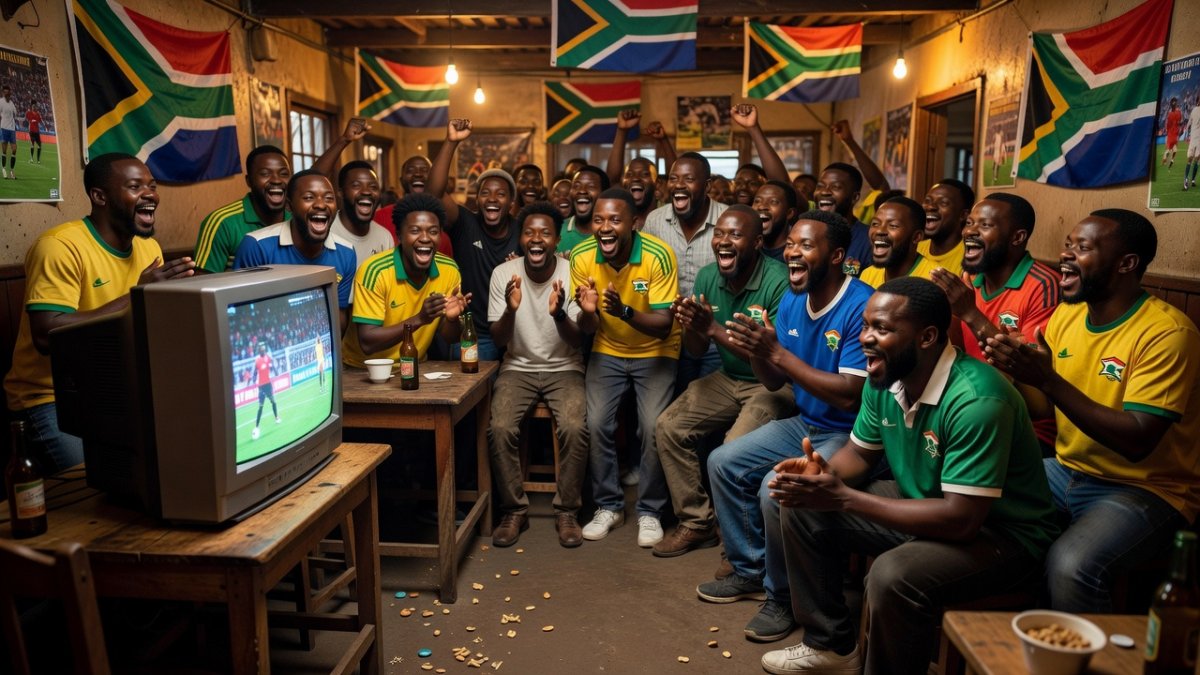
Bafana Bafana's World Cup 2026 Chase
Bafana Bafana sit atop Group C with 16 points from seven matches, positioning them strongly for automatic qualification to the 2026 tournament co-hosted by the USA, Canada, and Mexico. The upcoming qualifier against Nigeria represents a defining test, where victory would virtually seal their place. Coach Hugo Broos has instilled defensive organization and counter-attacking threat, transforming a side that previously faltered in crucial fixtures.
Percy Tau, captaining from Al Ahly, brings leadership and creativity, while Lyle Foster at Burnley adds physical presence up front. Ronwen Williams anchors the defense with experience from Mamelodi Sundowns. Their combined quality offers hope, yet an ineligible player sanction threat looms as a potential distraction that could disrupt preparations if not resolved swiftly.
South Africa's qualification history includes appearances in 1998, 2002, and 2010 as hosts, but prolonged absence since then has tested fan patience. The current Broos project emphasizes youth integration alongside experienced heads, aiming to avoid past pitfalls of inconsistent selection. Success here would mark a return to the global stage after years of continental struggles.
Key tactical adjustments, such as compact midfield screening and exploiting wide areas, mirror approaches that propelled the USA forward. Bafana must maintain focus through remaining fixtures to convert strong standings into confirmed qualification and renewed national pride.
African Football on the Global Stage
African nations approach the 2026 World Cup with heightened expectations, led by powerhouses Senegal and Nigeria who consistently reach knockout rounds through athleticism and tactical discipline. These teams serve as benchmarks for the continent, demonstrating how structured leagues and European exposure elevate performance. Morocco's remarkable 2022 semi-final run further inspired hope, showcasing defensive resilience and set-piece prowess that African sides can replicate.
South Africa's absence since 2010 underscores the urgency for revival, as the nation once celebrated for hosting now seeks to rejoin the elite conversation. Continental pride surges whenever any African team advances, uniting supporters from Cairo to Cape Town in shared celebration. The USA's current success offers a comparative lens, highlighting how investment in domestic structures accelerates progress for emerging football nations.
Development investment across Africa has increased through CAF initiatives and club partnerships, yet gaps remain in youth academies and coaching depth compared to North American models. Senegal's consistent qualification stems from early talent identification, a practice South Africa could strengthen to close the gap.
Ultimately, the global stage rewards sustained effort. African football's rise depends on emulating successful pathways while preserving the flair and passion that define the continent's unique identity on the world stage.
What It Means for South African Football Fans
South African fans will watch the 2026 World Cup unfold in shebeens and fan parks across the country, gathering to cheer every African success while dreaming of Bafana's participation. SuperSport's comprehensive coverage brings matches to life, fostering communal viewing experiences that echo the electric atmospheres at PSL derbies. The USA's achievement serves as both inspiration and reminder of what consistent development can deliver.
American fan culture, with its organized supporter groups and family-friendly stadium environments, contrasts with the raw passion found in South African venues. Yet both share an underlying love for the game's drama and community bonds. Local supporters hope Bafana's qualification push translates into similar scenes of national unity during the tournament.
The waiting game continues as remaining qualifiers approach, with every point carrying weight toward ending the long drought. Fans recall the 2010 excitement and yearn for a repeat, knowing qualification would reignite interest in local leagues and youth participation.
Dreaming of seeing Bafana at another World Cup fuels ongoing support for SAFA reforms and player development. The USA's journey from 1994 onward proves that patient investment yields results, offering a blueprint South African football can follow toward renewed global relevance.
By Dante Williams, Staff WriterThis article was produced with AI-assisted research and editorial support. Reporting is based on sources cited in the article.
What's Your Reaction?
 Like
0
Like
0
 Dislike
0
Dislike
0
 Love
0
Love
0
 Funny
0
Funny
0
 Wow
0
Wow
0
 Sad
0
Sad
0
 Angry
0
Angry
0

Breaking News and Investigations Correspondent at Global1.News. Based in London, covering global breaking news, security, and investigative stories. Known for digging deeper and connecting the dots across continents.










Comments (0)