
Free Ideogram 4 LoRA Training on Low-VRAM GPUs
In a move that could reshape who controls the future of AI image generation, a new YouTube tutorial from Aitrepreneur demonstrates how to fine-tune Ideogram 4 using LoRA on hardware most consumers already own. Released as an open-weight model in 2026, Ideogram 4 now faces community-driven customization that bypasses corporate filters entirely. This development raises urgent que
In a move that could reshape who controls the future of AI image generation, a new YouTube tutorial from Aitrepreneur demonstrates how to fine-tune Ideogram 4 using LoRA on hardware most consumers already own. Released as an open-weight model in 2026, Ideogram 4 now faces community-driven customization that bypasses corporate filters entirely. This development raises urgent questions about access, censorship, and creative freedom in artificial intelligence.
Free Ideogram 4 LoRA Training on Under 8GB VRAM Challenges AI Gatekeepers
Atlanta, GA – June 21, 2026 — A 21-minute-38-second video uploaded by the Aitrepreneur channel on June 20, 2026, outlines a complete pipeline for training custom LoRA adapters on Ideogram 4 without requiring data-center hardware. The tutorial targets users with consumer GPUs holding less than 8GB of VRAM and explicitly includes workflows for NSFW content generation. By leveraging open-weight access granted at Ideogram 4’s 2026 release, the method removes both financial and technical barriers that previously limited fine-tuning to well-funded labs.
Ideogram 4 and the Open-Weight Shift
Ideogram 4 launched in 2026 as one of the first high-capability text-to-image models distributed with publicly available weights. Unlike closed systems that restrict outputs through centralized moderation, the open weights allow any researcher or hobbyist to inspect, modify, and extend the model. This architectural choice directly enabled the LoRA training pipeline shown in the Aitrepreneur video, which runs locally rather than through paid cloud APIs.
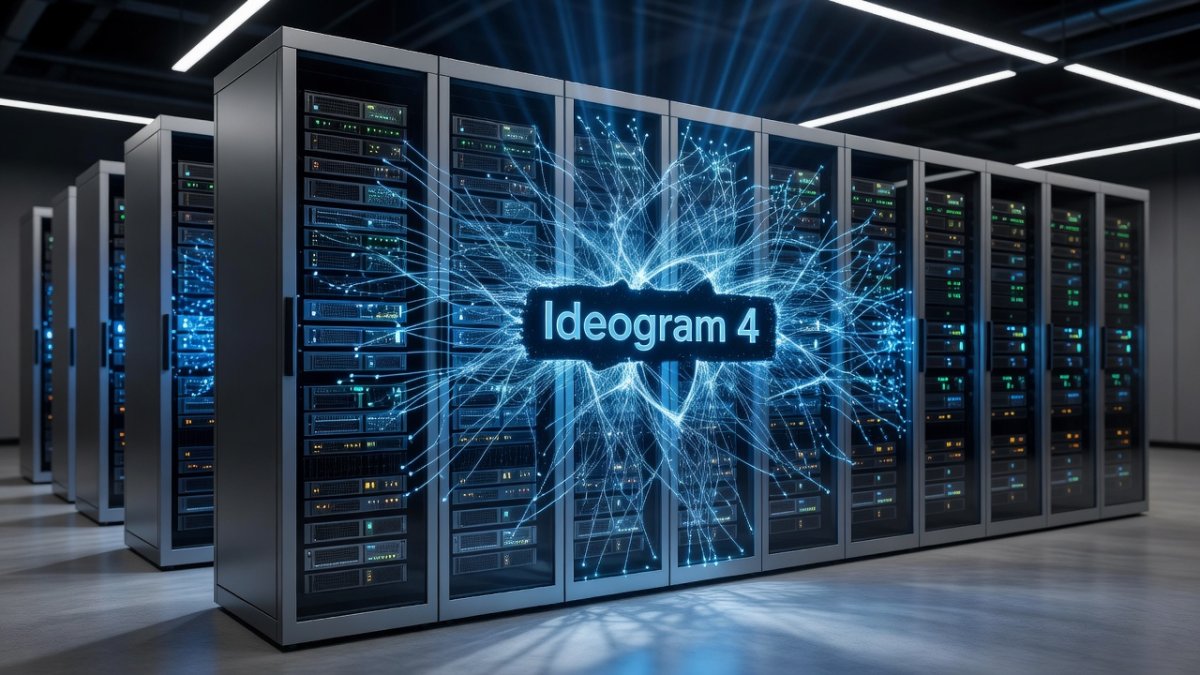
Ideogram 4's open-weight architecture powers community-driven fine-tuning. (Global 1 News)
What LoRA Training Actually Unlocks
Low-Rank Adaptation, or LoRA, inserts small trainable matrices into a frozen base model so that only a fraction of parameters need updating. The result is a compact adapter file that teaches Ideogram 4 new subjects, artistic styles, or character consistency without retraining billions of weights from scratch. The Aitrepreneur tutorial demonstrates dataset preparation, captioning, and training steps that produce usable adapters in hours rather than days on modest hardware.
Running the Pipeline on Less Than 8GB VRAM
Consumer graphics cards with 6GB or 8GB of memory have historically been excluded from serious model training. The video shows memory-efficient techniques including gradient checkpointing, 8-bit optimizers, and reduced batch sizes that keep peak VRAM usage below the stated threshold. These optimizations matter because they let independent creators iterate on custom models without renting enterprise GPUs priced at several dollars per hour.
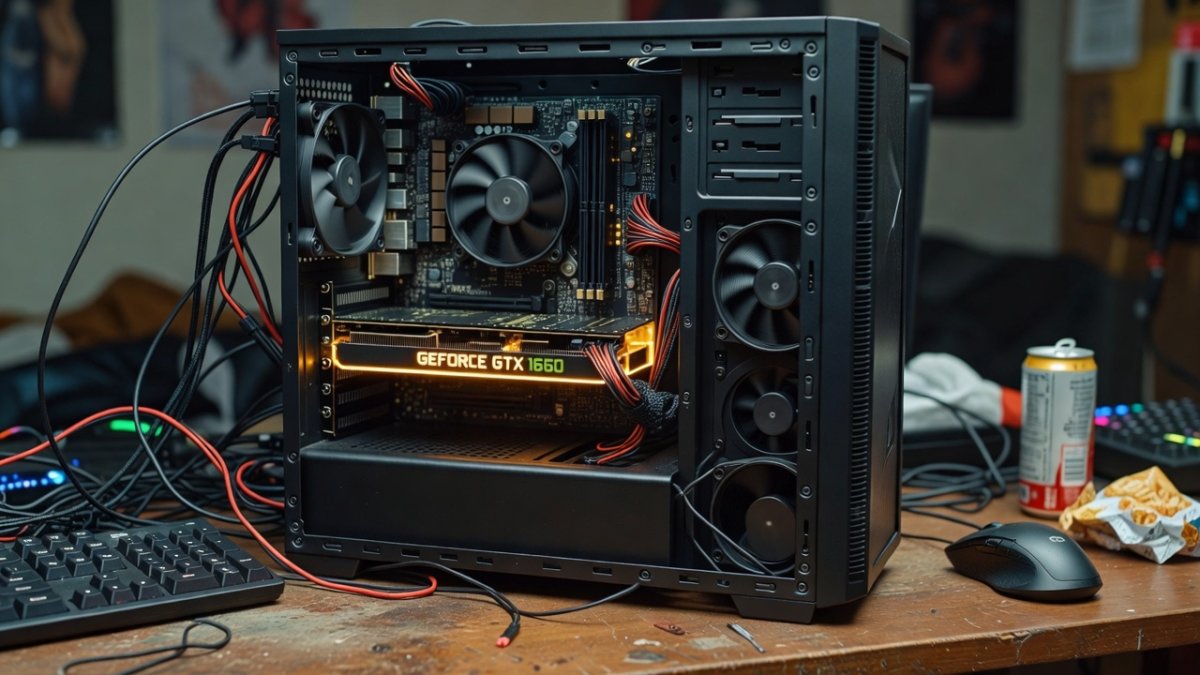
Consumer GPUs under 8GB VRAM can now run LoRA training locally. (Global 1 News)
The NSFW Dimension and Ongoing Censorship Debates
Corporate image generators routinely block adult or controversial prompts through safety classifiers. Ideogram 4’s open weights remove that layer of control once a user trains or applies an uncensored LoRA. The Aitrepreneur tutorial explicitly addresses NSFW dataset curation and training settings, reflecting broader community demand for models that do not refuse legal creative requests. This capability revives arguments about whether private companies should dictate the boundaries of synthetic media.
Aitrepreneur’s Track Record in AI Education
The Aitrepreneur channel has focused on Stable Diffusion, ComfyUI workflows, and other open-source tools since its inception. Its tutorials consistently emphasize zero-cost setups and step-by-step verification rather than paid shortcuts. The June 20, 2026, video continues that pattern by documenting every dependency and configuration flag needed to replicate the Ideogram 4 LoRA process on consumer hardware.
Practical Effects on Artists, Developers, and Platforms
Independent artists can now create consistent characters or branded visual styles without licensing fees or usage caps. Developers gain the ability to prototype domain-specific image models for games, product visualization, or archival restoration on laptops rather than cloud clusters. Platforms that previously relied on centralized filters may face increased competition from decentralized communities sharing adapter files directly.

The debate over AI censorship and creative freedom intensifies. (Global 1 News)
Remaining Technical and Legal Questions
Even with reduced VRAM requirements, dataset quality and training stability still determine adapter performance. Users must also navigate evolving terms around derivative models and potential misuse of generated content. The Aitrepreneur video provides the technical entry point; responsible application remains the responsibility of each practitioner.
By Jessica Ali, Staff Writer
Meta Title: Free Ideogram 4 LoRA Training on Low-VRAM GPUs Meta Description: Aitrepreneur’s 21-minute tutorial shows how to fine-tune Ideogram 4 with LoRA on under 8GB VRAM, including NSFW workflows, and what it means for open AI access. Keywords: Ideogram 4, LoRA training, open-weight AI, low VRAM, NSFW AI, Aitrepreneur, consumer GPU, fine-tuning, text-to-image, Stable Diffusion, ComfyUI, AI censorship, 2026 model release, adapter files, local trainingThis article was produced with AI-assisted research and editorial support. Reporting is based on sources cited in the article.
What's Your Reaction?
 Like
0
Like
0
 Dislike
0
Dislike
0
 Love
0
Love
0
 Funny
0
Funny
0
 Wow
0
Wow
0
 Sad
0
Sad
0
 Angry
0
Angry
0

Editor-in-Chief at Global1.News. Atlanta-based journalist who cuts through the BS and tells it like it is. Lead anchor, host, and the voice you hear when the spin stops and the truth starts.















Comments (0)