
U.S. Typhon Missile Deployment Strengthens Japan Defense
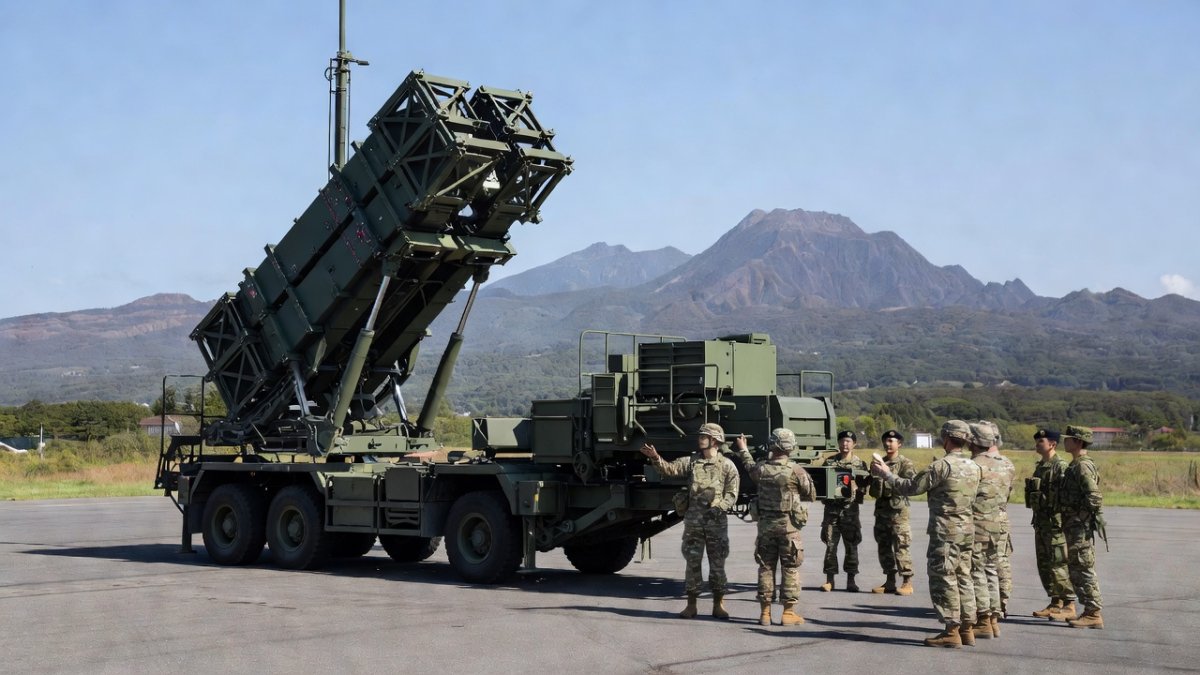
KANOYA AIR BASE, Kagoshima — The U.S. Army’s Typhon midrange missile system will reach this Maritime Self-Defense Force facility on June 22, 2026, for the Valiant Shield and Orient Shield exercises. A second rotation is scheduled for September 2026 during Resolute Dragon. The moves reflect Japan’s accelerating integration into U.S. strike capabilities following the 2019 collaps
Exercise Timeline and Deployment Details
The first Typhon deployment begins June 22, 2026, at Kanoya Air Base in Kagoshima Prefecture. U.S. Army Multi-Domain Task Force units will operate the system alongside Japan Self-Defense Forces during Valiant Shield, a biennial U.S. Indo-Pacific Command exercise, and Orient Shield, the annual bilateral field training event. These drills emphasize rapid deployment and live-fire coordination in the southwestern island chain.
The second rotation occurs in September 2026 for Resolute Dragon, which focuses on command-post and field operations across multiple prefectures. Kanoya’s selection leverages its existing Maritime SDF infrastructure and proximity to key maritime routes. U.S. Army Secretary Christine Wormuth has highlighted the deployments as essential steps in MDTF integration with Japanese forces. All activities remain rotational and are coordinated through existing bilateral frameworks rather than establishing permanent U.S. missile bases on Japanese soil.
Typhon System: Technical Profile and Capabilities
The Typhon launcher uses a trailer-mounted Mk 41 Vertical Launch System capable of firing both SM-6 and Tomahawk missiles. The SM-6 provides multi-mission capability against aircraft, ships, and land targets at ranges exceeding 370 kilometers, while the Tomahawk extends strike reach to approximately 2,400 kilometers. This combination gives U.S. and allied forces flexible, sea- and land-based options previously restricted under the INF Treaty.
Japan’s participation in these exercises allows SDF personnel to observe loading procedures, targeting cycles, and command integration. The system’s mobility enables rapid repositioning across Kyushu and the Nansei Islands, supporting defense of Okinawa and the Senkaku Islands. Technical familiarization during Valiant Shield and Resolute Dragon will inform future Japanese decisions on acquiring similar long-range strike assets as defense spending approaches 2 percent of GDP.
Japan's Changing Security Posture
Japan’s 2022 National Security Strategy marked a decisive shift by explicitly identifying China as the greatest strategic challenge. The document authorized acquisition of counterstrike capabilities and committed to raising defense spending to 2 percent of GDP by 2027. These changes remain within constitutional limits because they emphasize alliance interoperability rather than independent offensive operations.
Hosting the Typhon system at Kanoya demonstrates practical implementation of the new strategy. Joint exercises now routinely include scenarios defending the southwestern islands, reflecting Tokyo’s recognition that geography places Japan on the front line of any regional contingency. Increased budgetary resources are funding infrastructure upgrades at bases such as Kanoya to accommodate allied equipment and personnel rotations.
China's Strategic Response
Chinese Foreign Ministry spokesperson Guo Jiakun stated opposition to the Typhon deployment during the May 22 briefing, describing it as destabilizing. Beijing views the system’s 2,400-kilometer range as directly threatening Chinese territory and naval forces operating near Taiwan. PLA units have increased surveillance and electronic warfare activity around the Nansei Islands in recent years.
The deployments coincide with heightened Chinese military pressure on Taiwan. Japan’s decision to host Typhon therefore carries implications for cross-strait deterrence. Tokyo’s southwestern island focus is intended to raise the cost of any attempt to isolate or seize Japanese territory during a Taiwan contingency, a calculation that directly responds to China’s growing assertiveness reported by the Japan Times on June 21.
Russia and Broader Regional Dynamics
Moscow has objected to the Typhon arrival, claiming it threatens Russian interests in the Far East. Although Russia’s Pacific Fleet remains smaller than China’s, the precedent of U.S. intermediate-range missiles in Japan revives Cold War-era concerns. North Korea has also criticized the moves, linking them to its own missile development.
Japan’s response has been to deepen trilateral coordination with the United States and South Korea while maintaining dialogue channels with Moscow. The Kanoya deployments therefore serve a dual purpose: deterring Chinese actions in the south while signaling resolve to northern neighbors. This balanced approach aligns with Japan’s broader strategy of strengthening alliances without abandoning diplomatic engagement.
Economic Dimensions: Japan-China Trade Tensions
Japan-China bilateral trade exceeds $300 billion annually, creating strong incentives for stable relations. Yet security developments at Kanoya are already influencing corporate risk assessments. Japanese firms with manufacturing exposure in China are accelerating supply-chain diversification toward ASEAN and domestic production.
Business sentiment surveys conducted by Japanese chambers of commerce show rising concern over potential economic retaliation. At the same time, Tokyo continues to separate economic and security tracks, maintaining high-level economic dialogues even as defense cooperation expands. The Typhon rotations illustrate this dual-track policy: visible military strengthening paired with efforts to preserve commercial stability.
INF Treaty Legacy and U.S. Strategic Pivot
The 2019 collapse of the Intermediate-Range Nuclear Forces Treaty removed legal barriers to U.S. development of ground-launched missiles with ranges between 500 and 5,500 kilometers. The Typhon system is a direct result of that pivot. For Japan, the end of INF constraints has created new opportunities for alliance burden-sharing in the western Pacific.
U.S. Army MDTF units now train regularly with Japanese counterparts, focusing on command-and-control integration rather than permanent basing. This rotational model respects Japanese political sensitivities while delivering credible deterrence. The Kanoya deployments represent the first sustained operational use of Typhon in Northeast Asia since the treaty’s demise.
Future Outlook for the Japan-U.S. Alliance
Future Typhon rotations are expected to remain rotational rather than permanent, preserving flexibility for both governments. Interoperability will deepen through shared targeting networks and joint logistics at facilities such as Kanoya. Japan’s own long-range strike programs will likely draw on lessons from these exercises.
Over the next decade, the alliance is shifting from a purely defensive posture to one that includes credible counterstrike options. Continued emphasis on southwestern island defense will keep Kanoya and similar bases central to planning. The deployments therefore mark a durable evolution in Japan-U.S. security cooperation rather than a temporary exercise series.
Tags: Typhon missile, Kanoya Air Base, Japan US alliance, China military, Valiant Shield, INF Treaty, southwestern islands
By Kenji Tanaka, Staff Writer
This article was produced with AI-assisted research and editorial support. Reporting is based on sources cited in the article.
What's Your Reaction?
 Like
0
Like
0
 Dislike
0
Dislike
0
 Love
0
Love
0
 Funny
0
Funny
0
 Wow
0
Wow
0
 Sad
0
Sad
0
 Angry
0
Angry
0

Japan Correspondent at Global1.News. Tokyo-based voice covering Japanese politics, technology, economy, and culture. Tracks the intersection of tradition and innovation in one of the world's most dynamic societies.













Comments (0)