
Ukraine-Russia war latest: Putin tells banks and their staff to shoot down drones themselves under bizarre plan
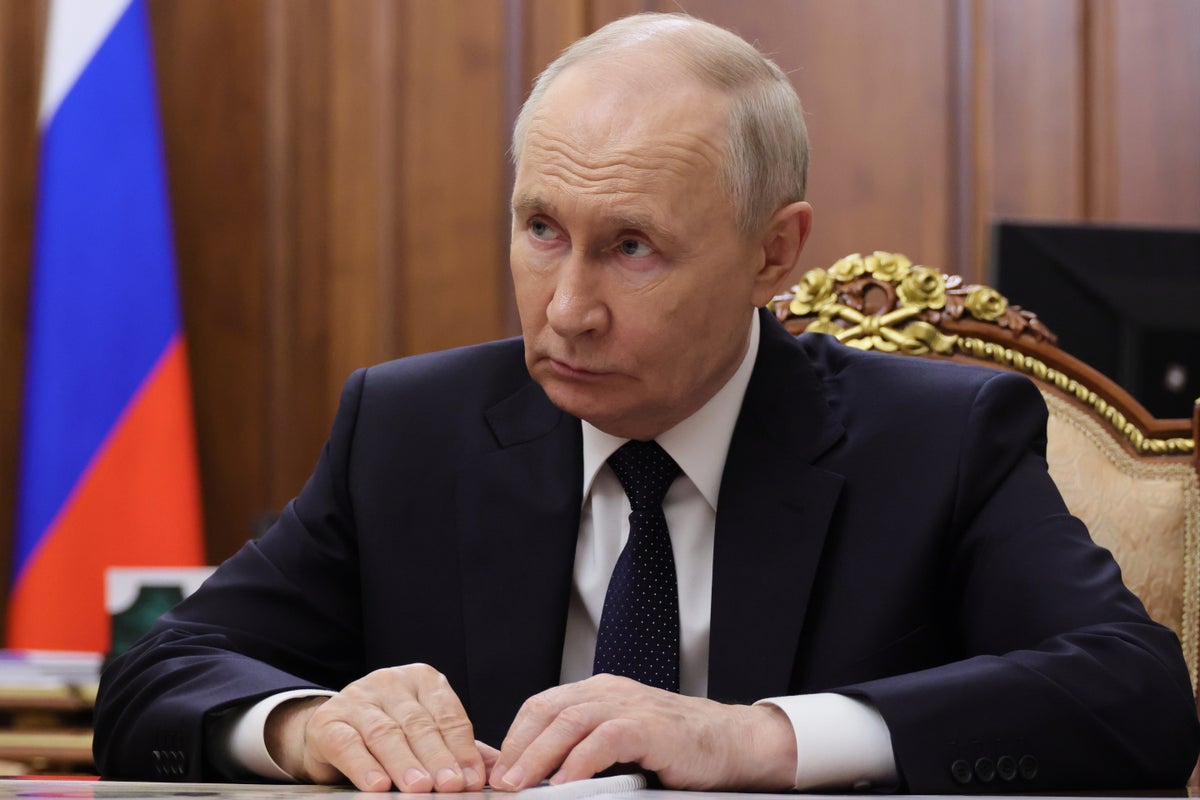
Ukraine-Russia War Latest: Putin Orders Bank Staff to Shoot Down Drones in Bizarre Crimea Defence Plan
The Strike That Sparked the Directive
In the early hours of Wednesday morning, Ukrainian forces launched a precision missile strike on the central bank’s regional office in Sevastopol, Crimea. The attack, confirmed by both Ukrainian military sources and Russian state media, damaged the facade of the building and caused minor structural fires. No casualties were reported among staff, though local emergency services described the scene as “chaotic” with shattered windows across adjacent streets. This latest incursion into Crimea, territory Russia annexed in 2014, has prompted an extraordinary response from the Kremlin.
President Vladimir Putin reportedly instructed regional bank managers and their employees to take personal responsibility for downing Ukrainian drones. The directive, delivered during a closed-door security meeting, instructs financial institutions in occupied Crimea and southern Russia to arm staff with small arms and anti-drone equipment. One Kremlin insider, speaking on condition of anonymity, described the plan as “unconventional but necessary given the evolving threat landscape.”
Context of Escalating Attacks on Crimea
Crimea has faced increasing Ukrainian strikes since the full-scale invasion began in February 2022. The peninsula serves as a critical logistics hub for Russian forces, hosting the Black Sea Fleet in Sevastopol and multiple air bases. According to open-source intelligence group Oryx, Ukraine has destroyed or damaged at least 17 Russian naval vessels and targeted over 40 military sites in Crimea since mid-2023. Civilian infrastructure, including the Kerch Bridge and energy facilities, has also been hit repeatedly.
The central bank office strike follows a pattern of targeting symbols of Russian administrative control. Sevastopol’s financial district holds particular significance, managing payments for military contractors and energy exports. Russian authorities claim the missile was intercepted, yet footage circulated on Telegram shows visible damage to the building’s upper floors. Ukrainian officials have not publicly claimed responsibility but have reiterated their right to strike military-adjacent targets in occupied territory.
The “Bizarre” Order and Its Practical Implications
Putin’s call for bank employees to engage drones directly marks a departure from standard Russian military protocol. Typically, air defence falls to specialised units equipped with systems such as the Pantsir-S1 or S-400. Handing this task to civilian staff raises immediate questions about training, legality and effectiveness. Defence analysts note that commercial drones used by Ukraine often fly at low altitudes, making them difficult for untrained personnel to detect and neutralise.
Local reports suggest some Crimean banks have begun distributing leaflets on basic drone identification and firearm safety. One branch manager in Simferopol told a Russian regional newspaper that staff were “encouraged to practise at nearby ranges.” The psychological impact appears significant: several employees have reportedly requested transfers to mainland Russia, citing safety concerns. This reflects broader strain on civilian morale in occupied areas where air-raid sirens have become routine.
Expert Analysis: Desperation or Propaganda?
Military experts view the directive as indicative of stretched Russian resources. Dr Elena Petrova, a senior fellow at the Royal United Services Institute in London, observes: “Russia’s integrated air defence network has suffered notable losses. Delegating responsibility to non-combatants signals both manpower shortages and a propaganda effort to portray resilience.” She adds that similar ad-hoc measures appeared in Donbas earlier in the conflict with limited success.
Economically, the plan could disrupt banking operations across the region. Crimea’s financial sector processes an estimated £4.2 billion in annual transactions tied to tourism, agriculture and military logistics. Heightened security protocols may slow services and deter investment. International sanctions already limit Russian banks’ access to global systems; further instability risks accelerating capital flight from the peninsula.
Broader War Dynamics and Ukrainian Strategy
Ukraine’s campaign against Crimea aligns with its stated goal of restoring full territorial integrity. Recent Western-supplied long-range missiles, including ATACMS variants, have extended Kyiv’s reach. Data from the Ukrainian General Staff indicates over 300 drone and missile strikes on Crimean targets in the past twelve months, degrading Russian naval and aviation capabilities.
Russian countermeasures have included intensified electronic warfare and relocation of fleet assets to Novorossiysk. Yet the Sevastopol strike demonstrates persistent vulnerabilities. Putin’s response may aim to rally domestic support by framing the conflict as an existential defence requiring total societal mobilisation. Critics, however, argue it exposes the limits of Russia’s conventional superiority narrative.
International Reactions and Legal Concerns
Western governments have condemned the escalation while avoiding direct comment on the bank directive. The UK Foreign Office issued a statement reiterating support for Ukraine’s right to self-defence. NATO officials privately express concern that arming civilians could blur lines between combatants and non-combatants under international humanitarian law.
Human rights groups warn of potential risks to bank customers and staff. In occupied territories, forced participation in defence activities raises coercion issues. Meanwhile, Russian media has portrayed the order as evidence of popular patriotism, downplaying its unusual nature.
The coming weeks will test whether this measure remains symbolic or evolves into widespread implementation. For now, it underscores a conflict entering a phase of unconventional tactics on both sides, with civilians increasingly drawn into the fray.
This is Erica Thornton for Global1 News, reporting from London. 🇬🇧
This article was produced with AI-assisted research and editorial support. Reporting is based on sources cited in the article.
What's Your Reaction?
 Like
0
Like
0
 Dislike
0
Dislike
0
 Love
0
Love
0
 Funny
0
Funny
0
 Wow
0
Wow
0
 Sad
0
Sad
0
 Angry
0
Angry
0

US Politics and Policy Correspondent at Global1.News. Based in Washington DC, covering American politics, policy, elections, and the courts. Knows how the system works and tells you what it actually means.












Comments (0)