
Ukraine-Russia war latest: Putin denies responsibility for Romania drone strike and says conflict is ‘near end’
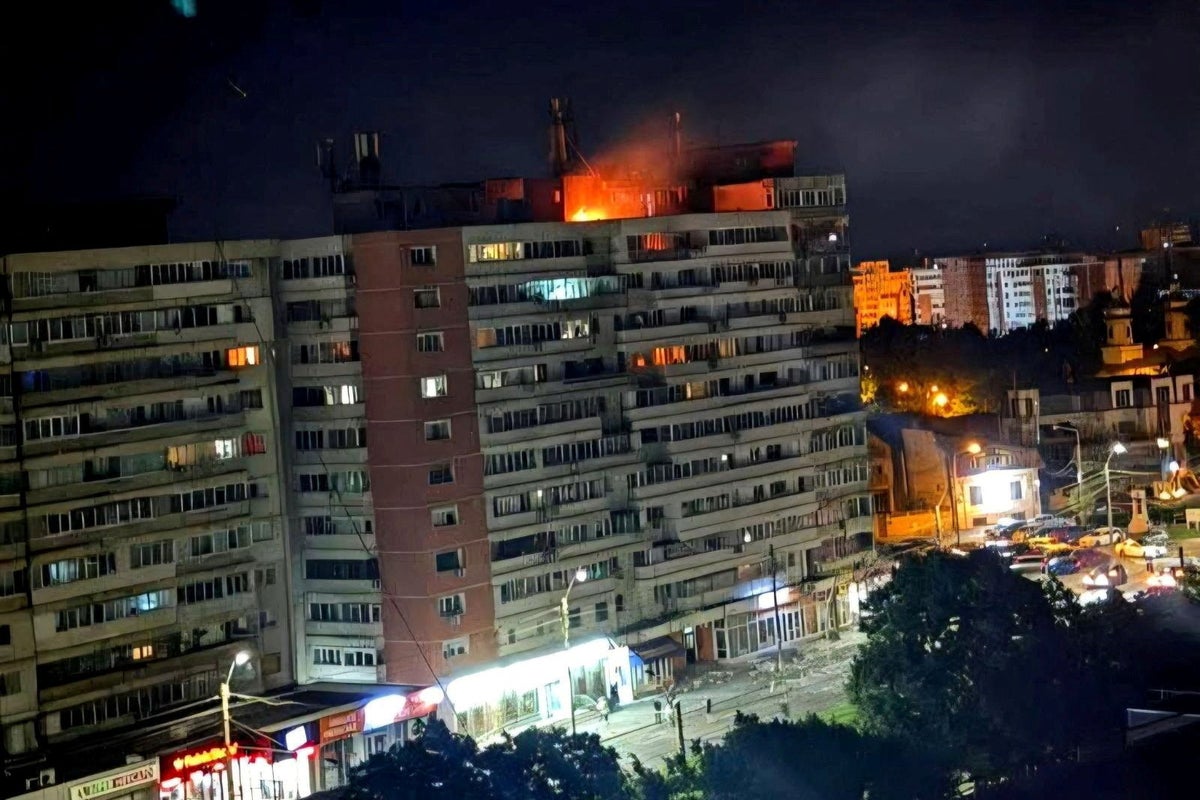
The reported drone strike on Romanian territory marks a significant escalation in the Ukraine-Russia conflict, raising immediate questions about NATO security guarantees and the risk of wider confrontation. Two people were injured when a drone triggered a fire in a ten-storey building, an incident that has drawn swift denials from Moscow even as President Putin suggested the wider war may be approaching its conclusion. This combination of alleged cross-border action and optimistic rhetoric from the Kremlin underscores the unpredictable nature of the fighting, with potential implications for alliance cohesion and European stability at a moment when diplomatic channels remain strained.
The episode highlights how incidents involving NATO member states can rapidly shift the strategic calculus. Romania’s position on the alliance’s eastern flank places it in a sensitive position, and any breach of its airspace invites scrutiny of collective defence commitments. While the precise origins of the drone remain disputed, the event itself has prompted urgent assessments in capitals across Europe about how to manage spillover risks without triggering further confrontation.
The Reported Incident and Immediate Consequences
Details emerging from the strike point to a fire that engulfed part of a multi-storey residential structure, leaving two individuals requiring medical attention. Such events, even when limited in scale, carry outsized weight because they occur on the territory of a NATO member. Romanian authorities moved quickly to contain the blaze and assess damage, while emergency services focused on ensuring public safety in the affected area. The choice of target, if deliberate, would represent a departure from previous patterns of engagement that have largely remained confined to Ukrainian soil. Analysts note that the presence of a fire in a densely occupied building amplifies the human cost and complicates efforts to downplay the episode as accidental. Public concern in Romania has centred on the vulnerability of civilian infrastructure near the border region, prompting calls for enhanced monitoring of airspace.Putin’s Denial and Optimistic Assessment
President Putin has rejected any Russian responsibility for the drone activity, framing the episode as unrelated to Moscow’s operations. In the same set of remarks he characterised the overall conflict as nearing its end, a statement that appears designed to project confidence amid ongoing military developments. This dual message—denial paired with an assertion of impending resolution—reflects a familiar pattern in which Russian leadership seeks to control the narrative while avoiding direct admission of actions that could invite retaliation. The claim that the war is close to conclusion stands in contrast to the continued intensity of fighting inside Ukraine. Observers interpret such statements as attempts to influence domestic opinion and perhaps test the willingness of Western governments to sustain support for Kyiv. By coupling denial with forward-looking rhetoric, Moscow may be aiming to reduce pressure for immediate escalation while keeping open the possibility of future manoeuvres.NATO’s Delicate Balancing Act
The involvement of Romanian territory inevitably draws the North Atlantic Treaty Organisation into the discussion, even if the precise response remains measured. Alliance members have long emphasised the importance of defending every inch of NATO soil, yet they have also sought to avoid direct clashes with Russian forces that could spiral into wider war. The current episode tests that equilibrium, requiring careful calibration between reassurance to eastern flank states and restraint in public statements. Background considerations include the long-standing debate over NATO expansion and Russian objections to the alliance’s presence near its borders. Romania’s accession in 2004 placed it squarely within the security architecture that Moscow has repeatedly criticised. Any perceived challenge to that member’s sovereignty therefore resonates beyond the immediate incident, touching on foundational questions about where Europe’s security lines are drawn.Historical Context and Shifting Dynamics
The Ukraine-Russia conflict has evolved through multiple phases since 2014, moving from localised fighting in the Donbas to a full-scale invasion in 2022 and subsequent war of attrition. Throughout this period, cross-border incidents have occasionally threatened to widen the theatre, yet both sides have generally avoided steps that would bring NATO forces into direct combat. The reported drone activity in Romania fits into a pattern of probing actions that test red lines without necessarily crossing them. Economic sanctions, military aid packages, and diplomatic initiatives have all shaped the trajectory of the war. European governments have absorbed millions of refugees, recalibrated energy supplies, and coordinated sanctions regimes that continue to evolve. Against this backdrop, any incident on alliance territory acquires additional significance because it risks altering the cost-benefit calculations that have so far prevented direct NATO-Russia confrontation.Implications for Regional Security and Future Developments
Should the drone strike prove to be more than an isolated anomaly, it could accelerate discussions about air defence enhancements along NATO’s eastern frontier. Countries neighbouring Ukraine have already increased patrols and intelligence sharing; further measures might include additional deployments or accelerated modernisation of surveillance systems. Such steps would aim to reduce the chance of similar occurrences while signalling resolve. At the same time, Putin’s suggestion that the conflict is approaching its end invites scrutiny of possible negotiating positions. Any movement toward talks would require clarity on territorial issues, security guarantees, and reconstruction responsibilities. Western capitals remain wary of proposals that might reward aggression, yet fatigue on all sides could eventually create openings for dialogue. The coming weeks will likely reveal whether this episode remains an outlier or signals a broader change in operational patterns. Romanian and NATO officials are expected to continue investigations while maintaining open lines of communication to prevent miscalculation. European leaders, meanwhile, face the dual task of sustaining support for Ukraine and preparing their publics for the possibility of prolonged tension along the alliance’s perimeter.By Erica Thornton, Staff Writer
This article was produced with AI-assisted research and editorial support. Reporting is based on sources cited in the article.
What's Your Reaction?
 Like
0
Like
0
 Dislike
0
Dislike
0
 Love
0
Love
0
 Funny
0
Funny
0
 Wow
0
Wow
0
 Sad
0
Sad
0
 Angry
0
Angry
0

Erica Thornton
US Politics and Policy Correspondent at Global1.News. Based in Washington DC, covering American politics, policy, elections, and the courts. Knows how the system works and tells you what it actually means.











Comments (0)