
Ujjwala LPG Subsidy Cut Threatens Public Health in India
The Ministry of Petroleum and Natural Gas has reduced subsidised LPG refills under the Pradhan Mantri Ujjwala Yojana from nine to four cylinders per year, a decision that public health experts warn could push millions of poor households back to biomass cooking. With over 10 crore beneficiaries nationwide, the Ujjwala scheme has been one of India's largest public health interven
The Ministry of Petroleum and Natural Gas has reduced subsidised LPG refills under the Pradhan Mantri Ujjwala Yojana from nine to four cylinders per year, a decision that public health experts warn could push millions of poor households back to biomass cooking. With over 10 crore beneficiaries nationwide, the Ujjwala scheme has been one of India's largest public health interventions against indoor air pollution since its launch in 2016.
Ujjwala LPG Subsidy Cut: What the Reduction to Four Refills Means for India's Public Health Gains
New Delhi, Delhi – June 9, 2026 — The central government has reduced the number of subsidised LPG refills under the Ujjwala scheme from nine to four cylinders annually, with beneficiaries continuing to receive a ₹300 cashback on the first four refills. The revision follows an ₹89 increase in cooking gas prices and comes amid escalating conflicts in West Asia that have driven up global crude oil and LPG prices.
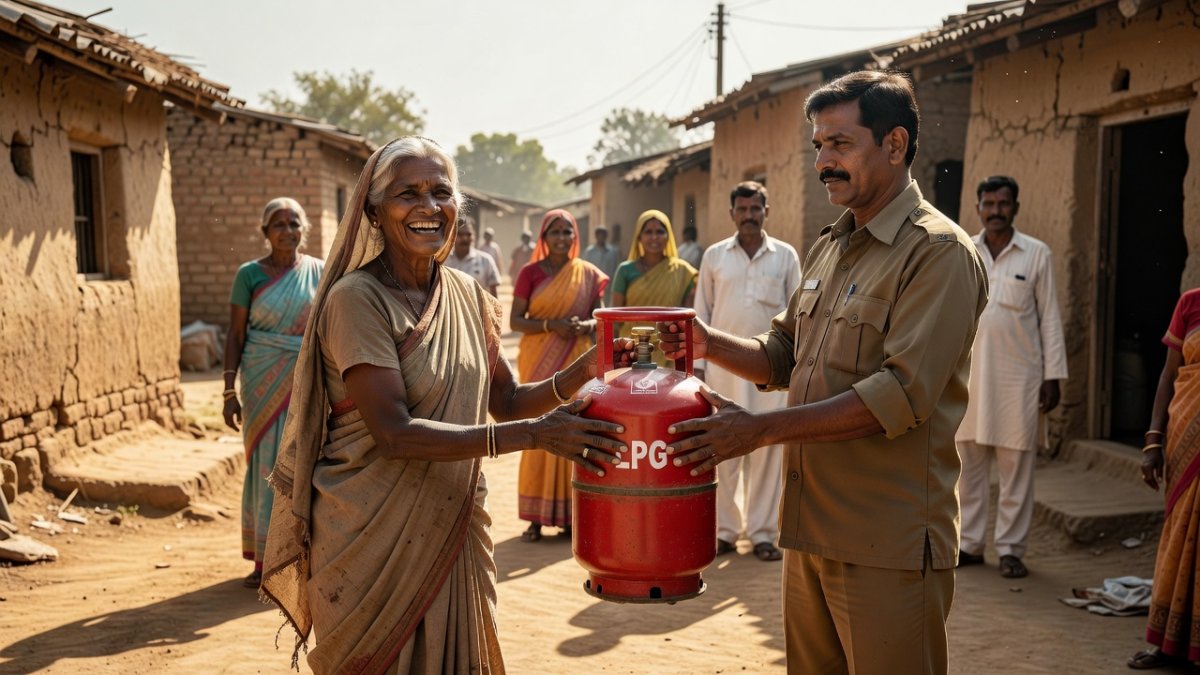
The Scale of the Subsidy Revision
According to the Ministry of Petroleum and Natural Gas, the actual cost of supplying a 14.2 kg LPG cylinder is nearly ₹1,600, with oil marketing companies facing an under-recovery of ₹700 per cylinder. The government absorbs a subsidy of nearly ₹1,000 per Ujjwala refill. Officials have justified the reduction by noting that the average annual consumption for Ujjwala beneficiaries is roughly four cylinders, though this figure masks significant seasonal and regional variations during winter months and festival periods in states such as Uttar Pradesh, Bihar, and Madhya Pradesh.
Origins of the Ujjwala Scheme in Ballia
Prime Minister Narendra Modi launched the Pradhan Mantri Ujjwala Yojana on 1 May 2016 in Ballia, Uttar Pradesh. The programme initially provided twelve subsidised cylinders annually to households below the poverty line. Ujjwala 2.0, rolled out in August 2021, added one crore additional connections, bringing the total above 10 crore beneficiaries nationwide. The Ministry of Petroleum and Natural Gas oversees implementation through public sector oil marketing companies including Indian Oil, Bharat Petroleum, and Hindustan Petroleum.
Indoor Air Pollution as a Public Health Crisis
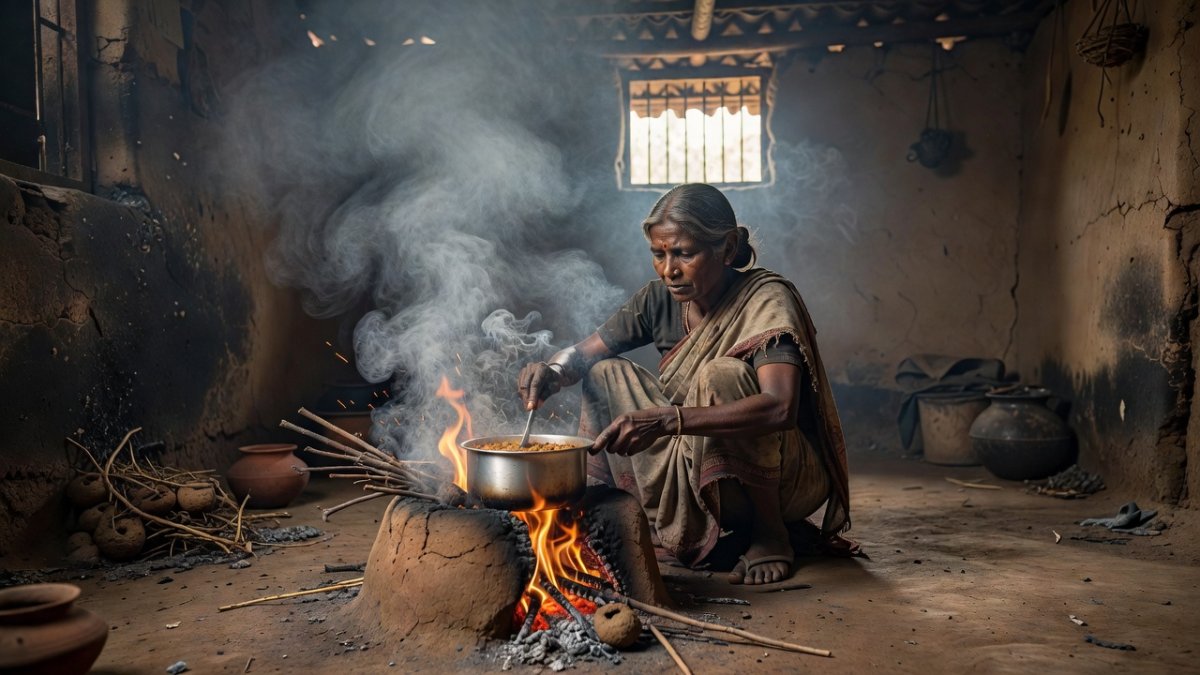
Biomass cooking using wood, dung, and crop residue produces fine particulate matter (PM2.5) that penetrates deep into lung tissue and enters the bloodstream. The World Health Organization attributes more than 500,000 premature deaths annually in India to household air pollution from solid fuel cooking. Respiratory diseases, chronic obstructive pulmonary disease, and pneumonia rates remain elevated in districts where LPG access remains inconsistent or where households have reverted to traditional fuels.
Returning households to biomass cooking reverses documented improvements in lung function and reduced hospital admissions recorded after the initial Ujjwala rollout in eastern Uttar Pradesh and northern Bihar. Women and children bear the heaviest burden because they spend the longest hours in proximity to cooking fires, inhaling smoke equivalent to burning hundreds of cigarettes per day in poorly ventilated kitchens.
Economic Pressure on Poor Households
With only four subsidised cylinders, families in rural Ballia or Madhubani must purchase additional refills at market rates exceeding ₹1,000 after subsidy. Many low-income households in these districts already stretch monthly budgets below ₹8,000. The additional outlay forces difficult trade-offs between clean cooking fuel and basic necessities such as nutrition, children's education, or healthcare.
Data from the Ministry of Petroleum confirm that average Ujjwala household consumption hovers near four cylinders yearly, yet consumption patterns vary sharply by region and season. In colder months across northern India, demand rises for heating water and longer cooking sessions, pushing families back toward biomass collection and combustion when subsidised refills run out. This regressive pattern threatens to undo the air quality improvements achieved in rural kitchens since 2016.
Broader Policy Implications for India's Healthcare System
The subsidy revision occurs against a backdrop of rising global LPG prices and mounting fiscal pressures on oil marketing companies. While the government cites average consumption figures to justify the cap, the decision risks undermining the National Health Policy's stated goal of reducing the disease burden attributable to air pollution. Primary health centres in high-biomass districts already report elevated caseloads of asthma, acute respiratory infections, and chronic bronchitis among women and children.
The Ministry of Health and Family Welfare has previously acknowledged the link between clean cooking fuel and maternal health outcomes. Studies published by the Indian Council of Medical Research (ICMR) have demonstrated that pregnant women using LPG rather than biomass have lower rates of low birth weight deliveries and stillbirths. The subsidy reduction could reverse these gains in the very population the Ujjwala scheme was designed to protect.
Regional Disparities and Seasonal Vulnerability
The impact of the four-cylinder cap will not be uniform across India. States with high beneficiary density and colder climates — including Uttar Pradesh with over 2.5 crore Ujjwala connections, Bihar with 1.8 crore, and Madhya Pradesh with 1.2 crore — will face the most acute shortages during winter months. In these regions, the gap between subsidised allocation and actual cooking fuel needs widens significantly between November and February.
District-level data from the Ministry of Petroleum shows that Ujjwala beneficiaries in Himalayan states and the northeastern region consume 60 to 80 per cent more LPG than the national average due to colder temperatures. For these households, a four-cylinder annual cap represents a severe constraint that forces reliance on wood and coal during peak winter months, precisely when indoor air pollution levels are most dangerous due to reduced ventilation.
The Bottom Line
The Ujjwala scheme represented one of independent India's largest public health interventions for clean household energy, delivering measurable improvements in respiratory health, maternal outcomes, and quality of life for over 10 crore families. Cutting subsidised refills to four cylinders threatens to erode these hard-won gains in the very communities the programme was designed to serve. Sustained support for at least nine annual refills, combined with targeted top-up subsidies during peak seasonal demand, remains critical to prevent thousands of additional respiratory cases and preserve India's progress against the devastating health impacts of indoor air pollution.
— By Dr. Raj Patel, Staff Writer
This article was produced with AI-assisted research and editorial support. Reporting is based on sources cited in the article.
What's Your Reaction?
 Like
0
Like
0
 Dislike
0
Dislike
0
 Love
0
Love
0
 Funny
0
Funny
0
 Wow
0
Wow
0
 Sad
0
Sad
0
 Angry
0
Angry
0

India/South Asia Correspondent at Global1.News. Analytical voice with a background in science and health journalism. Based in New Delhi, covering Indian politics, education, healthcare, technology, and policy. Breaks down complex data into clear, actionable reporting.









Comments (0)