
Burgenstock US-Iran Talks: Vance's New Leaf Diplomacy
The quadrilateral US-Iran talks unfolding at the Burgenstock resort in Switzerland, mediated by Pakistan and Qatar, represent the most consequential diplomatic engagement between Washington and Tehran since the 2015 Joint Comprehensive Plan of Action. US Vice President JD Vance's arrival on June 21, 2026 carries the weight of a region scarred by four months of open warfare foll
The quadrilateral US-Iran talks unfolding at the Burgenstock resort in Switzerland, mediated by Pakistan and Qatar, represent the most consequential diplomatic engagement between Washington and Tehran since the 2015 Joint Comprehensive Plan of Action. US Vice President JD Vance's arrival on June 21, 2026 carries the weight of a region scarred by four months of open warfare following the February assassination of Supreme Leader Ali Khamenei, the closure of the Strait of Hormuz, and oil markets teetering on the edge of US$150 per barrel. The outcome will shape not merely the immediate ceasefire but the broader architecture of Middle Eastern security, the trajectory of Iran's nuclear program, and the strategic calculations of Gulf states racing to diversify their economies away from hydrocarbon dependence.
Burgenstock Quadrilateral Engagement Charts Uncertain Path Through Post-Khamenei Middle East Turmoil
[Burgenstock, Switzerland – June 22, 2026] — US Vice President JD Vance stepped onto the manicured grounds of the Burgenstock resort on June 21, 2026, declaring that the delegations must “turn over a new leaf” after months of devastating conflict. Flanked by Special Envoy Steve Witkoff and senior advisor Jared Kushner, Vance’s motorcade passed tight Swiss security cordons as Iranian representatives led by Speaker Mohammad Bagher Ghalibaf and Foreign Minister Abbas Araghchi maintained a deliberate distance, refusing handshakes or joint photographs. Pakistani Prime Minister Shehbaz Sharif and Army Chief General Asim Munir arrived alongside Qatar’s Prime Minister Sheikh Mohammed bin Abdulrahman Al Thani, whose country had hosted preparatory sessions. The atmosphere remained tense yet purposeful, with aides shuttling between chalets carrying the 14-point Islamabad MoU signed only five days earlier. Observers noted the absence of ceremonial pleasantries as Vance emphasized pragmatic steps to reopen maritime lanes and address frozen assets valued at $12 billion monthly. The resort’s lakeside setting contrasted sharply with the high stakes, as each delegation calculated how far compromise could extend before domestic red lines hardened.
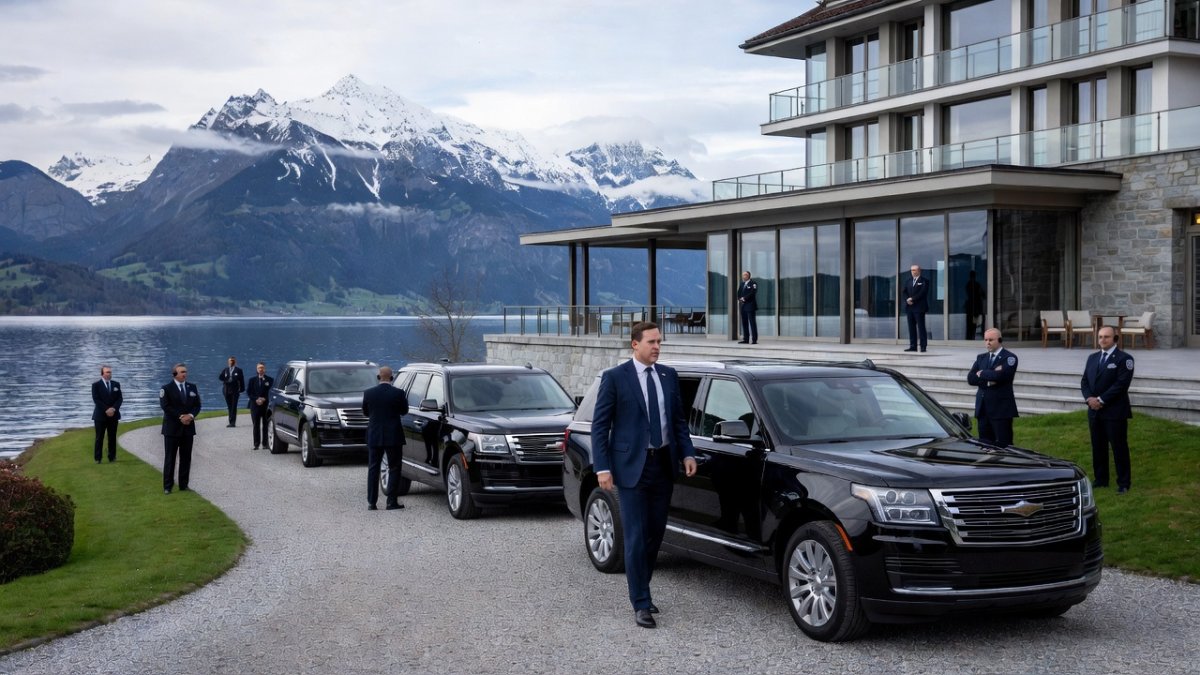
US Vice President JD Vance at the Burgenstock resort, June 21, 2026 (Global 1 News)
The Burgenstock Summit: Quadrilateral Diplomacy Takes Center Stage
The Burgenstock summit convenes four distinct actors whose interests intersect at critical junctures. US Vice President JD Vance leads a team that includes Steve Witkoff and Jared Kushner, focusing on immediate de-escalation and nuclear containment. Opposite them sit Iranian Speaker Mohammad Bagher Ghalibaf and Foreign Minister Abbas Araghchi, who arrived without engaging in customary diplomatic courtesies. Pakistan’s delegation blends civilian and military authority through Prime Minister Shehbaz Sharif and Army Chief General Asim Munir, while Qatar’s Prime Minister Sheikh Mohammed bin Abdulrahman Al Thani serves as the principal facilitator. The Islamabad MoU, a 14-point framework initialed on June 17, 2026, supplies the procedural backbone. Iranian refusal to participate in staged imagery underscores lingering mistrust, yet the presence of all parties signals recognition that continued Hormuz closure threatens every capital. Vance’s public call to “turn over a new leaf” frames the talks as an opportunity rather than a concession, though Iranian negotiators remain wary of repeating the 2018 JCPOA experience. Technical working groups are expected to convene within days if initial atmospherics hold.
Geopolitical Context: The Islamabad MoU's 14-Point Architecture
The Islamabad MoU establishes a sequenced roadmap anchored by the phased release of $12 billion in monthly frozen Iranian assets, contingent upon verifiable compliance milestones. IAEA inspectors receive expanded access protocols, including real-time monitoring at key enrichment sites. Maritime security provisions mandate joint patrols in the Strait of Hormuz under a proposed trilateral mechanism involving US, Iranian, and Qatari naval liaison officers. Pakistan’s dual civilian-military representation allows General Asim Munir to address security guarantees directly, while Prime Minister Shehbaz Sharif handles economic deliverables. Qatar’s role as neutral broker leverages its established channels with both Tehran and Washington. Verification mechanisms include quarterly reports shared among all four capitals, with sanctions snapback clauses tied to enrichment thresholds. The framework deliberately separates nuclear confidence-building from broader regional disputes, yet its success hinges on whether Iranian hardliners accept intrusive inspections in exchange for liquidity. Gulf states watch closely, aware that any asset release could recalibrate regional power balances.
Historical Background: From the JCPOA to the February War
The 2015 Joint Comprehensive Plan of Action capped Iran’s enrichment at 3.67 percent and reduced its stockpile in return for sanctions relief. Washington’s 2018 withdrawal triggered accelerated Iranian nuclear advances, pushing enrichment levels above 60 percent by late 2025. The February 2026 assassination of Supreme Leader Ali Khamenei removed the regime’s paramount decision-maker and unleashed retaliatory missile barrages against US regional assets. Iranian forces closed the Strait of Hormuz within seventy-two hours, prompting CENTCOM to surge carrier strike groups and conduct limited strikes on proxy facilities in Iraq and Syria. Yemen’s Houthis and Iraqi Shia militias expanded operations, deepening Sunni-Shia fault lines across the Levant. Four months of intermittent naval clashes and proxy escalation produced an estimated 4,200 casualties before back-channel communications through Islamabad and Doha produced the current quadrilateral format. The war exposed the fragility of post-JCPOA deterrence and demonstrated how quickly nuclear latency could translate into conventional leverage.
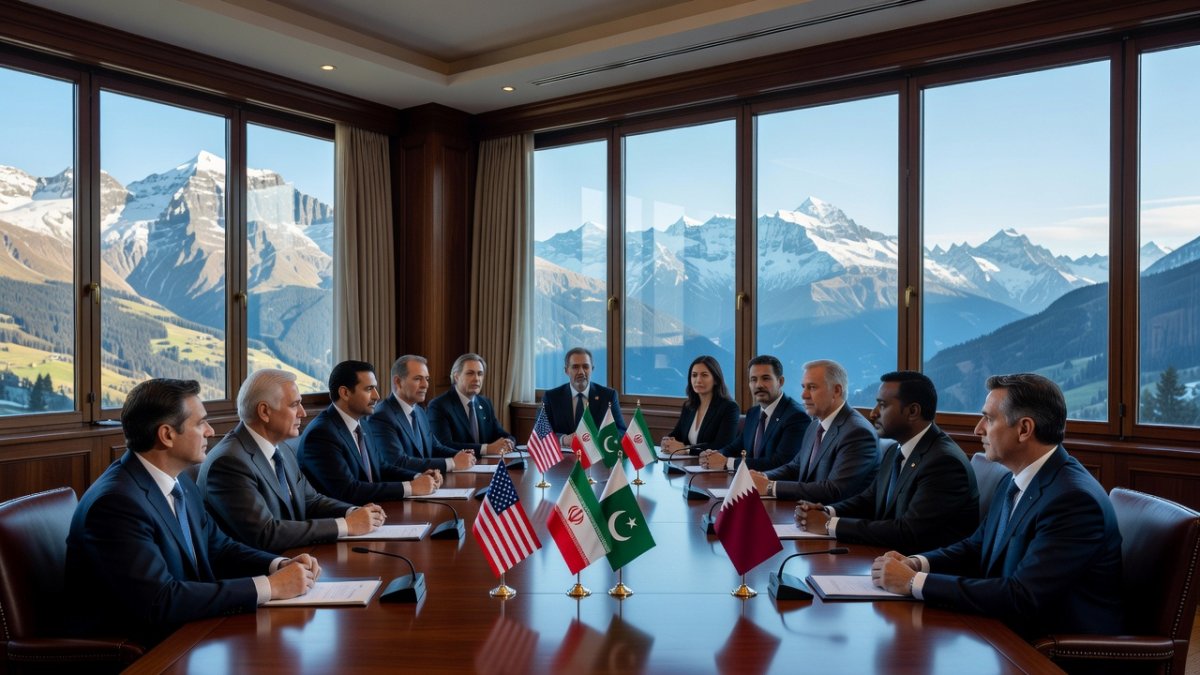
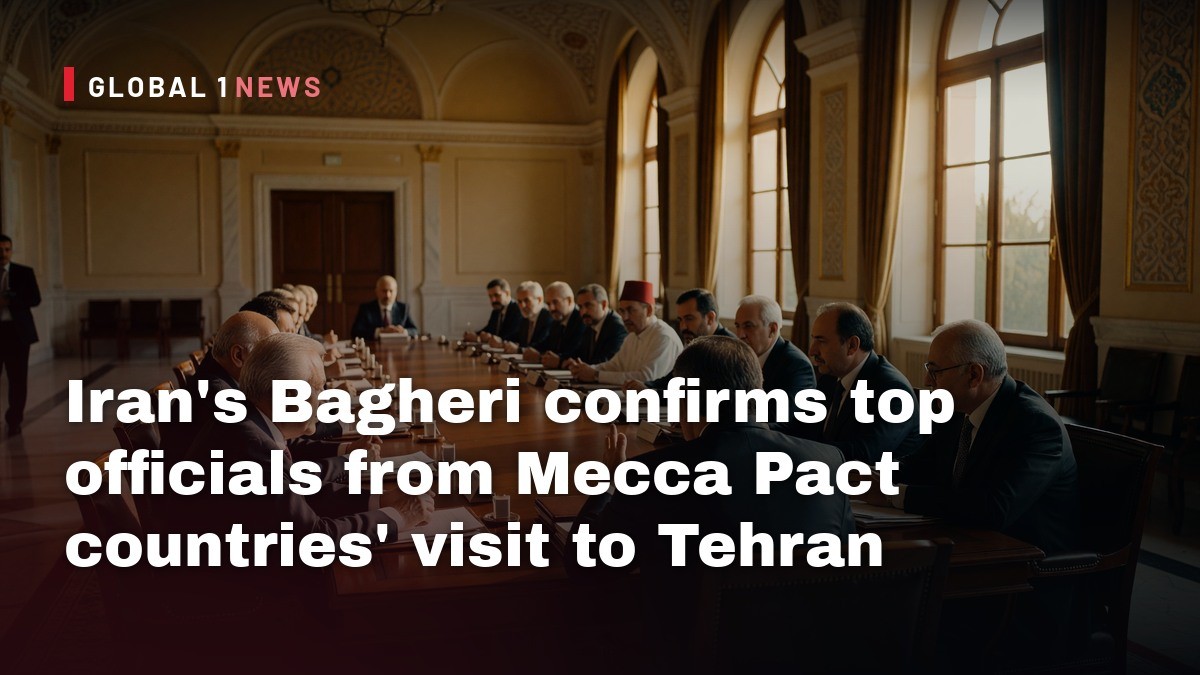
Delegations convene for the quadrilateral talks at Burgenstock (Global 1 News)
Regional Dynamics: Sunni-Shia Competition and the Mediation Puzzle
Pakistan’s mediation reflects its delicate balancing act between longstanding Sunni ties to Gulf Cooperation Council states and historic cultural links to Iran’s Shia population. General Asim Munir’s direct involvement signals Islamabad’s intent to protect energy import routes while avoiding entanglement in sectarian confrontation. Qatar’s unique position as host to both the Taliban office and US Central Command forward headquarters allows it to bridge otherwise irreconcilable parties. Saudi Arabia and the United Arab Emirates remain skeptical observers, concerned that any sanctions relief could embolden Iranian proxies and slow Arab-Israeli normalization momentum. Turkey monitors developments for opportunities to expand influence in northern Syria and Iraq. China’s quiet presence in the background underscores great-power interest in stable energy flows through the Gulf. The summit therefore tests whether sectarian competition can be subordinated to shared economic imperatives, particularly as Gulf monarchies accelerate diversification programs that require predictable hydrocarbon revenues.
The Strait of Hormuz: Energy Markets at the Crossroads
Approximately 20 percent of global oil transit passes through the Strait of Hormuz, equating to roughly 17 million barrels daily according to CENTCOM maritime statistics. The February closure triggered immediate price spikes toward $150 per barrel, contributing to US inflation readings of 3.8 percent driven largely by energy costs. Fifty-five naval vessels from multiple nations currently patrol the waterway under ad-hoc coordination. Joint maritime monitoring proposals within the Islamabad MoU envision shared radar feeds and deconfliction hotlines, yet implementation requires Iranian naval cooperation that remains politically sensitive in Tehran. Gulf states face acute pressure because Vision 2030 diversification timelines depend on stable fiscal revenues; prolonged high prices accelerate domestic subsidy reforms but also risk social unrest. Any durable agreement must therefore address both physical security guarantees and transparent verification that prevents sudden re-closure, a requirement that directly links nuclear talks to energy market stability.
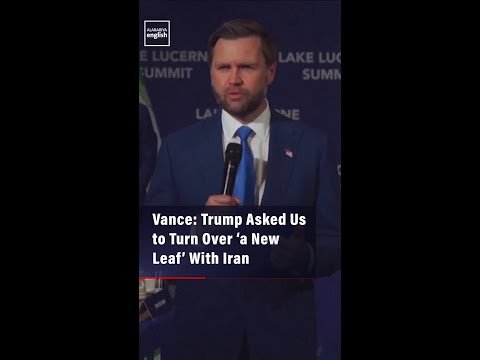
Al Arabiya English coverage of the US-Iran quadrilateral talks (Al Arabiya English)
Strategic Calculus: Washington, Tehran, and the Mediators
Washington’s primary objectives center on inflation control and preventing a return to $150 oil while containing Iranian nuclear breakout capacity. Tehran seeks predictable asset releases and sanctions relief sufficient to stabilize its currency and deter further domestic unrest. Pakistan aims to secure long-term energy import deals and elevate its diplomatic profile as a credible interlocutor. Qatar seeks reinforcement of its role as indispensable broker, enhancing leverage in future Gaza and Lebanon negotiations. Former President Trump’s public warnings regarding potential Hormuz tolls and strikes on Hezbollah-linked targets add external pressure that could either catalyze compromise or derail progress. Each capital calculates domestic political costs: Iranian negotiators must demonstrate tangible economic gains, while US officials require visible nuclear constraints. The mediators’ credibility rests on delivering incremental confidence-building measures within the next sixty days of technical talks.
Regional Implications: What Follows Burgenstock
Outcomes at Burgenstock will reverberate across Arab-Israeli normalization tracks, with renewed Saudi-Israeli discussions possible only if Iranian deterrence appears constrained. Turkey’s balancing act between NATO commitments and energy cooperation with Tehran may shift depending on sanctions trajectories. Sunni-Shia alignment patterns could stabilize if proxy de-escalation accompanies nuclear limits, yet failure risks renewed militia activity in Iraq and Yemen. Great-power competition dynamics favor China if talks collapse, as Beijing positions itself to offer alternative financing to cash-strapped Gulf economies. Energy market stability remains the immediate barometer; successful verification mechanisms could support gradual price moderation toward $90 per barrel. Technical talks scheduled over the next sixty days will determine whether the Islamabad framework produces a durable ceasefire or merely postpones escalation. Should the deal hold, renewed normalization conversations may accelerate; collapse would likely trigger intensified proxy confrontations across multiple theaters.
By Malik Hassan, Staff WriterThis article was produced with AI-assisted research and editorial support. Reporting is based on sources cited in the article.
What's Your Reaction?
 Like
0
Like
0
 Dislike
0
Dislike
0
 Love
0
Love
0
 Funny
0
Funny
0
 Wow
0
Wow
0
 Sad
0
Sad
0
 Angry
0
Angry
0

Middle East Correspondent at Global1.News. Based in Beirut, covering politics, conflict, energy, and society across the Middle East. Brings context and depth to a region often reduced to headlines.










Comments (0)