
Trump Signals No USMCA Renewal, Mexico Faces Trade Uncertainty
The DW News YouTube video titled "Has Trump backed down from his Mexico tariffs plan because of Claudia Sheinbaum?" frames the Mexican president's measured diplomatic style as a key factor in recent trade developments. The segment highlights how Sheinbaum's approach differs from previous tensions and sets the stage for understanding the latest statement from Washington. On June
The DW News YouTube video titled "Has Trump backed down from his Mexico tariffs plan because of Claudia Sheinbaum?" frames the Mexican president's measured diplomatic style as a key factor in recent trade developments. The segment highlights how Sheinbaum's approach differs from previous tensions and sets the stage for understanding the latest statement from Washington.
On June 10, 2026, President Donald Trump stood in the Oval Office and declared he is not looking to renew the United States-Mexico-Canada Agreement. The announcement directly affects the daily lives of 130 million Mexicans who depend on cross-border commerce, factory jobs, and agricultural exports that flow through the agreement signed in 2018 and effective since 2020.
What Trump Said
Trump stated, "I'm not looking to renew it," referring to the USMCA. He added context by saying, "I made the deal because NAFTA was the worst trade deal," and continued, "We don't need anything that Canada has, we don't need anything that Mexico has." He emphasized that "They have to treat us better" before softening the position slightly with the remark, "I don't know whether I'm going to renew it."
The agreement contains a six-month withdrawal clause and is scheduled to expire in 2036. Economy Secretary Marcelo Ebrard has already submitted a formal request for a 16-year extension that would push the expiration to 2042. Bilateral goods trade between Mexico and the United States reached $872.8 billion in 2025, making any disruption a direct threat to supply chains that run from Monterrey assembly plants to distribution centers in the American Midwest.
Trump's comments arrive as the agreement undergoes its first formal review process scheduled to begin on July 1. Mexican negotiators had hoped the review would focus on minor adjustments rather than wholesale termination, yet the Oval Office remarks have shifted the baseline for all upcoming discussions.
Mexico's Response
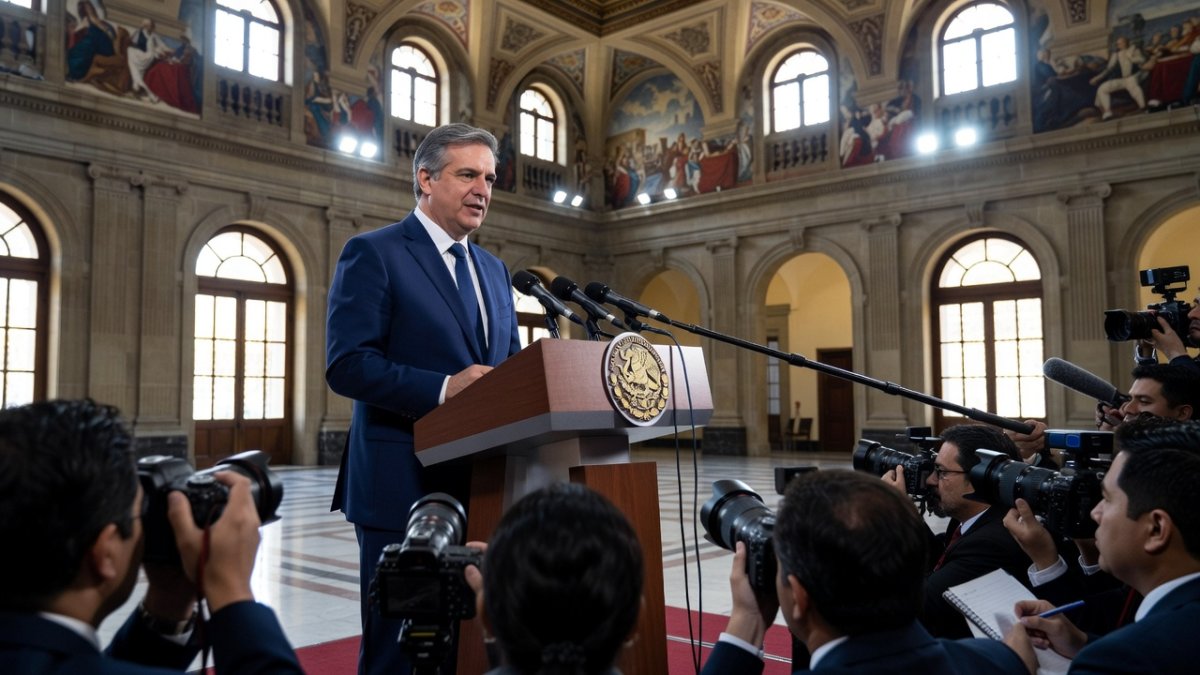
Economy Secretary Marcelo Ebrard addressed the matter during President Claudia Sheinbaum's daily mañanera press conference at Palacio Nacional. He announced that a second round of formal talks would take place in Washington from June 15 to 18. Ebrard told reporters, "It wasn't known if we were going to have these formal talks or not. They are underway and we'll be there next week."
Mexico arrives at the table with prepared arguments for tariff relief on vehicles, steel, and aluminum that the United States currently maintains. Officials note that Mexico holds a stronger negotiating position than Vietnam or the European Union because of integrated North American supply chains that would be costly for American manufacturers to replicate elsewhere.
The Secretaría de Economía has compiled data showing that existing tariffs already raise costs for Mexican exporters in key sectors. Ebrard's team will present these figures alongside proposals that tie tariff reductions to continued cooperation on energy and regulatory standards enforced by COFEPRIS.
Impact on Mexican Economy
The automotive sector centered in Monterrey, Aguascalientes, and Puebla faces immediate uncertainty. Plants operated by major assemblers rely on USMCA rules of origin that allow duty-free movement of components across the border. Any change in the agreement could force production adjustments that affect thousands of workers in these industrial corridors.
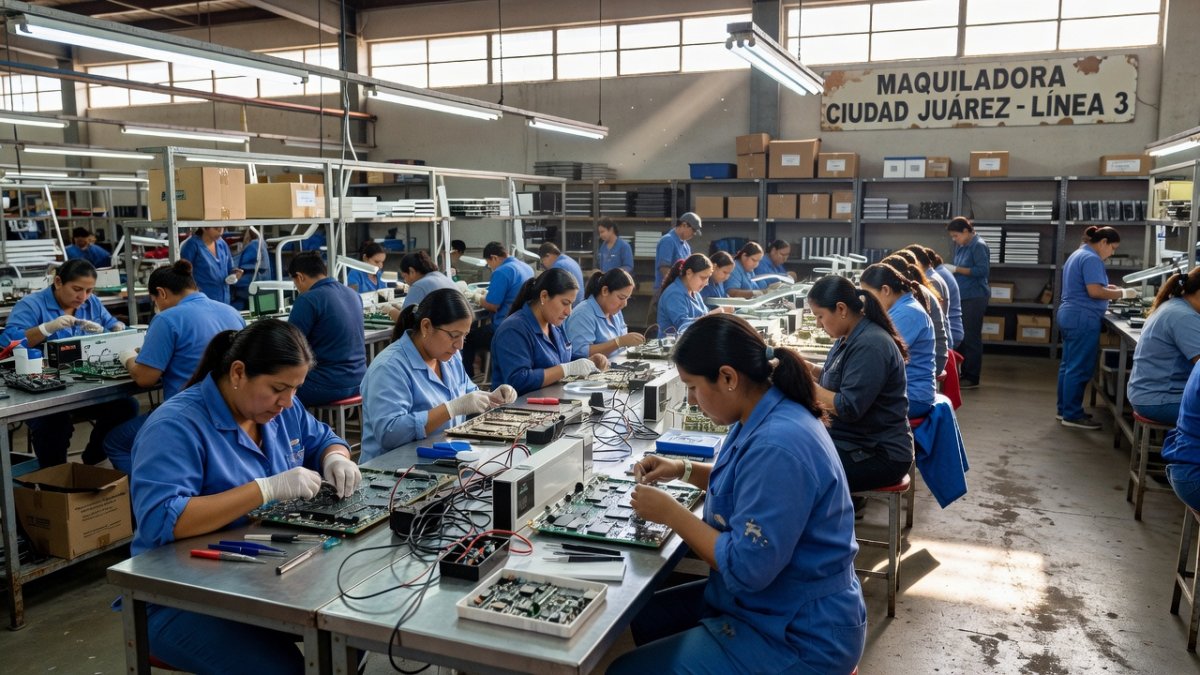
Maquiladoras in Ciudad Juárez, Tijuana, and Nogales process electronics, medical devices, and apparel destined for the United States market. These facilities operate under the agreement's tariff preferences, and managers in each city are already modeling scenarios that include higher duties if renewal talks stall.
Agricultural exports from Michoacán avocados, Sinaloa tomatoes, Jalisco berries, and tequila and beer from multiple states would also encounter new barriers. PEMEX and CFE energy cooperation clauses within the agreement could face renegotiation, while small businesses in Guadalajara and Mexico City that supply parts to larger exporters would feel secondary effects through reduced orders.
Impact on Mexican Families
Factory workers living in border colonias around Ciudad Juárez and Tijuana depend on steady maquiladora shifts to cover rent, school fees, and IMSS contributions. A slowdown in production orders would reduce overtime pay that many households count on for basic expenses.
Campesinos in Michoacán, Jalisco, and Sinaloa who grow avocados, tomatoes, and berries for export would see lower farmgate prices if tariffs increase. These price drops directly affect family incomes in rural municipalities where alternative employment remains limited.
Healthcare workers at IMSS and ISSSTE facilities would confront higher costs for imported medical supplies and equipment if trade frictions raise prices. CONEVAL poverty measurements already track how sudden income changes push households below the poverty line, and analysts expect the current trade uncertainty to appear in the next quarterly data release.
Sheinbaum Administration Strategy
President Sheinbaum has adopted a more assertive diplomatic posture than the "hugs not bullets" security approach associated with the previous administration. Her government coordinates closely between the Secretaría de Relaciones Exteriores and the Secretaría de Economía to present unified positions in Washington.
The Morena majority in the Congreso de la Unión provides legislative backing for any agreements reached, while the INE and SCJN maintain institutional oversight of domestic implementation. This structure allows Sheinbaum to move quickly on trade policy without immediate congressional delays.
Officials emphasize that Mexico will not accept terms that undermine labor or environmental provisions already embedded in the current text. The strategy focuses on demonstrating mutual economic benefits rather than confrontation, a shift that the DW News video suggests has already influenced tariff discussions.
What To Watch For
The Washington talks scheduled for June 15-18 will produce the first concrete signals about whether the United States intends to pursue full withdrawal or seek modifications. A joint statement is expected at the conclusion of those meetings.
Possible tariff adjustments on steel, aluminum, and vehicles remain on the table. The July 1 formal review start date will set the timeline for any changes, while FGR and COFEPRIS regulatory cooperation on food safety and pharmaceutical standards could serve as additional leverage points during negotiations.
Observers will monitor whether the six-month withdrawal notice is formally issued or whether the extension request to 2042 receives any counter-proposal from the American side.
Looking Ahead
Mexican readers should prepare for continued volatility in trade policy through the remainder of 2026. The combination of existing tariffs and renewal uncertainty creates a narrow window for negotiators to secure stability before supply chains begin shifting.
While uncertainty remains high, the structured talks beginning June 15 offer a clear path for dialogue. Mexican families and businesses will watch the outcome of those meetings to determine whether the integrated North American economy can continue under updated terms or whether deeper adjustments lie ahead.
By Rosa Martinez, Staff WriterThis article was produced with AI-assisted research and editorial support. Reporting is based on sources cited in the article.
What's Your Reaction?
 Like
0
Like
0
 Dislike
0
Dislike
0
 Love
0
Love
0
 Funny
0
Funny
0
 Wow
0
Wow
0
 Sad
0
Sad
0
 Angry
0
Angry
0

Latin America/Andes Correspondent at Global1.News. Based in Bogota, covering politics, environment, energy, and social movements across the Andean region. Passionate about environmental journalism and communities protecting their land.














Comments (0)